Energy experts at Egypt Economic Outlook conference: 1,000 MW of wind power saves $250 million in gas imports, while solar energy cuts factory investment payback period to 4 years
Key facts
- Adding 1,000 megawatts of wind capacity in Egypt is projected to save approximately $250 million in imported natural gas costs
- The expansion of 1,000 megawatts of wind power is estimated to reduce carbon emissions by around 1.6 million tons
- The payback period for solar power installations in Egyptian factories has decreased to roughly four years from seven to eight years
- A 1,000-megawatt solar plant in Minya is scheduled for completion by December 2027 according to project officials
Hisham El-Gamal: Wind projects cut carbon emissions by approximately 1.6 million tons... and a 1,000-megawatt solar plant in Minya will be completed by December 2027
Renewable energy experts and officials stated that expanding solar and wind projects presents a significant economic and investment opportunity for Egypt, extending beyond increased power generation to reducing fuel import costs, enhancing the competitiveness of domestic industry, attracting private sector investment, and creating new opportunities for Egyptian companies in regional and African markets.
They explained that adding 1,000 megawatts of wind capacity could save on imported natural gas consumption valued at approximately $250 million, while also reducing carbon emissions by around 1.6 million tons. Meanwhile, the payback period for solar power installations in factories has decreased to roughly four years, compared to previous periods that ranged between seven and eight years.
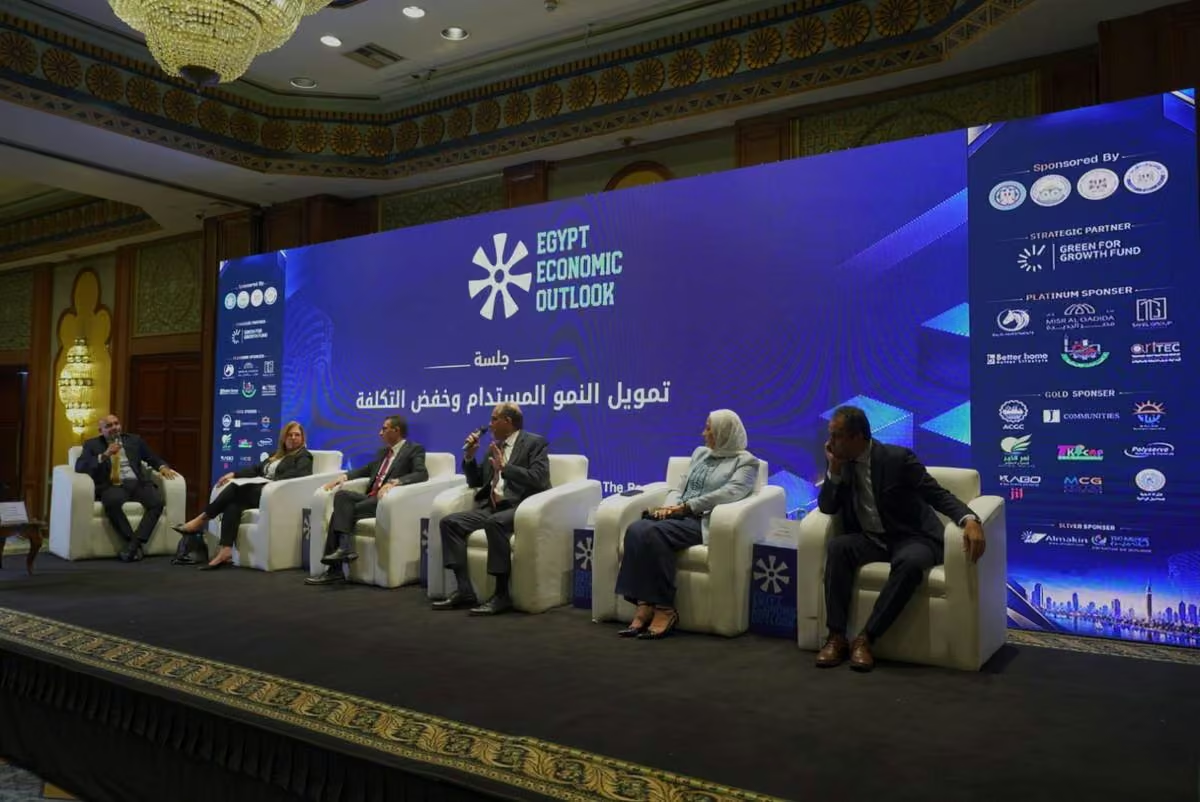
These remarks were made during sessions at the “Egypt Economic Outlook” conference, held under the theme “A New Economic Program for Egypt and Maximizing the Role of the Private Sector.” The event discussed growth opportunities in the renewable energy sector, as well as the financial, regulatory, and technical challenges facing investors, alongside the future of local manufacturing and the capacity of Egyptian companies to compete in major projects.
Participants at the Egypt Economic Outlook conference emphasized that realizing the economic benefits of the shift to clean energy requires upgrading electrical grid infrastructure, streamlining investment procedures, and providing more flexible financing mechanisms. These efforts must proceed in parallel with enabling domestic companies to participate in project execution and build their technical expertise.
Hisham El-Gamal: Wind power cuts the gas import bill and opens new investment avenues
Hisham El-Gamal, president of the Benban Solar Investors Association, stated that Egypt is undergoing a significant transformation in its new and renewable energy sector, driven by the expansion of investment projects and the increased participation of the private sector and international financial institutions.
He explained that expanding renewable energy capacity yields direct economic savings for the state by reducing reliance on natural gas, fuel oil, and diesel in power generation, while also lowering carbon emissions and strengthening energy security.
El-Gamal revealed that the site for a new 1,000-megawatt wind power project has been secured, and the necessary environmental and technical studies have commenced. He noted that once this capacity is operational and connected to the grid, it could save an estimated $250 million in imported natural gas consumption, while also reducing the carbon footprint by approximately 1.6 million tons, according to his estimates.
He pointed out that the private sector has become a key partner in financing renewable energy projects, with investors providing around 20% of the funding for several initiatives, while international financial institutions cover the remaining portion.
El-Gamal added that the Benban Solar Complex in Aswan has demonstrated the Egyptian market’s ability to attract substantial investment in clean energy projects, noting that the complex has seen an expansion in grid-connected capacity since the initial phases began operations.
The company is preparing to expand its capacity at the Benban complex, which includes a 200-megawatt project and 120-megawatt battery storage systems. These additions are designed to enhance operational flexibility and maximize the utilization of generated power.
Additionally, a 1,000-megawatt solar energy project in Minya Governorate has been announced, with completion scheduled for December 2027. Egyptian firms are also participating in the development of renewable energy projects across African markets, including Senegal and South Africa.
Achieving the targets for renewable energy expansion requires a continuous flow of investment, the provision of suitable land, and the acceleration of grid connection works to ensure full utilization of the new capacities.
Ahmed Ibrahim: Four years to recoup the cost of solar power plants at factories
Ahmed Ibrahim, chief executive officer of Al-Makina Solar, stated that the economic viability of investing in solar power plants has improved significantly in recent periods, enhancing the prospects for expanding their use within factories and industrial facilities.
He explained that the payback period for investments in solar power plants has decreased to approximately four years, compared to the previous range of seven to eight years. This reduction makes the transition to clean energy a more attractive option for factories seeking to lower operational costs and improve their competitive position.
Ibrahim noted that the decision to invest in a solar plant is linked to the nature of the industrial activity, its continuity, and the expected savings from electricity consumption. He emphasized that the shortened payback period serves as a significant incentive for making such investment decisions.
He pointed out that the limited space available within certain factories constitutes an obstacle to the expansion of plant construction. He called for the development of mechanisms that allow electricity to be generated from plants located at sites separate from industrial facilities, with the generated power transmitted through the grid to consumption sites.
Ibrahim stressed the importance of supporting the local manufacturing of solar power plant components, particularly given the success of the Egyptian industry in producing certain supplies, including cables. He added that this would help reduce reliance on imports and deepen the local content component.
The speaker called for a review of the tax and customs burdens imposed on production inputs, noting that certain components used in local manufacturing are subject, according to him, to a 14% value-added tax and customs duties of up to 5%, while some imported products enjoy more favorable treatment.
He emphasized that closing this gap is essential to ensure fair competition between domestic and imported goods, and to encourage Egyptian companies to invest in the manufacturing of renewable energy plant components, thereby supporting national supply chains and creating new opportunities for industrial growth.
Hassan Amin: Reducing financing risks is the key to accelerating renewable energy investments
Hassan Amin, chief executive officer of ACWA Power, stated that unlocking investment opportunities in the renewable energy sector requires refining regulatory procedures, particularly those governing the path to financial close and the securing of necessary funding for project execution.
He identified the prolonged duration required to finalize financing arrangements as a critical challenge. To address this, he advocated for the standardization of power purchase agreements or the development of semi-standardized, bankable templates. Such measures would shorten negotiation timelines and accelerate investment decision-making processes.
Amin emphasized the necessity of involving international financial institutions at the early stages of project preparation. Rather than waiting until agreements are fully drafted before presenting them to lenders, early engagement allows for the identification and resolution of financing requirements from the outset.
He also highlighted the importance of establishing a clear and transparent mechanism for allocating land designated for renewable energy projects. Furthermore, he noted that comprehensive technical and environmental studies should be completed prior to offering these sites to investors.
Regarding wind energy projects, Amin pointed out the need for precise wind speed measurements over specific time periods. He confirmed that providing this data in advance significantly reduces the time required for project preparation and facilitates the achievement of financial close.
Addressing investment risks, Amin emphasized the necessity of resolving challenges related to exchange rates and the ability to repatriate funds, particularly for projects financed in foreign currencies.
He noted that consistent payment schedules and the availability of clear mechanisms for currency conversion and hedging against exchange rate volatility bolster the confidence of investors and financial institutions. These factors, in turn, contribute to reducing borrowing costs and the final electricity tariff.
Amin clarified that while sovereign guarantees serve as a key instrument for protecting investors from repayment risks, the volatility of currency exchange rates necessitates additional solutions. These include hedging instruments and insurance coverage for the periods between invoice issuance and the actual transfer of funds.
He stressed that mitigating these risks benefits not only the investor but also the state’s economic interests by lowering financing costs and enhancing the country’s capacity to attract new investments on more competitive terms.
Jasser Shawky, Chief Executive Officer of Art Tech Group for Trade and Contracting, stated that the expansion of solar energy projects in Egypt has contributed to the development of the local market and opened the door for new companies and investors. However, he noted that specialized Egyptian contracting firms continue to face challenges that limit their ability to participate in large-scale projects.
He noted that a primary obstacle is the requirement for developers to demonstrate a track record commensurate with the scale of the tendered projects. This criterion places emerging and mid-sized Egyptian firms at a competitive disadvantage, even when they possess the requisite technical and financial capabilities.
The expert explained that a company with a history of executing small-scale projects, such as those with a capacity of 3 megawatts, struggles to qualify for larger assignments reaching 20 megawatts. This difficulty stems from the absence of a project portfolio that meets the specific requirements of project owners and financiers.
He called for the allocation of a defined percentage of engineering, procurement, and construction (EPC) contracts within major projects to Egyptian contracting firms. Such a measure would provide these companies with the opportunity to gain experience, enhance their execution capabilities, and build the track record necessary for future competition.
It was emphasized that the lack of a substantial track record affects not only the domestic market but also the prospects of Egyptian firms in African markets. Many project owners in these regions mandate prior execution experience with specific project sizes and capacities as a prerequisite for participation.
Another challenge highlighted involves the availability of qualified technical personnel. The migration of Egyptian expertise to Arab and African markets compels local companies to train new teams for every individual project, straining internal resources and continuity.
He emphasized that increasing the involvement of domestic companies in renewable energy projects constitutes an investment in building a comprehensive Egyptian industry and a technical base capable of exporting engineering and contracting services to international markets.
Energy security demands a careful balance among fuel supply, grid infrastructure and demand management, according to industry experts speaking at the Egypt Economic Outlook conference.
Sahab Meshali, former deputy minister of electricity, emphasized that ensuring the sustainability of Egypt’s energy system extends beyond merely expanding generation capacity. She argued that a comprehensive strategy is required, anchored in three core pillars: securing fuel supplies, reinforcing electricity transmission and distribution networks, and optimizing energy demand management.
Meshali noted that the heavy reliance on natural gas for power generation makes diversifying supply sources a strategic imperative. Citing 2026 data from the International Energy Agency, she highlighted that natural gas accounted for approximately 75% of Egypt’s electricity production in 2025.
She stressed the necessity of diversifying liquefied natural gas import sources and securing long-term contracts, while retaining sufficient flexibility to capitalize on global price fluctuations.
Furthermore, Meshali underscored the importance of boosting domestic fuel production and encouraging investment in research and exploration. She also advocated for maintaining strategic reserves of alternative fuels to ensure the continuous operation of power plants during disruptions in global energy markets.
Regarding infrastructure, Meshali explained that the expansion of solar and wind energy projects necessitates parallel investments in the electrical grid. Such investments are essential to accommodate new capacities and manage the natural variations in generation rates.
The speaker highlighted the strategic value of expanding regional power interconnection projects, with particular emphasis on the Egypt-Saudi Arabia link designed to facilitate the exchange of up to 3,000 megawatts. This infrastructure is viewed as a critical instrument for bolstering energy security and enhancing grid flexibility across the region.
Demand-side management was identified as a priority area requiring greater attention, given its potential to reduce fuel consumption and diminish the need for additional capital investment in generation capacity.
A proposal was put forward to restructure electricity tariffs based on consumption timeframes, aiming to incentivize users to shift non-essential loads away from peak hours. This approach would be complemented by the design of incentive programs that allow industrial facilities to participate in load management without disrupting their production processes.
It was revealed that reducing technical losses in the power grid by just 1 percent could yield annual savings estimated at more than 2 to 3 billion Egyptian pounds. The discussion underscored the necessity of combating electricity theft, scaling up the deployment of smart meters, and improving overall grid efficiency.
The session concluded with a reaffirmation that energy security hinges on striking a balance between the expansion of renewable energy sources and the assurance of supply stability. This equilibrium must be supported by grid modernization and improved consumption efficiency, measures that are essential for sustaining industrial growth and alleviating financial pressures on the Egyptian economy.
The private sector and local manufacturing are set to take center stage in the priorities for the coming phase.
The discussions underscored the necessity of shifting focus from merely adding new power generation capacity to constructing a comprehensive renewable energy ecosystem. This framework must accommodate the requirements of investors, industrial facilities, construction firms, and financial institutions.
Three critical priorities emerged within this strategic direction: accelerating project execution while mitigating associated financing risks, maximizing the involvement of Egyptian enterprises in construction and manufacturing activities, and upgrading electrical grid infrastructure to handle the influx of new renewable capacities.
Projections regarding cost savings from wind energy projects, coupled with the improved economic viability of industrial solar installations, indicate that renewable energy investments can play an increasingly significant role in reducing production costs and curbing fuel import expenditures. However, this potential can only be realized if the regulatory and financing frameworks continue to evolve, and if private sector participation expands.
Pvola take
The significant reduction in solar payback periods to four years fundamentally alters the risk profile for industrial off-takers, making distributed generation a viable cost-saving strategy rather than a long-term bet. This shift, combined with the substantial savings from wind capacity, signals that renewable assets can now compete directly with fossil fuels on economic grounds. Developers should prioritize projects that demonstrate clear operational cost reductions, as these metrics are increasingly critical for securing private sector investment and achieving financial close in the Egyptian market.
Frequently asked questions
How much in gas import costs can 1,000 MW of wind capacity save in Egypt according to conference experts?
Adding 1,000 MW of wind capacity can save approximately $250 million in imported natural gas consumption. This expansion also reduces carbon emissions by around 1.6 million tons annually.
What is the current payback period for solar power installations in Egyptian factories as discussed at the conference?
The payback period for solar power installations in factories has decreased to roughly four years. This is a significant improvement from previous periods that ranged between seven and eight years.
What specific data requirement did experts identify to facilitate financial close for wind energy projects in Egypt?
Experts emphasized the need for precise wind speed measurements over specific time periods. Providing this data in advance significantly reduces the time required for project preparation and facilitates financial close.