United States: [US Election Industry Impact] ③ Will Green Policies Return? Expecting Tailwinds for Korean Batteries and Solar
Key facts
- South Korean battery and solar industries are expected to benefit from a favorable business environment following the U.S. midterm elections
- Analysts predict that investments in clean energy, including energy storage systems and solar power, could regain momentum in the U.S
- Three major battery companies signed supply agreements with Posco Future M and L&F to secure non-Chinese LFP cathode materials
- Bipartisan discussions in the U.S. Congress are underway regarding legislation requiring data center operators to bear infrastructure costs
- The introduction of data center regulations is expected to expand demand for related equipment while renewable energy demand continues to rise
Democratic lawmakers are expected to push for a reinforcement of environmental support measures, a move that could benefit local manufacturing and supply chains decoupled from China.
The focus is shifting beyond mere opposition to former President Donald Trump’s agenda, with attention now turning to the likelihood of substantive legislation being enacted. Regulatory frameworks governing data centers are also emerging as a critical variable in this evolving landscape.
SEOUL, Nov. 8 (Yonhap) -- The so-called "blue wave" in the U.S. midterm elections is expected to create a favorable business environment for South Korea's battery and solar power industries.
With the U.S. Congress gaining greater leverage to check the sharp reversal in energy policy under the second Trump administration, which had seen a retreat from green initiatives, analysts predict that investments in clean energy, including energy storage systems (ESS) and solar power, could regain momentum.
However, cautious voices also note that shifts in the U.S. political landscape are unlikely to lead to dramatic policy changes in the immediate term. A key variable is the possibility that if the Democratic Party pushes aggressively for regulations on the artificial intelligence (AI) industry, delays in data center projects could dampen new orders for ESS and other technologies.
Industry sources said on Wednesday that the Democratic Party's landslide victory in the midterms is expected to lead to expanded support for green industries, including the restoration of clean energy tax credits, which could benefit South Korean companies involved in batteries, solar power, and other clean energy sectors.
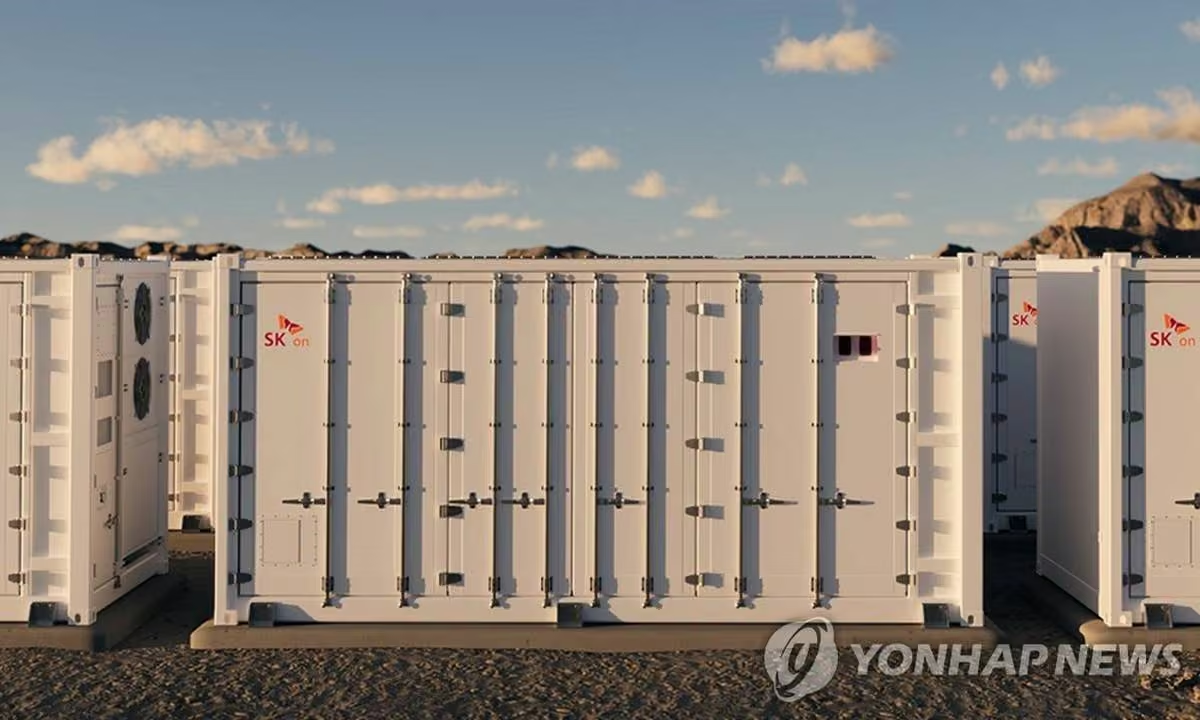
The battery industry is particularly hopeful that North American ESS projects, which have emerged as a new growth driver, will gain significant momentum. ESS are facilities that store surplus electricity for use during peak demand, playing a critical role in mitigating the intermittency of renewable energy sources and ensuring stable grid operations.

The three major Korean battery manufacturers, LG Energy Solution, Samsung SDI, and SK On, are expected to benefit from the shifting political landscape as they have already expanded their energy storage system (ESS) production capacity in the United States, a strategic market. According to market research firm SNE Research, the North American ESS market share held by Korean battery companies reached approximately 21% in the first three quarters of this year, more than doubling the 13% recorded in the same period last year.
The Democratic Party’s alignment with the Republican stance on strengthening the non-Chinese battery supply chain in the United States is viewed as a positive development for domestic battery firms that have been accelerating efforts to diversify raw material sources away from China. Recently, the three major battery companies entered into medium- to long-term supply cooperation agreements with domestic cathode material producers Posco Future M and L&F, which manufacture lithium iron phosphate (LFP) cathodes, a key component in ESS batteries, further expanding their non-Chinese supply chains.
In a research report, Yuna Yoon, an analyst at Yuanta Securities, stated, "The secondary battery sector has emerged from policy uncertainties, such as the early reduction of tax credits, following the U.S. midterm elections." She added, "When factoring in the maximum 48.4% tariff on Chinese-made batteries and associated subsidies, cells produced locally in North America hold a cost advantage of over 40% compared to direct imports from China, suggesting that Korean companies could dominate the market by 2029."
Domestic solar energy companies are also expected to gain momentum as support policies under the Democratic-led administration are strengthened. Hanwha Solutions’ Q-Cells division (Hanwha Q-Cells) and OCI Holdings are cited as primary beneficiaries, given their established production facilities and non-Chinese supply chains within the United States.
Hanwha Q-Cells has been manufacturing solar cell products at its integrated solar production hub, the Solar Hub, in Georgia, U.S., since July, following the production of solar power materials and components. Meanwhile, OCI Holdings is expanding its solar power generation projects in the U.S. while building a non-Chinese supply chain for polysilicon, a raw material for solar panels, through its subsidiary in Malaysia.

Analysts suggest that whether the Democratic surge in the recent midterm elections will translate into tangible benefits for the industry hinges on the ability of Democratic-led legislation to overcome executive branch opposition. Although the party secured a majority, it did not achieve the two-thirds supermajority in both chambers required to override a presidential veto.
An industry official noted that the likelihood of abrupt shifts in U.S. green energy laws and policies remains limited. However, given the clear voter backlash against the Trump administration evident in the election results, there is an expectation that the Democratic Party could negotiate with the executive branch to bring about gradual policy adjustments.
Concerns have also emerged that if the Democratic Party tightens regulations on data center construction and power consumption, it could dampen the demand for green energy investments from major technology firms. Counterarguments suggest that such regulations would not halt construction but rather strengthen requirements for operators to secure their own power and infrastructure, thereby mitigating potential negative impacts.
Another industry source stated that bipartisan discussions are underway in the U.S. Congress regarding legislation that would require data center operators to directly bear a portion of power infrastructure and environmental costs. The official added that the introduction of such regulations could actually expand demand for related equipment, while overall renewable energy demand is expected to continue its upward trajectory.
Pvola take
Developers and investors should anticipate a more stable regulatory backdrop for U.S. projects, as the shift in congressional control reduces the risk of abrupt policy reversals. The emergence of data center cost-sharing legislation creates a new demand driver for storage and grid equipment, offering a distinct growth avenue beyond traditional utility-scale solar. This legislative momentum suggests that long-term contracts with non-Chinese suppliers will become increasingly critical for maintaining supply chain resilience and project viability.
Frequently asked questions
How will the U.S. midterm election results impact South Korea's battery and solar industries?
The expected Democratic majority in Congress is predicted to create a favorable business environment for South Korean clean energy firms. This political shift may lead to the reinstatement of green initiatives and increased investment in energy storage and solar power sectors.
What supply chain agreements have South Korean battery companies signed with domestic cathode producers?
Major South Korean battery companies have entered medium- to long-term supply agreements with domestic producers like Posco Future M and L&F. These deals focus on lithium iron phosphate cathodes, aiming to expand non-Chinese supply chains for energy storage systems.
How might new U.S. data center regulations affect renewable energy equipment demand?
Bipartisan discussions are underway regarding legislation requiring data centers to bear part of power infrastructure costs. Analysts suggest that such regulations could actually expand demand for related renewable energy equipment and support the upward trajectory of clean energy adoption.