Wildfires Threaten Solar Power Stations in Australia (Report)
Key facts
- Smoke from Australian bushfires can reduce solar power output in areas up to 150 kilometers from the fire source
- UNSW researchers recommend increasing the frequency of solar panel inspections and cleaning to mitigate smoke contamination effects
- The study analyzed data from the 2019-2020 Black Summer fires and the 2009 Black Saturday fires in Victoria
- Developers are advised to examine wildfire history and prevailing wind directions when evaluating new solar plant sites
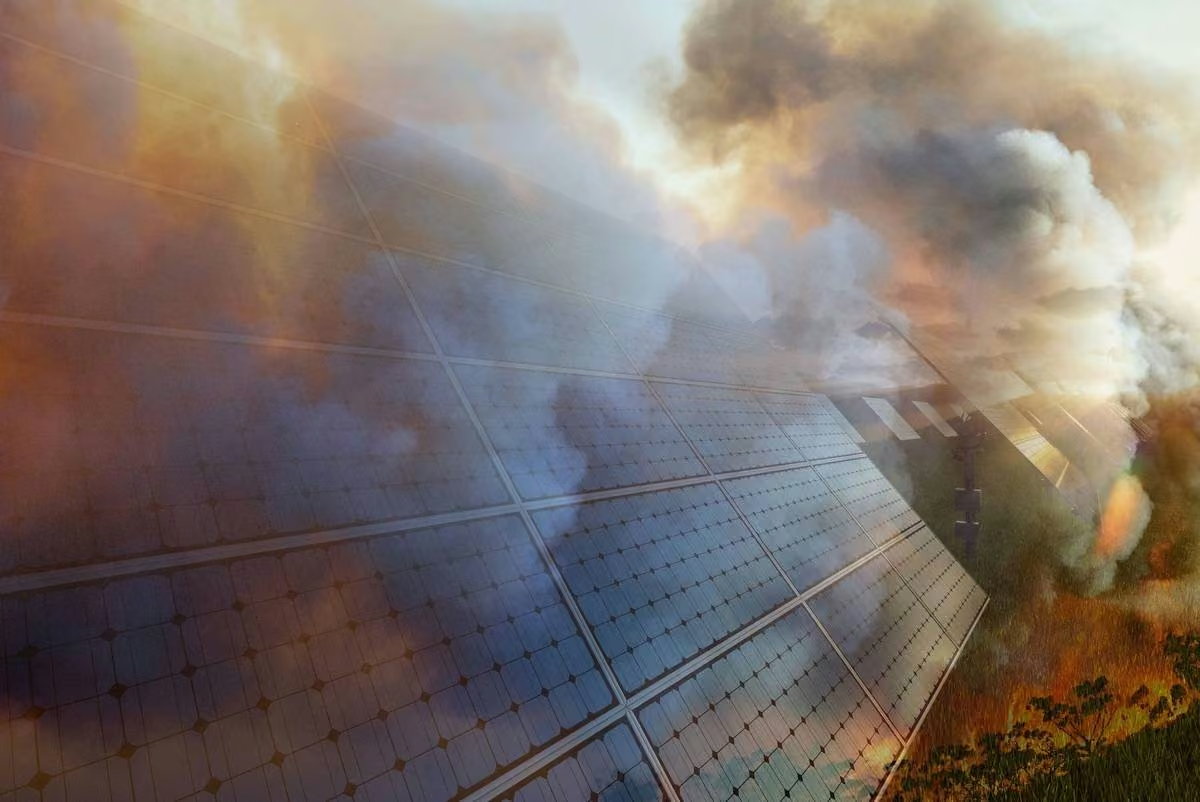
Operators of solar power plants in Australia are receiving warnings about the impact of bushfires, as smoke emissions from the blazes reduce electricity generation and contaminate solar panels.
The threat extends beyond the immediate danger of flames to include smoke from major fires, which can cause a sharp drop in power output at solar facilities even in areas up to 150 kilometers from the fire site, according to media reports reviewed by the Washington-based Al-Energy platform.
A recent study published this week by Australia’s University of New South Wales (UNSW) highlighted the need to improve smoke movement forecasting, increase the frequency of solar panel inspections and cleaning, and adjust operational protocols.
The research, which examined the effects of the 2019–2020 Black Summer fires and the 2009 Black Saturday fires in Victoria, argued that attention must be broadened to include areas farther from the immediate fire zone, taking into account the potential pathways of smoke dispersion.
Power generation is being affected
A University of New South Wales analysis leveraged historical weather data and satellite imagery to model how smoke and airborne particulates impact solar power generation across Australia, while also assessing panel temperatures in the country's southeast.
Consequently, the findings do not represent actual measurements from specific solar farms. Instead, they are estimates derived from simulation models, according to a report published by the Renew Economy platform.
Researcher estimates indicate that solar electricity output during the Black Summer fires, for instance, dropped by as much as 70% in areas within 50 kilometers of fire hotspots, and by approximately 40% in regions located more than 150 kilometers away.
Similarly, the Black Saturday fires in Victoria caused an 18% decline in solar power generation at facilities near the fire sites, with reductions ranging from 4% to 10% at solar installations situated more than 100 kilometers from the blaze locations, although the overall impact was less severe due to the relatively smaller scale of those fires.
The cause was not limited to smoke plumes and atmospheric haze, which significantly reduce incoming solar radiation and thereby constrain solar electricity production. It also included the accumulation of smoke particles on solar panels, a process that diminishes the amount of sunlight reaching the panel surfaces.
Smoke trail
Shokla Podar, a researcher at the University of New South Wales in Sydney, which houses the School of Photovoltaic and Renewable Energy Engineering, argues that further investigation is required into factors such as smoke trajectory models, the distances these particles can travel, and their atmospheric residence time.
She noted that severe bushfires have become more frequent and intense in various regions, including Australia, California, and southern Europe.
The impacts of these fires extend well beyond the immediate burn areas. For instance, smoke from the 2020 California wildfires reached Europe.
Similarly, smoke generated by the 2025 wildfires in Spain traveled to the United Kingdom and northwestern Europe.
Although this specific study focuses on two severe bushfire events in Australia, Podar stated that the same methodology and analytical framework can be applied to other parts of the world.
The research found that during the "Black Summer" fire season, solar panels would have operated at temperatures 10 to 20 degrees Celsius higher than the standard climatic average for such equipment, according to details reviewed by the specialized energy platform.
The phenomenon stems from the unusually high temperatures recorded during the 2019-2020 summer season, compounded by emissions from bushfires that deposit smoke particles onto solar panels. This accumulation creates localized hot spots on the panels, elevating their operating temperatures and potentially accelerating thermal degradation.
Forecasting feature
The research-based recommendations emphasize the need to integrate wildfire data, wind patterns, and smoke trajectory models to help predict which solar power farms are likely to be affected.
While weather forecasts assist Australian solar plant operators in anticipating conditions such as high temperatures and strong winds, a similar system for smoke could provide early warning that airborne particles are heading toward their facilities.
Shakla Podar, the report’s author, explains that if operators receive an alert that their solar plants may be impacted, they are likely to develop coordinated strategies, such as:
Adjusting the angle of solar panels can help reduce heat exposure and also assist in mitigating smoke particles that have accumulated on panel surfaces.
The research recommends improved remote monitoring and electrical fault detection to enable operators to identify abnormal temperature conditions more quickly and isolate damaged sections of the system with greater speed.
Dr. Podar and her colleagues believe their work could contribute to guiding decisions about the siting of future solar power plants.
For instance, developers could examine the wildfire history of nearby areas, analyze prevailing wind directions, and track potential smoke transport pathways when evaluating proposed sites.
The recommendations aid in understanding recurring wildfire hotspots and air movement patterns, forming part of a preliminary assessment of the feasibility for siting new solar power plants.
Pvola take
Solar developers in Australia must integrate wildfire smoke dispersion modeling into their site feasibility assessments to protect asset performance. Since smoke can travel over 150 kilometers and significantly reduce generation, ignoring these atmospheric pathways creates substantial operational risk. Operators should also budget for more frequent panel cleaning to maintain efficiency during high-smoke events.
Frequently asked questions
How does bushfire smoke impact solar power generation in Australia according to recent research?
Smoke emissions from bushfires can cause a sharp drop in power output at solar facilities. This impact extends to areas up to 150 kilometers from the fire site due to smoke dispersion.
What operational changes does the UNSW study recommend for solar plant operators facing wildfire risks?
The study recommends improving smoke movement forecasting and increasing the frequency of solar panel inspections and cleaning. Operators should also adjust operational protocols to account for potential smoke pathways.
How should solar developers assess wildfire risks when selecting sites for new power plants?
Developers should examine the wildfire history of nearby areas and analyze prevailing wind directions. Tracking potential smoke transport pathways is essential for a preliminary feasibility assessment of new sites.