Greece: Balcony Solar Panels: The Premiere Is Nearing - What Consumers Should Watch Out For
Key facts
- The Hellenic Distribution Network Operator platform for registering plug-in solar systems is expected to be operational by the end of the year
- The Hellenic Distribution Network Operator published technical specifications for plug-in solar systems just days ago, outlining installation prerequisites
- Plug-in solar units connect directly to standard household outlets, eliminating the need for complex electrical panel integration required by traditional systems
- Regulations require the presence of an appropriate residual current device, and older installations may need grounding inspections or socket replacements
- Consumers must select certified systems carrying the CE mark and providing detailed assembly and usage instructions in Greek to ensure safe operation
The rollout of plug-in solar systems is entering its final phase, with the Hellenic Distribution Network Operator (ΔΕΔΔΗΕ) platform for registering these installations expected to be operational by the end of the year.
This represents the last remaining step to activate this new self-generation capability, which targets households that lack the space for conventional solar installations or the necessary capital. The preceding step was completed just days ago when the ΔΕΔΔΗΕ published the technical specifications for these systems, outlining the prerequisites for their installation and safe operation.
The defining feature of plug-in solar units is their ability to connect directly to a standard household outlet, eliminating the need for the complex electrical panel integration required by traditional solar systems. This design allows consumers to generate a portion of their own electricity, thereby reducing the volume of power they draw from the grid.
However, the ease of use does not mean that installation can proceed without prerequisites. The specific technical specifications published by the Distribution System Operator of the Hellenic Power System (DSO HPS) in October outline distinct requirements for the equipment, electrical safety, and the structural support of the photovoltaic frames.
How they work and how much electricity they can generate
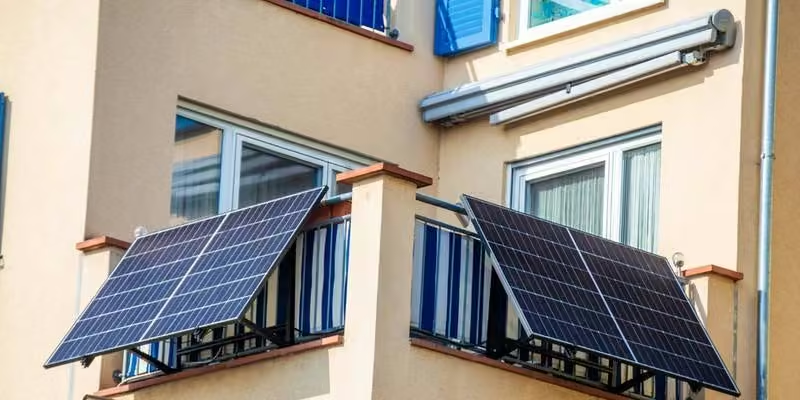
Balcony solar systems comprise one or more photovoltaic panels, a micro-inverter, the necessary cabling, and a mounting base. The micro-inverter converts the direct current generated by the panels into alternating current, enabling the electricity to be utilized by the home’s electrical infrastructure.
Under the applicable specifications, the total installed capacity of the photovoltaic frames must not exceed 1,000 watts, while the maximum output of the micro-inverter is capped at 800 watts. The use of a larger inverter is prohibited, even if its operation is electronically limited to 800 watts.
Each electrical supply line may host only one such system. Consequently, installing multiple independent micro-solar systems on the same supply is not permitted, regardless of whether they are connected to different outlets.
Panels may be installed on balconies, facades, walls, pergolas, or rooftops, provided that safe mounting requirements are met. The regulations also allow for the relocation of the system to a different position or even to another building, with the responsibility for ensuring a safe installation remaining with the parties involved.
The rules
A fundamental prerequisite is the presence of a suitable electrical installation and a Schuko-type socket. The Public Power Distribution and Trading Company (DDIE) explicitly prohibits connections via power strips or extension cords, as the system must be plugged directly into a fixed outlet.
Particular attention must also be paid to electric shock protection devices. Regulations require the presence of an appropriate residual current device, and depending on the existing equipment, replacement may be necessary. Similarly, in older electrical installations, an inspection of the grounding or replacement of the socket may be required.
Inspections and related interventions must be carried out by a licensed electrician. If modifications are made to the electrical panel or if interventions affect electrical safety, the issuance and submission of a new Installer’s Declaration of Responsibility (YDE) is required.
A significant restriction also applies to newer electrical installations. As highlighted by the Distribution System Operator, the current EL 60364 standard does not yet permit this specific connection in installations that fall under its scope. The amendment to the standard was put out for public consultation on October 30, meaning it remains an outstanding issue that needs to be resolved.
Battery integration
Technical specifications allow the integration of balcony solar systems with electrical energy storage units. The battery component is optional, and its capacity can be tailored to individual user requirements, provided that all equipment meets established safety standards.
Incorporating a battery enables the storage of a portion of the electricity generated during daylight hours for later use. This is particularly useful during periods of low household consumption or when solar irradiance is absent, thereby increasing the overall share of solar energy utilized by the household.
However, the presence of a battery does not transform the system into a backup power source for outages. Regulations explicitly prohibit the storage system from supplying power to the electrical installation if the voltage in the connected circuit has been interrupted.
How the electricity bill is reduced
The financial benefit of balcony solar systems stems from the direct consumption of the electricity they generate. For instance, when the system produces power during daylight hours, it can offset a portion of the energy demand from appliances operating at that moment.
Conversely, any surplus energy fed into the grid is neither compensated nor netted against the household’s overall electricity consumption. Consequently, the extent of savings depends on how well the timing of generation aligns with the home’s actual energy needs.
This is why factors such as the installation location, panel orientation, and the presence or absence of a battery storage system can significantly impact the economic outcome.
Finally, secure mounting of the panels is critical to ensure they withstand strong winds and other adverse weather conditions. The Distribution System Operator of the Northern Interconnection (ΔΕΔΔΗΕ) prohibits makeshift support solutions using ropes, cable ties, or adhesive tape, and mandates specific requirements for equipment durability and certification.
Regardless of the specific setup, consumers should opt for certified systems that carry the CE mark and come with detailed assembly and usage instructions in Greek. Adhering to these specifications is a fundamental prerequisite to ensure that the new self-generation capability operates safely alongside the existing electrical infrastructure.
Pvola take
The imminent launch of the registration platform signals a critical shift toward decentralized, low-barrier solar adoption for residential consumers. Developers and installers should prepare for a surge in demand for certified plug-in units, as the removal of complex panel integration lowers entry barriers. However, the requirement for licensed electricians to verify residual current devices and grounding means that service providers must integrate rigorous safety checks into their workflows to maintain grid stability and compliance.
Frequently asked questions
When will the Hellenic Distribution Network Operator platform for registering plug-in solar systems become operational?
The platform is expected to be operational by the end of the year. This final step activates the self-generation capability for households that lack space or capital for conventional solar installations.
What technical specifications did the DSO HPS publish for plug-in solar systems in October?
The specifications outline prerequisites for installation and safe operation, including the need for appropriate residual current devices. Older electrical installations may require inspection of grounding or socket replacement by a licensed electrician.
What certification requirements must consumers meet when purchasing plug-in solar systems in Greece?
Consumers must choose certified systems that carry the CE mark and include detailed assembly instructions in Greek. Adhering to these specifications is a fundamental prerequisite to ensure safe operation alongside existing electrical infrastructure.