Bifacial Solar Cuts Diesel Emissions for Antarctic Research Stations
The short answer
A 5 kW bifacial solar plant on King George Island now powers a climate monitoring station, preventing up to 10 tons of annual greenhouse gas emissions. This deployment demonstrates how bifacial technology leverages snow reflection to reduce diesel reliance in remote, high-latitude environments.
Key facts
- Application
- Bifacial solar power for climate monitoring station
- Scale
- 5 kW system with 16 bifacial panels
- Performance metric
- Prevents up to 10 tons of annual emissions
- Segment
- Remote scientific research infrastructure
- Location
- King George Island, Antarctica
Two kilometers of walkways anchored to trees: This is the new "thermal forest" near Puyehue National Park
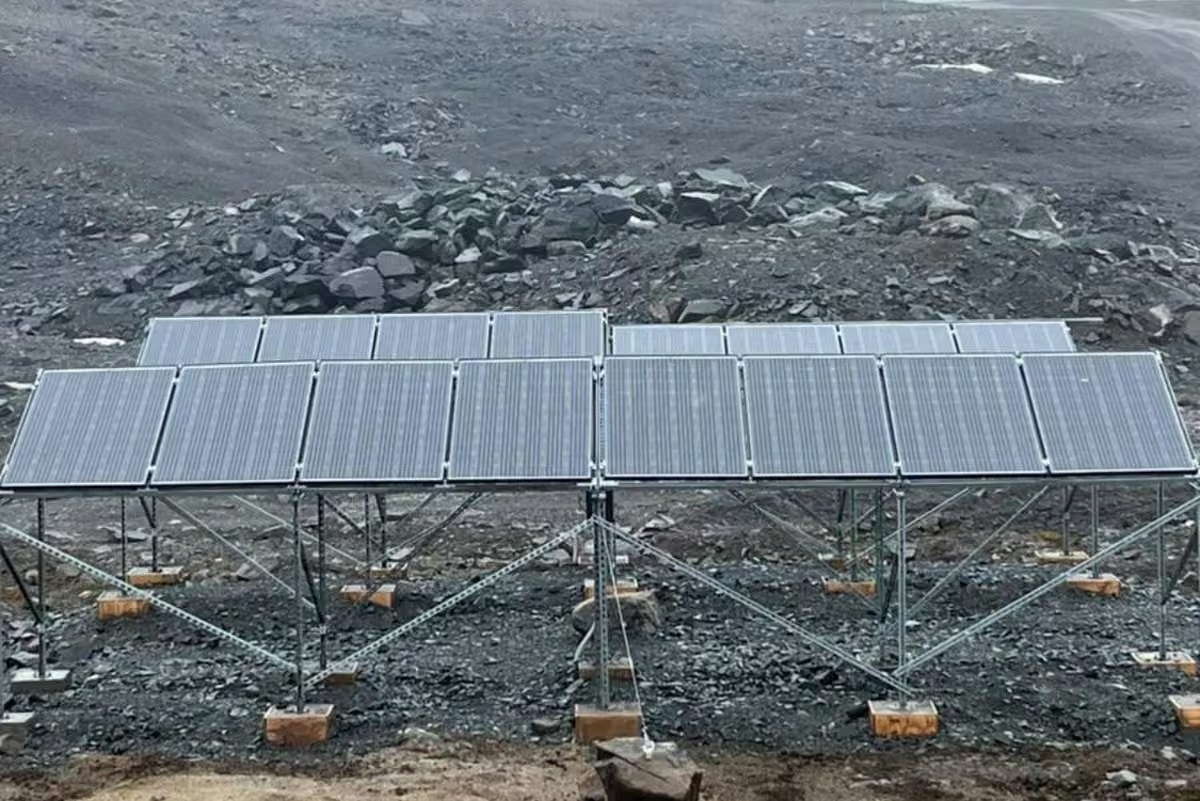
Located adjacent to the Professor Julio Escudero base on King George Island, the facility is the first bifacial solar panel plant on the Antarctic continent, according to the project documentation. It powers a climate monitoring station operated by the University of Santiago (Usach) and could prevent up to 10 tons of emissions annually by reducing diesel consumption.
In Antarctica, a significant portion of electricity is still generated by diesel engines. To decrease this reliance, a Chilean team installed a 5 kW solar plant next to the Professor Julio Escudero scientific base on King George Island. The system supplies power to the TARP station, which is dedicated to climate monitoring.
The project describes the installation as the first bifacial solar panel plant deployed on the Antarctic continent.
The station is part of a research project led by Raúl Cordero from the University of Santiago (Usach). The installation was carried out during the most recent summer season with support from staff at the Chilean Antarctic Institute (INACH), under the leadership of then-base chief David Domenech.
Domenech explained that 16 bifacial solar panels were installed approximately 25 meters from the base. This setup enables the TARP station to operate autonomously, independent of conventional power sources, while also generating surplus energy that could potentially be fed into the grid in the future.
Panels that leverage snow
Unlike conventional solar panels, bifacial modules feature a transparent rear surface. This design allows them to capture solar radiation reflected off the ground, a characteristic that proves particularly advantageous in snow-covered environments.
“It is a technology highly suited to this territory,” Cordero stated.
The facility also incorporates a bank of deep-cycle lithium batteries with an average operational duration of 13 hours. These batteries sustain operations during nighttime hours and recharge using daylight energy.
Reduced diesel use, lower black carbon emissions
Cordero noted that by reducing the reliance on diesel generators, which currently produce electricity in Antarctica, the new solar plant is estimated to prevent the emission of up to 10 tons of greenhouse gases annually.
The environmental advantages extend beyond carbon dioxide. “The facility will also help reduce black carbon emissions. This pollutant, a byproduct of diesel use, accelerates snowmelt when it settles on the surface,” the source added.
Civil works, structural assembly, equipment installation, grid connection, and commissioning were carried out jointly by the logistical staff of the Escudero base and the researchers involved in the project.
Sustainable Daily Subscription
Receive a dose of sustainability directly in your inbox. This is not just any newsletter; it features compelling stories, sustainable innovations, and voices of change that are redefining what it means to be sustainable in Chile and beyond.
Pvola take
This installation validates bifacial modules for high-latitude, snow-covered sites where albedo significantly boosts yield. By decoupling remote stations from diesel, the project reduces black carbon pollution that accelerates local snowmelt, offering a replicable model for off-grid scientific deployments.
Frequently asked questions
What is the significance of the new solar plant installed at the Professor Julio Escudero base in Antarctica?
It is the first bifacial solar panel plant deployed on the Antarctic continent. The facility powers a climate monitoring station operated by the University of Santiago.
How does the bifacial design of the solar panels benefit the installation in the Antarctic environment?
The transparent rear surface allows the panels to capture solar radiation reflected off the snow-covered ground. This design is described as highly suited to the specific territory.
What is the potential environmental impact of the 5 kW solar plant at the Chilean Antarctic base?
The system could prevent up to 10 tons of emissions annually by reducing diesel consumption. It supplies power to the TARP station dedicated to climate monitoring.