Yerga Solar III Secures Approval for 4 MW BESS in A Coruna
The short answer
The Galician regional government has approved the environmental impact assessment for the 4 MW Raposeiras BESS, developed by Yerga Solar III. This clearance allows the project to proceed with civil works, adding to a pipeline of ten storage projects currently under review in A Coruna province.
Key facts
- Capacity
- 4 MW
- Offtaker or owner
- Yerga Solar III
- Location
- Ordes, A Coruna, Spain
- COD or milestone
- Environmental clearance granted
Energy storage initiatives continue to gain momentum in the A Coruña region. The Galician regional government has granted environmental clearance for the BESS Raposeiras battery storage facility and its associated evacuation infrastructure, which will be developed across the municipalities of Carral, Cerceda, and Ordes. The project will feature an installed capacity of 4 megawatts, with an evacuation line operating at 20 kilowatts. This line will run through private underground land in Carral before connecting to the Meirama electrical substation in Cerceda.
The initiative is being promoted by Yerga Solar III in collaboration with the Directorate General for Energy Planning and Mining, under the Ministry of Economy and Industry. The battery system will be located in Ordes, specifically within the Ardemil parish. The installation will consist of six containers housing 48 battery modules arranged in eight parallel racks. The equipment will occupy a fenced plot with a total area of 2,661 square meters.
The underground connection line will traverse 11 plots of land and extend for 1,474 meters. According to the environmental impact assessment, the installation of specific components, including a cooling system and fire detection and suppression equipment, is required to ensure the safety and operational performance of the battery system.
The civil works necessary for the construction project involve several phases, starting with the preparation of access routes via the DP-2405 regional road and the clearing of the site. The scope of work also includes the installation of a stormwater drainage system that will connect to the existing sanitation infrastructure in the Monte Piñeiro area. These operations are completed by the foundation work for the battery zone, the construction of a perimeter fence, and the installation of infrastructure and conduits for the underground line conductors.
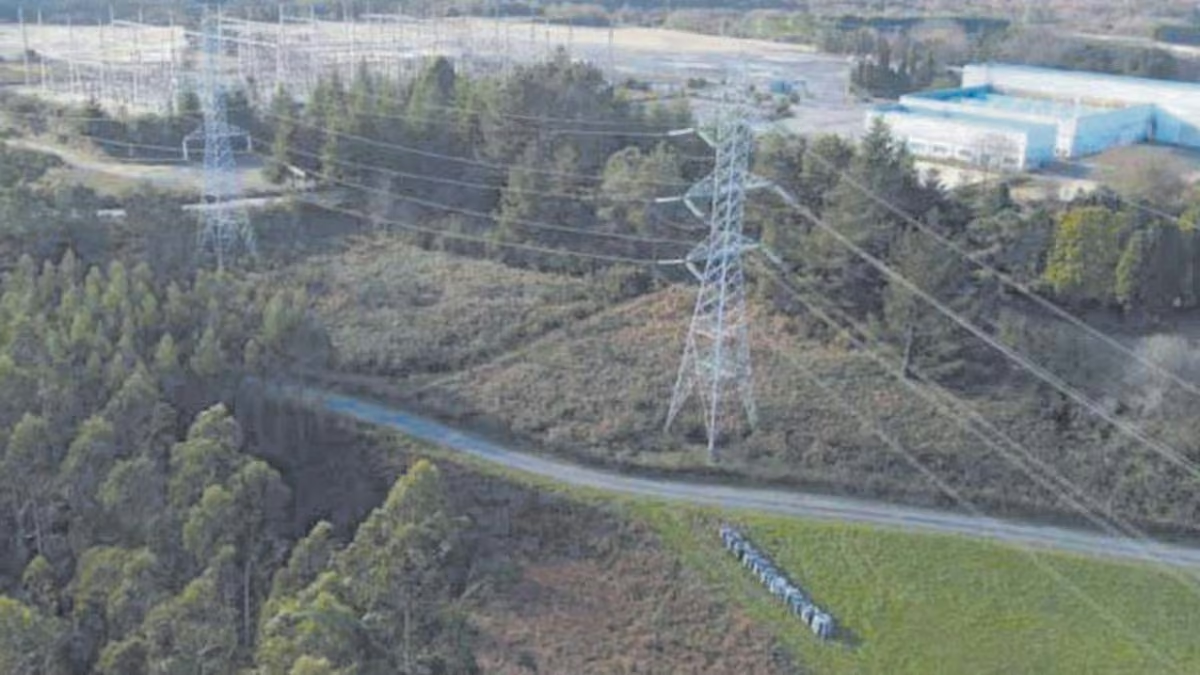
The initiative received approval from more than a dozen regional bodies, which concluded that it will not have significant impacts on areas such as atmospheric protection, population, health, local water resources, soil, or natural heritage. The facilities are situated near the former materials depot of the Meirama thermal power plant, in an area characterized by a dispersed population living in scattered hamlets and small settlements.
The environmental report also notes that, considering the simultaneous construction of the wind farms and the currently planned Quieroal solar photovoltaic plant, the combined impact of these projects on noise pollution will be low.
The regional government warned that the developers remain obligated to secure all authorizations, licenses, permits, or reports required by legislation to proceed with the project.
Energy boom after the blackout
The surge in renewable energy has driven a rise in the popularity of battery storage systems, with up to ten such projects currently undergoing approval in the A Coruña province. These facilities capture surplus electricity generated during production peaks—such as sunny days or windy nights when solar panels and wind turbines generate more power than is consumed—and feed it back into the grid when demand increases.
Beyond the BESS Raposeiras, the regional government is also processing the environmental documentation for two additional battery systems proposed by Tiaga in the municipality of Oleiros, near the San Marcos electrical substation. The BESS Alfaroleiros is designed for a capacity of 3.20 megawatts, while the BESS Betanzos is projected at approximately 5.5 megawatts.
Pvola take
The approval of Raposeiras signals that regional authorities are actively clearing the path for grid-scale storage to support renewable integration. With ten similar projects in the pipeline, A Coruna is becoming a significant hub for battery deployment, though developers must still secure individual operational licenses.
Frequently asked questions
What environmental clearance was granted for the Raposeiras BESS project in the A Coruña region?
The Galician regional government granted environmental clearance for the Raposeiras BESS facility and its evacuation infrastructure. This approval covers the development across the municipalities of Carral, Cerceda, and Ordes.
What are the technical specifications of the Raposeiras BESS battery storage facility in Ordes?
The facility has an installed capacity of 4 megawatts and features a 20 kilowatt evacuation line. The battery system consists of six containers housing 48 battery modules arranged in eight parallel racks.
How does the environmental approval for the Raposeiras BESS project impact local infrastructure in Carral and Cerceda?
The approval permits the installation of an underground connection line traversing 11 plots of land in Carral. This line extends for 1,474 meters before connecting to the Meirama electrical substation in Cerceda.