Matrix Renewables Develops 2 GWh BESS in Scotland
The short answer
The UK National Wealth Fund is partnering with Matrix Renewables to develop two 1 GWh battery storage facilities in Scotland. These projects will add 2 GWh of capacity to the grid, supporting renewable integration and creating over 200 jobs.
Key facts
- Capacity
- 1,000 MW total across two 500 MW sites
- Energy
- 2,000 MWh total storage capacity
- Duration
- 2 hours per site
- COD or milestone
- Eccles operational October 2027; Kilmarnock September 2028
- Offtaker or owner
- Matrix Renewables retains majority ownership
- Location
- Eccles and Kilmarnock, Scotland
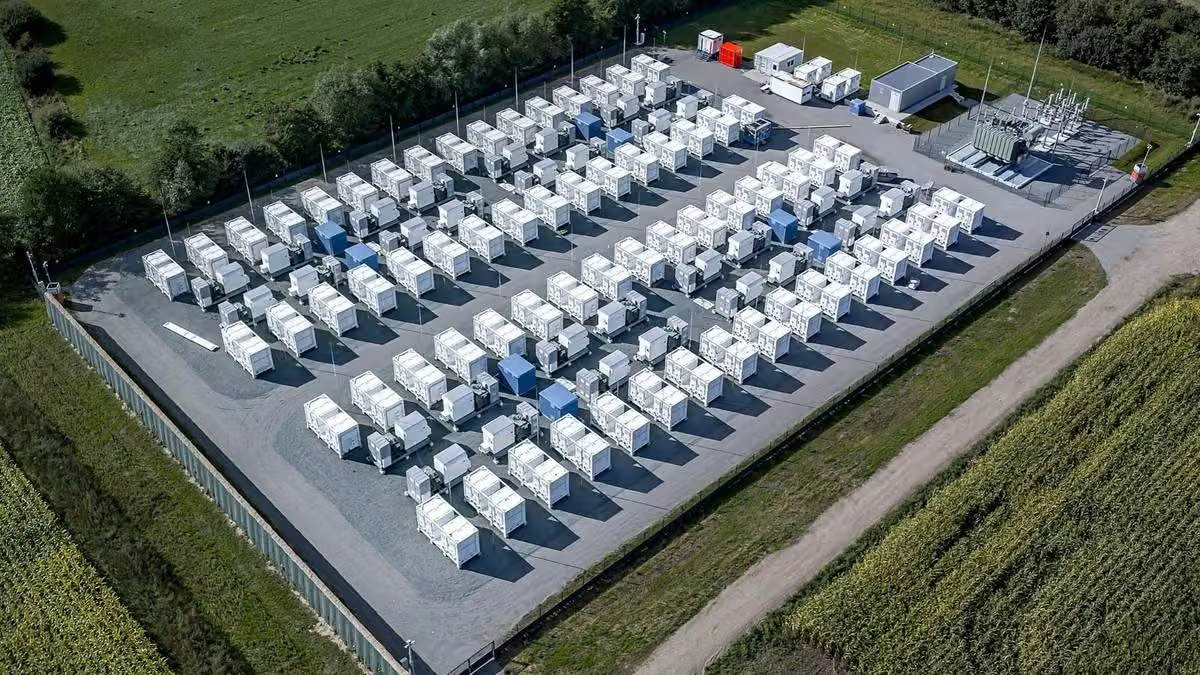
The United Kingdom's National Wealth Fund will partner with Matrix Renewables to develop two energy storage facilities in Scotland. Situated in Eccles and Kilmarnock, the projects will deliver a combined output of 1 GW and a storage capacity of 2 GWh. The joint investment aims to reinforce Britain's electrical infrastructure and ease the integration of renewable energy into the grid. Furthermore, the facilities are expected to create or support more than 200 jobs during their construction and operational phases.
National Wealth Fund backs 1 GW BESS facilities
The Eccles and Kilmarnock projects will feature identical specifications, with each site providing 500 MW of power and 1 GWh of storage. This configuration will result in a total capacity of 1,000 MW and 2,000 MWh. Matrix Renewables will retain majority ownership of both assets, while the National Wealth Fund will provide capital to underpin their development and execution.
The siting of the facilities also reflects strategic considerations, as both will be located near major electricity transmission corridors linking Scotland and England. This positioning will enable the injection of flexibility into the grid and assist in managing network constraints.
Energy storage to integrate more renewables
The development of battery energy storage systems (BESS) addresses one of the central challenges of the energy transition: managing the variability of renewable generation. Wind and solar output depends on weather conditions, meaning production does not always align with periods of peak electricity demand.
In this context, batteries allow surplus electricity to be stored and dispatched when demand rises or generation falls. They also help optimize the use of transmission infrastructure and mitigate limitations associated with energy availability.
Oliver Holbourn, chief executive of the National Wealth Fund, emphasized the critical role of battery storage in developing a cleaner, safer, and more flexible energy system. He noted that the investment will enable the storage of greater volumes of renewable energy, strengthen the electrical interconnection between Scotland and England, and support hundreds of jobs.
Once fully operational, the Eccles and Kilmarnock facilities will possess sufficient storage capacity to cover annual consumption equivalent to that of approximately 520,000 households.
Eccles to begin operations in 2027, Kilmarnock in 2028
The two facilities are progressing on distinct execution timelines. Construction at Eccles is already underway, with commercial operations expected to commence in October 2027. Meanwhile, construction at Kilmarnock will begin in December 2026, with a targeted operational start date of September 2028. Beyond expanding the nation’s electrical storage capacity, both projects are set to impact employment. During the construction and operational phases, the initiatives are projected to create or support more than 200 jobs.
Matrix Renewables expands UK energy storage strategy
For Matrix Renewables, the development of the Eccles and Kilmarnock sites marks its entry into the British market. The company believes the United Kingdom offers favorable conditions for advancing large-scale energy storage projects. Luis Sabaté, CEO of Matrix Renewables, stated that the firm is considering new multi-gigawatt investments in storage and flexible generation. This strategy is part of its plans to diversify its portfolio and expand its presence in the power sector.
The National Wealth Fund, in turn, aims to leverage its stake to support new storage infrastructure and mobilize private capital toward strategic projects for the British energy system. The joint investment in Eccles and Kilmarnock represents a new step forward in the development of large-scale storage systems in the United Kingdom. Once operational, the facilities will add 2 GWh of energy capacity and help improve grid flexibility, a requirement for integrating a higher share of renewable electricity.
Source: Power Technology
Photo: Shutterstock
I am a mechanical engineer and a specialist writer covering technology, engineering and industrial development, with a focus on the breakthroughs reshaping these fields. My goal is to turn complex technical information into clear, rigorous and relevant journalism.
Pvola take
This partnership signals a shift toward sovereign capital backing large-scale storage in the UK. By securing National Wealth Fund involvement, Matrix Renewables de-risks execution for a 2 GWh project, setting a precedent for state-backed infrastructure investment in the sector.
Frequently asked questions
What is the total capacity of the battery storage projects backed by the National Wealth Fund in Scotland?
The combined output of the two projects is 1 GW with a storage capacity of 2 GWh. Each site in Eccles and Kilmarnock will provide 500 MW of power and 1 GWh of storage.
How will the location of the Eccles and Kilmarnock battery projects benefit the UK grid?
The facilities are located near major electricity transmission corridors linking Scotland and England. This positioning enables the injection of flexibility into the grid to assist with renewable energy integration.
What is the ownership structure for the new battery storage assets in Scotland?
Matrix Renewables will retain majority ownership of both assets. The National Wealth Fund will provide capital to underpin the development and execution of the projects.