How Rooftop Solar Cuts Grid Costs for Vietnamese Manufacturers
The short answer
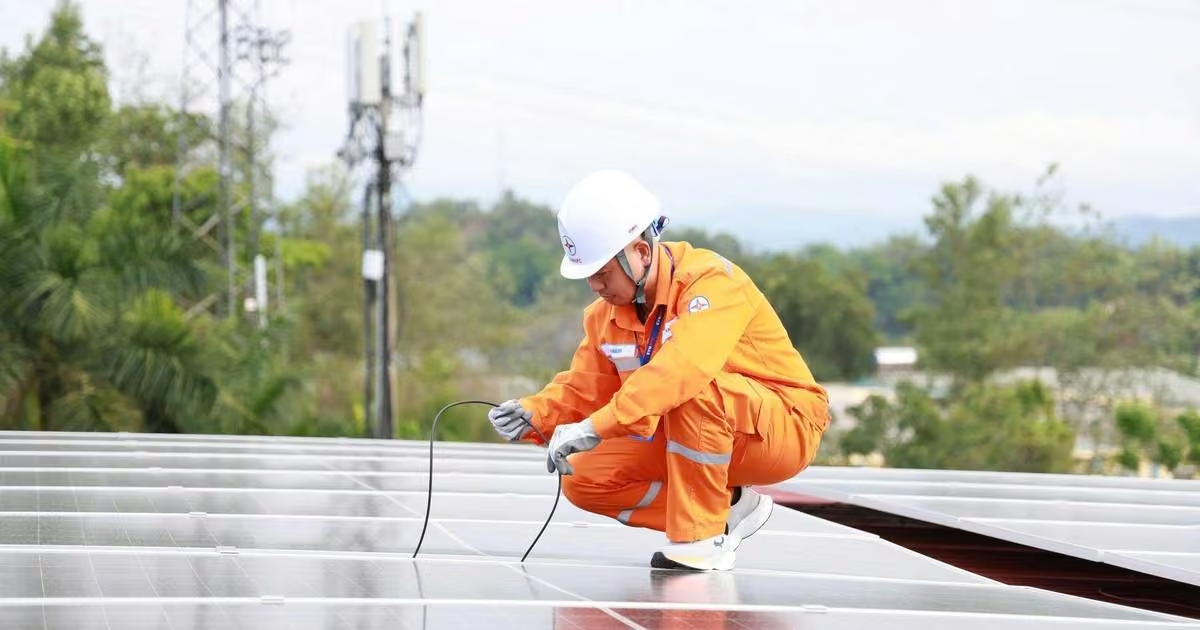
EVNNPC recorded 18,609 new rooftop solar customers adding 812.9 MW in northern Vietnam over ten months, exceeding 2026 targets by 183%. This rapid deployment offers manufacturers a fast path to reduce grid dependence and cut operational costs.
Key facts
- Application
- Rooftop solar for self-consumption
- Scale
- 812.9 MW added in 10 months
- Performance metric
- 20-40% reduction in monthly electricity bills
- Segment
- Manufacturing facilities in Bac Ninh and Hai Phong
- Economics
- Investment recouped within three to five years
- Location
- Northern Vietnam, including Bac Ninh, Hung Yen, Thanh Hoa
Businesses save billions through rooftop solar
Rooftop solar installations are surging across northern Vietnam. According to the Northern Electricity Corporation (EVNNPC), the first 10 months of this year saw 18,609 customers in its service area adopt self-consumption rooftop solar systems, adding a combined capacity of 812.9 MW. This performance exceeded the 2026 targets by 183% in customer count and 120% in installed capacity.
Prior to 2026, the total rooftop solar capacity in the north stood at just over 330 MW.
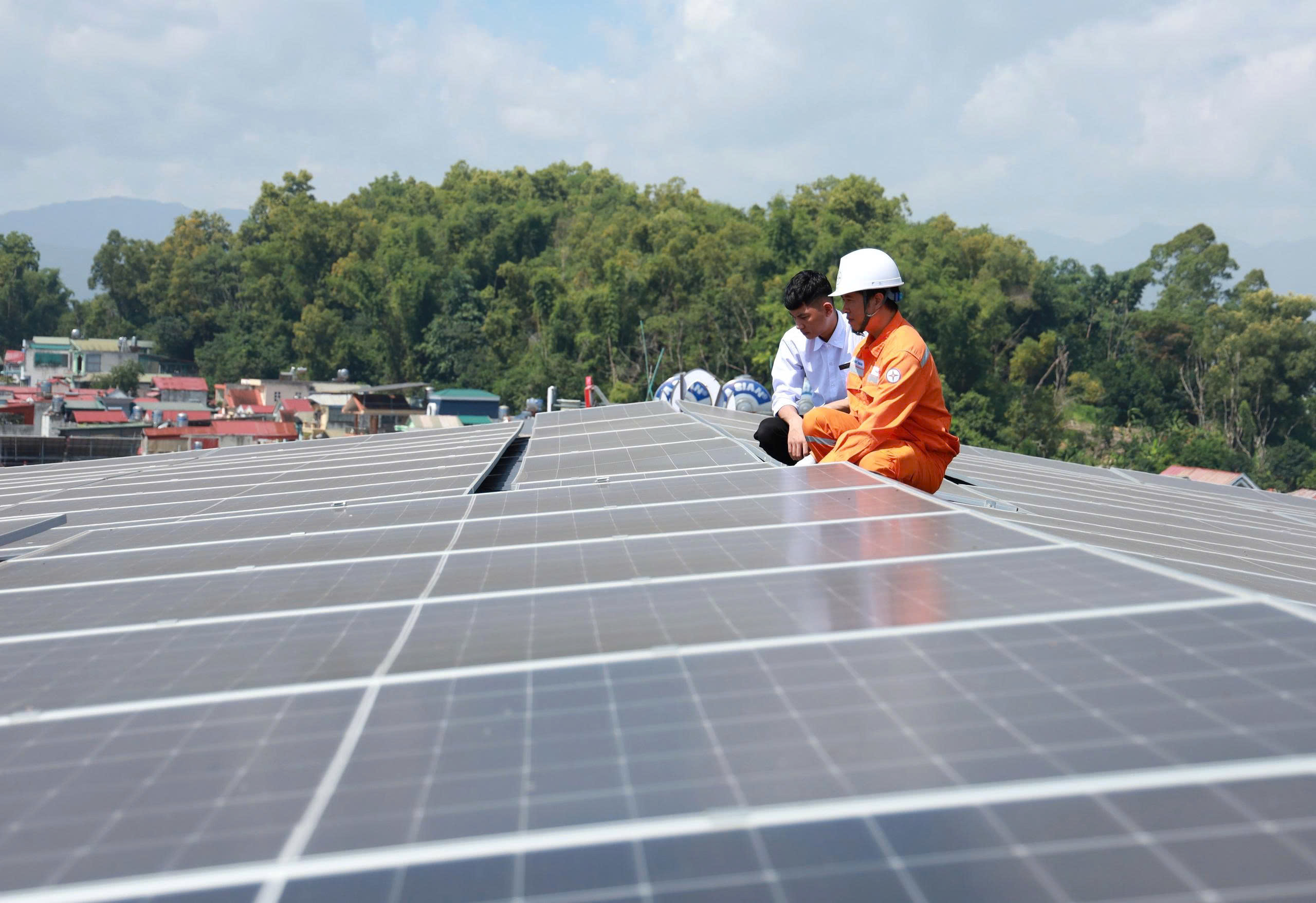
Local authorities in Bac Ninh, Hung Yen, Thanh Hoa and Lai Chau have proactively implemented measures to accelerate the deployment of rooftop solar systems. These initiatives include setting specific performance targets, researching green credit policies, simplifying administrative procedures, and applying a "green channel" mechanism to prioritize the processing of applications. Additionally, localities are encouraging the installation of energy storage systems. Tran Van Binh, director of Vinphat Power Co., Ltd., noted that the El Nino phenomenon has kept temperatures high in the northern region through November, sustaining robust demand for consultation and installation of rooftop solar systems in the final months of the year.
Drawing on practical experience from completed projects, Binh highlighted that the most significant reduction in electricity bills is observed among users with high daytime power consumption. For instance, in urban areas such as Hanoi, a townhouse housing four to five people, operating two to three air conditioning units, an electric stove, fans, and lighting, typically incurs electricity costs of 3 to 4 million dong per month during the summer. After installing a rooftop solar system with a capacity of 5 to 6 kWp, the monthly electricity bill during hot months drops sharply to 1 to 1.5 million dong. On an annual average, electricity expenses decrease by 40 to 70%, a benefit that is particularly pronounced for households with elderly members, young children, or individuals working from home during the day.
Manufacturing facilities in Bac Ninh and Hai Phong, such as garment and mechanical workshops, operate their machinery primarily during day shifts, allowing them to consume nearly the entire output of their rooftop solar systems. This alignment has reduced monthly electricity bills by 20% to 40%, enabling businesses to recoup their initial investment within three to five years while continuing to generate economic benefits throughout the system’s operational life.
Bui Quoc Giang, head of the technical department at Van Diem Paper Joint Stock Company in Phu Xuyen, Hanoi, stated that the company’s 2026 investment in a 990 kWp rooftop solar installation effectively addresses its energy cost challenges.
From April through October, the company’s grid electricity consumption dropped to 5.83 million kWh, equivalent to 12.14 billion dong, a sharp decline from 6.53 million kWh, or approximately 13.36 billion dong, during the same period in 2025.
“Six months after installing the rooftop solar system, the company reduced its grid electricity usage by nearly 1 million kWh, saving over 1.2 billion dong on electricity bills,” Giang said.
Monthly bills of 1.5 million dong warrant rooftop solar installation
Amidst challenging forecasts for the 2027 electricity supply, the expansion of rooftop solar power has emerged as the most rapid method for augmenting the grid, drawing concentrated efforts from numerous local authorities. A rooftop solar installation can be deployed and operational within a matter of weeks, whereas other base-load power sources require years of investment to become functional.
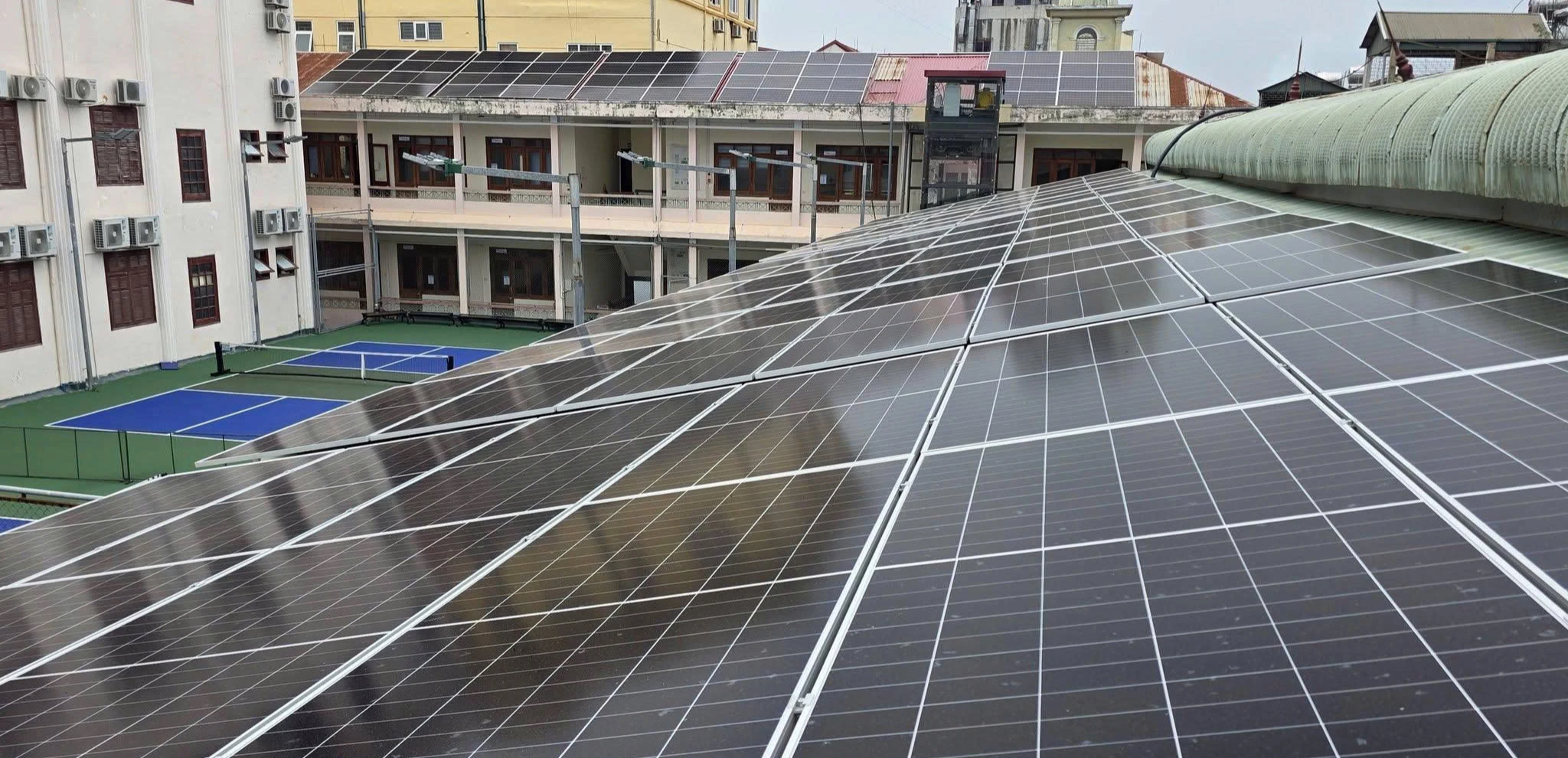
Hanoi Electric Power Corporation (EVNHANOI) projects that commercial electricity output for 2026 will reach approximately 30 billion kWh, representing an increase of over 11%. The utility anticipates continued double-digit growth in the coming years, posing significant challenges to energy security. In response, EVNHANOI and the Hanoi Department of Industry and Trade have launched the "Roofs Embrace the Sun – Turning Sunlight into Electricity" campaign to promote the development of self-consumption rooftop solar photovoltaic systems across the capital.
Tran Duc Hai, Director of the Hanoi Department of Industry and Trade, stated that the Hanoi People's Council has approved a policy to support individual households in installing self-consumption rooftop solar photovoltaic systems. Under this policy, eligible households can receive a maximum subsidy of 3 million dong for the solar photovoltaic component and an additional maximum of 3 million dong if they install a synchronized energy storage system, bringing the total maximum support to 6 million dong.
Nguyen Anh Tuan, General Director of EVNHANOI, emphasized that the "Roofs Embrace the Sun – Turning Sunlight into Electricity" campaign aims to significantly increase the number of rooftops generating clean electricity. EVNHANOI advised that households should carefully assess their actual electricity consumption needs, verify the structural load-bearing capacity of their roofs, and select qualified construction contractors to ensure long-term investment efficiency before proceeding with installations.
Tran Van Binh, in further analysis, identified households with monthly electricity bills ranging from 1.5 to 2 million VND (equivalent to 600 to 800 kWh per month) as the ideal threshold for investing in rooftop solar power systems, noting an average payback period of four to six years. To minimize initial investment costs, Binh advised residents to install capacity that precisely matches their self-consumption needs rather than excess capacity intended for resale, as the feed-in tariff for surplus electricity is lower than the retail rate for domestic consumption.
Residents are also encouraged to shift the operation of high-energy appliances, such as washing machines, water pumps, and water heaters, to daytime hours when solar irradiance is highest, thereby enhancing the utilization efficiency of their rooftop solar installations.
Amidst a continued surge in electricity demand in the northern region, particularly within industrial zones and major production hubs, Phan Tu Luong, Deputy General Director of EVNNPC, stated that the utility is collaborating with local authorities to intensify outreach, provide consultation, and guide customers in deploying rooftop solar systems that align with their actual usage patterns, technical conditions, and current regulatory requirements.
"We specifically encourage businesses in industrial zones and clusters, as well as production facilities with high daytime electricity demand, to proactively research and invest in on-site power generation. Where appropriate, they should integrate energy storage systems to gain greater control over their power usage, reduce costs, and help alleviate the supply pressure on the national grid," Mr. Luong stated.
Pvola take
The surge in rooftop solar adoption in northern Vietnam signals a shift toward distributed generation as a primary cost-control strategy for industrial operators. Local authorities are actively removing administrative barriers, creating a favorable environment for installers to scale projects quickly. This model suits daytime-heavy loads, where self-consumption maximizes financial returns.
Frequently asked questions
How much rooftop solar capacity was added in northern Vietnam in the first 10 months of this year?
The Northern Electricity Corporation reported that 812.9 MW of rooftop solar capacity was added in its service area. This figure exceeded the 2026 target for installed capacity by 120%.
What specific measures are local authorities in Bac Ninh and Hung Yen using to accelerate rooftop solar deployment?
Local authorities are simplifying administrative procedures and applying a green channel mechanism to prioritize application processing. They are also researching green credit policies to support the installation of energy storage systems.
Why are businesses in northern Vietnam encouraged to integrate energy storage with their rooftop solar systems?
Integrating energy storage allows businesses to gain greater control over power usage and reduce operational costs. This strategy also helps alleviate supply pressure on the national grid during peak demand periods.