Rooftop Solar Plus Storage Cuts Grid Costs for Industrial Manufacturers
The short answer
Lego Manufacturing Vietnam commissioned a rooftop solar and battery storage system in September 2025, covering 75% of its electricity needs. This direct power purchase agreement model offers industrial buyers a stable, renewable supply without owning the infrastructure.
Key facts
- Application
- Rooftop solar integrated with battery energy storage system
- Scale
- 12,400 solar panels installed on factory rooftops
- Performance metric
- Covers approximately 75% of total electricity requirements
- Segment
- Industrial manufacturing
- Economics
- Direct power purchase agreement with VSIP
- Location
- Lego Manufacturing Vietnam facility
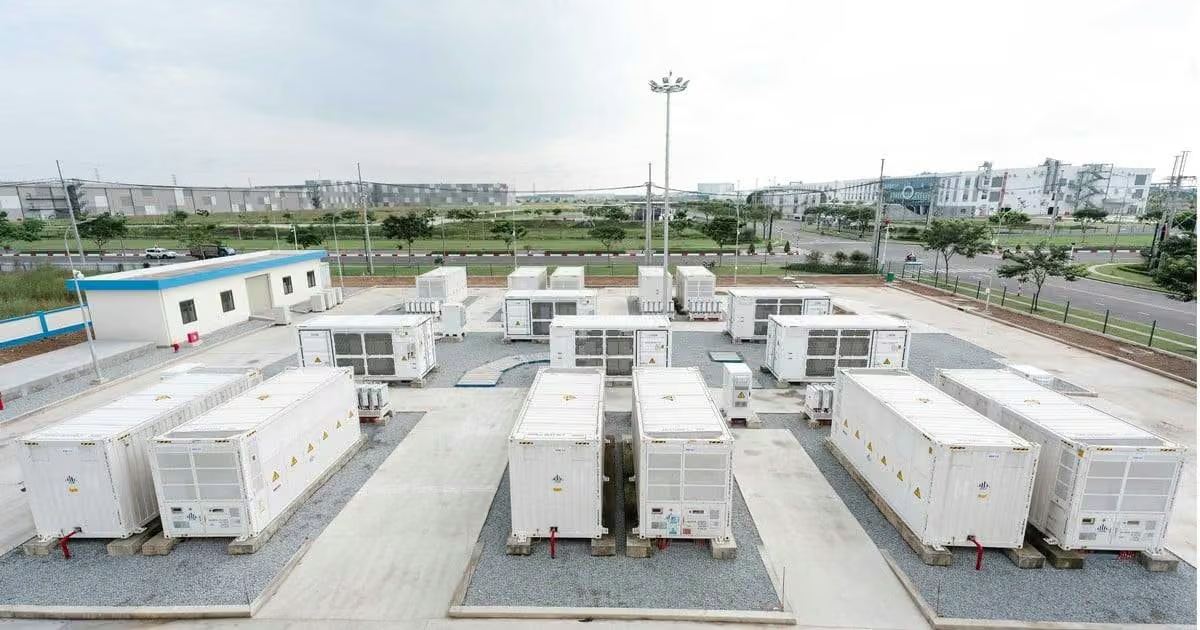
Lego Manufacturing Vietnam has recently commissioned a renewable energy storage system powered by battery technology, a project realized through capital investment in its installation and a direct power purchase agreement (DPPA).

Lego has revealed that its new energy infrastructure was developed in partnership with Vietnam-Singapore Industrial Park Joint Venture Company Limited (VSIP), marking a significant step toward achieving its goal of powering its Vietnamese manufacturing facility with renewable energy.
The project represents the first large-scale renewable energy solution in Vietnam tailored specifically for the industrial manufacturing sector. Under this arrangement, Lego operates a rooftop solar array at its factory and has entered into a direct power purchase agreement (DPPA) with VSIP.
Under the terms of the agreement, electricity generated by the rooftop solar system is integrated with VSIP’s battery energy storage system (BESS) and delivered directly to the factory via a dedicated transmission line.
When solar generation exceeds immediate demand, the surplus power is stored in VSIP’s battery system and released as needed, ensuring a stable and continuous supply of renewable energy.
The energy storage system, which incorporates 12,400 solar panels mounted on the factory buildings' rooftops, is engineered to meet approximately 75% of the facility's total electricity requirements during its initial five years of operation.
This infrastructure also contributes to avoiding the release of roughly 20,000 tonnes of CO2e annually. This figure is calculated using the Vietnam grid emission factor of 0.561 tCO2e/MWh and includes power generated by the existing rooftop photovoltaic solar system at the plant.
Lego Manufacturing Vietnam is simultaneously investigating additional power purchase agreements to address the remaining 25% of its electricity needs, a step intended to sustain the company's shift toward renewable energy sources.
The Lego Group's Vietnamese facility, scheduled to open in April 2025, was developed to accommodate long-term regional growth and to advance the group's progress toward its sustainable development goals.
In September 2025, the parties executed a direct power purchase agreement (DPPA) under which the solar and storage system managed by VSIP delivers renewable electricity directly to the Lego facility.
The official commissioning of the battery energy storage system marks a significant milestone in the manufacturer’s roadmap to achieve 100% renewable energy.
Pvola take
This deployment demonstrates that hybrid solar-storage models can significantly reduce grid dependency for heavy industrial loads. By offloading generation to a dedicated transmission line, manufacturers secure stable renewable supply while avoiding the capital burden of owning the entire energy infrastructure.
Frequently asked questions
How does Lego's new energy system in Vietnam cover 75% of its electricity needs?
The system combines a rooftop solar array with a battery energy storage system to ensure continuous supply. Surplus solar power is stored in the battery and released when generation is low, meeting the facility's demand.
What is the annual CO2e reduction achieved by Lego's rooftop solar and storage project in Vietnam?
The infrastructure avoids the release of roughly 20,000 tonnes of CO2e annually. This calculation uses the Vietnam grid emission factor of 0.561 tCO2e/MWh and includes power from the existing rooftop PV system.
How does the direct power purchase agreement between Lego and VSIP function for energy delivery?
Electricity generated by the rooftop solar system is integrated with VSIP's battery storage and delivered via a dedicated transmission line. This arrangement ensures a stable and continuous power supply to the manufacturing facility.