Brazil: Energy deficit in western Bahia opens the door for solar generation and new business opportunities
Key facts
- Application
- Irrigated agriculture and pumping systems in western Bahia
- Scale
- 1.826 GW projected demand by 2035 across 33 municipalities
- Performance metric
- 465 MW immediate shortfall between 908 MW demand and 443 MW supply
- Segment
- Agribusiness, irrigation, and rural infrastructure operators
- Location
- Western Bahia, Brazil, covering 33 municipalities analyzed by AIBA
The expansion of irrigated agriculture in western Bahia is creating new opportunities for solar power generators, photovoltaic equipment manufacturers and suppliers, and renewable energy marketers.
The region is experiencing a significant shortfall in grid electricity supply, a condition that is already driving the adoption of self-supplied energy sources and is expected to worsen as agricultural activity continues to grow.
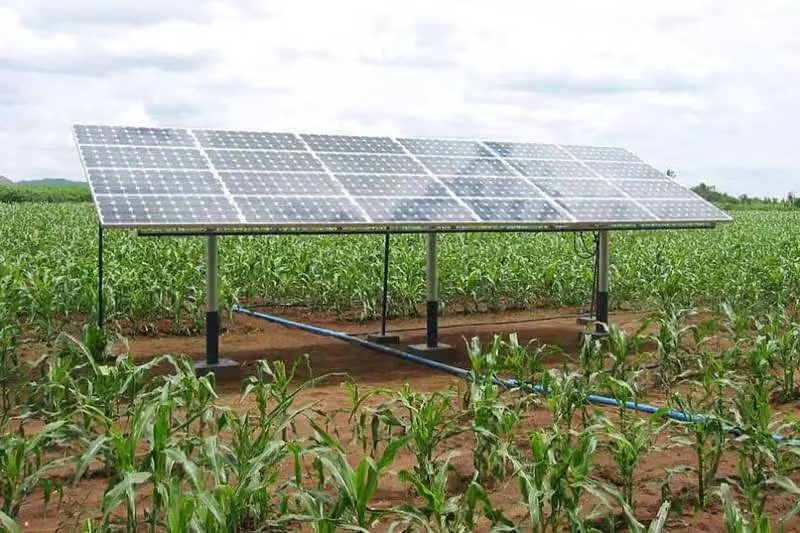
In this context, solar energy is emerging as a viable alternative to meet the power requirements of farms, pumping systems, and other infrastructure tied to the agribusiness sector.
These findings are part of the Study on the Electricity Demand of Irrigated Agriculture in Western Bahia, which projects that energy needs for irrigation and related activities across the 33 municipalities analyzed by AIBA (Association of Farmers and Irrigators of Bahia) will reach 1,826 megawatts (MW) by 2035.
The current electrical supply capacity allocated to these consumers stands at 443 MW, while the corresponding demand reaches 908 MW. This gap represents an immediate shortfall of approximately 465 MW.
This deficit does not indicate a lack of power within the broader Brazilian electrical system, but rather challenges in delivering electricity to specific consumption points.
The study highlights constraints in regional distribution, including a limited number of supply points, long distances between substations and rural properties, and high costs associated with new connections.
Self-generation gains ground
One key finding of the survey is that a portion of agricultural demand is already being met through alternatives to conventional supply.
When calculating the region’s equivalent energy needs, the study also accounts for the share covered by self-generation, which includes photovoltaic systems, diesel generators, and small isolated hydroelectric plants.
Consequently, solar generation is not merely a future possibility; it is already an integral component of the energy supply for rural properties.
Grid inadequacies and connection costs are likely to boost interest in self-generation projects, creating opportunities for suppliers of modules, inverters, mounting structures, pumping systems, and electrical integration solutions.
The report also identifies photovoltaic self-generation as a complementary alternative to enable productive activities in areas where the infrastructure fails to deliver electricity with sufficient quantity or quality.
The need to assess solutions located close to load centers is gaining traction, given the significant distances between farms and available connection points.
Market
Beyond the installation of private systems, the growth in demand represents a potential opportunity for companies that trade renewable energy.
Suppliers seeking to expand access to electricity and reduce exposure to local grid limitations can evaluate free-market supply contracts, shared generation models, or other commercial structures.
However, the study does not compare contracting models nor quantify the specific potential for migration to the Free Contracting Environment (ACL).
The opportunity stems from the identified demand volume and the need for supply alternatives, requiring each project to assess connection conditions, consumption profiles, and economic viability.
Demand set to double by 2035
The irrigated area analyzed in the survey expanded from 217,600 hectares in 2020 to approximately 410,000 hectares in 2026. The study’s projections indicate a further increase to 692,000 hectares by 2035. Consequently, the equivalent electrical demand for irrigation across the 33 municipalities examined is expected to rise to 1.826 GW.
In the broader 40-municipality area considered by Neoenergia Coelba, the estimate reaches approximately 2 GW. The study concludes that expanding electrical infrastructure is essential, though self-generation could also help meet the unmet demand.
Antonio Carlos Sil is a journalist who graduated from FMU/FIAM. He worked as a reporter for Brasil Energia and provided services to Agência Estado, Exame, and Canal Energia. He also served in communications roles at CPFL Energia, CESP, and AES Tietê. He has covered the electricity sector since 2000 and has experience reporting on events such as energy auctions, conventions, lectures, trade fairs, congresses, and seminars.
Comments must be respectful and contribute to a healthy debate. Offensive comments may be removed. The opinions expressed here are the responsibility of the authors and do not necessarily reflect the position of Canal Solar.
Pvola take
The 465 MW deficit is not a system failure but a distribution bottleneck, making on-site solar the only viable near-term solution for remote farms. Installers should target this segment now, as grid connection costs and distance are forcing a structural shift toward self-generation.
Frequently asked questions
What is the projected electricity demand for irrigated agriculture in western Bahia by 2035 according to the AIBA study?
The projected demand is 1,826 MW by 2035. This figure is based on an analysis of 33 municipalities in the region.
How large is the current electricity supply deficit for agricultural consumers in western Bahia?
The current deficit is approximately 465 MW. Current supply capacity is 443 MW while demand stands at 908 MW.
Why is solar self-generation considered a viable alternative for farms in western Bahia?
Solar self-generation addresses the significant shortfall in grid electricity supply. It allows productive activities to continue in areas where infrastructure fails to deliver sufficient power.