Saving $614 billion by 2050 with distributed resources: solar, storage and flexibility
Key facts
- The Brattle Group found that removing barriers to distributed energy resources would cut U.S. electric system costs by $614 billion through 2050
- Distributed solar capacity is projected to reach 230 GW by 2050, up from 68 GW today, assuming existing state goals are met
- Distributed storage capacity in virtual power plants is expected to grow to 35 GW by 2050, starting from a current base of 1 GW
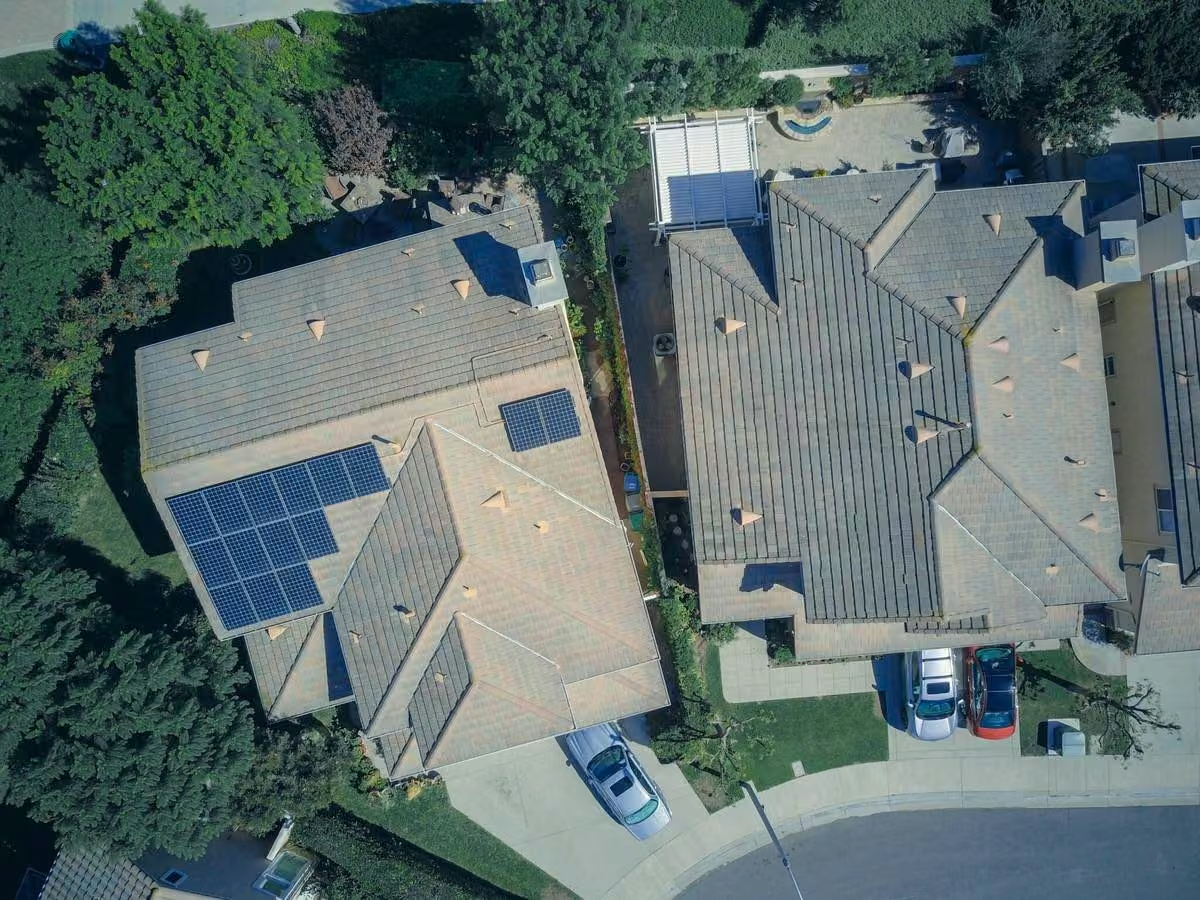
- Rooftop solar is projected to be installed on one in six single-family homes in the United States by the year 2050
- The study modeled cost savings from automating interconnection, reforming permitting, and integrating distributed resources into distribution planning
Addressing “all barriers” to distributed energy resource deployment would reduce U.S. electric system costs by $614 billion through 2050, The Brattle Group found in a modeling study that was funded by the Pew Charitable Trusts.
The study is titled “The national case for a more distributed power grid.”
The cost savings would result from growth in distributed solar, distributed storage, and several technologies projected to provide demand flexibility.
To project the amount of distributed solar deployed by 2050, Brattle modeled achievement of existing state-legislated carbon emissions goals, renewable portfolio standards, clean energy standards, and resource procurement goals, as well as utility targets that are more aggressive than state goals.
Assuming those goals would be achieved, distributed solar capacity would grow to 230 GW by 2050, up from 68 GW today, with rooftop solar deployed on one in six single-family homes in 2050.
Distributed storage capacity enrolled in virtual power plants would grow to 35 GW in 2050, up from 1 GW today.
Improvements in permitting and interconnection of distributed solar and storage would reduce the installed cost of distributed solar, the study says, so that compensation to those adding distributed solar “can be reduced to a more financially sustainable level, easing or removing the burden on existing non-solar customers.”
About 105 GW of newly deployed storage would “shift” from the transmission grid, under a baseline scenario, to the distributed grid, replaced by both distributed storage, which “can provide value to both the bulk power and distribution systems,” and demand flexibility.
Demand flexibility on the distributed grid would reach 260 GW by 2050, up from 44 GW today.
Technologies that were projected to flex their demand for electricity were HVAC (heating, ventilation and air conditioning), electric vehicles, water heating, and other commercial and industrial uses of electricity.
Utility-scale solar and wind deployment would also increase with removal of distributed grid barriers, as distributed resources “can be a valuable tool to integrate these renewable additions into a reliable regional energy portfolio.”
The study’s projected cost savings were not based on any specific approaches that could be taken to “unlock” distributed energy resource (DER) benefits. Instead, Brattle modeled “an ambitious but feasible end-state if addressable barriers are removed.”
To provide a “tangible illustration of the potential impact of targeted action,” however, Brattle projected the cost savings from three potential reforms: automating and streamlining DER interconnection, reforming DER permitting, and integrating DERs into distribution planning.
All three of those approaches were described by the Pew Charitable Trusts in an April report.
The interconnection reforms modeled by Brattle would enable flexible interconnection agreements, which it said could be based on dynamic operating envelopes as used in Australia , whereby distributed resources export within dynamic limits that reflect local grid conditions. The interconnection reforms would reduce grid costs by $39 billion through 2050.
Streamlining the permitting process, the study says, “could reduce permitting costs by 90%,” as “achieved in Australia and Germany,” thereby reducing grid costs by $50 billion through 2050.
Integrating distributed resources into distribution planning would reduce grid costs by $177 billion through 2050. “Unlocking this value,” the study says, requires distributed resources “to be deployed where constraints are expected, aggregated at sufficient scale, and incorporated into utility planning, procurement, and operations.”
Policies that could remove other “addressable barriers” to distributed resources, such that the full $614 in potential savings could be achieved, were not identified in the report.
The three policies considered “are not a complete policy agenda, nor the only way to enable DER value,” the study says. “Still, the scale of the opportunity available from these three reforms makes them clear near-term priorities for policymakers, regulators, utilities, and industry stakeholders to consider.”
Of the projected $614 billion in power system cost savings through 2050, about half of the savings would result from avoiding the capital and operating costs of new generation. That’s because increases in peak demand could be met by distributed storage and demand flexibility, instead of new peaker generating units. About 70 GW of new natural gas generation would be avoided.
Another one-third of the savings would come from deferring growth-driven distribution system upgrades.
The study provides distributed resource adoption “success stories” drawn from around the U.S. to illustrate that the policies considered could achieve the projected deployment amounts. But reaching those deployment levels would require “sustained progress” in removing barriers that now slow deployment.
Brattle based its study on a modeling framework combining “a bottom-up estimate of the bulk power system” using the firm’s capacity-planning model gridSIM, and “a top-down view of distribution-system opportunities” using the firm’s FLEX model.
A spokesman for the Pew Charitable Trusts said the organization “will continue to share this report with industry, advocates, and policymakers to highlight how distributed energy resources can benefit customers and our energy system.”
Pvola take
Developers and investors should prioritize projects that align with state-mandated renewable portfolio standards, as the study links these regulatory targets to significant long-term cost reductions. The projected expansion of distributed solar to 230 GW and storage to 35 GW indicates a massive market opportunity for those who can navigate the upcoming interconnection and permitting reforms. Streamlining these administrative processes is the critical factor that will unlock the full economic potential of distributed energy resources for the grid.
Frequently asked questions
How much could the U.S. electric system save by 2050 if distributed energy resource barriers are removed?
The system could save $614 billion by 2050 if all barriers to distributed energy resource deployment are addressed. This projection comes from a modeling study conducted by The Brattle Group.
What is the projected capacity for distributed solar and virtual power plant storage in the U.S. by 2050?
Distributed solar capacity is projected to reach 230 GW and VPP storage 35 GW by 2050. These figures assume the achievement of existing state-legislated carbon emissions and renewable energy goals.
Which specific regulatory reforms does the Brattle Group model to reduce distributed solar installation costs?
The study models automating DER interconnection, reforming permitting, and integrating DERs into distribution planning. These reforms are intended to lower installed costs and improve system efficiency.