Batteries soon to be majority in the capacity payment mechanism (CPM) in Belgium
Key facts
- Elia contracted 6.5 GW for 2027-2028 at a weighted average price of 30.944 euros per megawatt per year
- The Y-2 auction secured 1.6 GW for 2028-2029, with new battery projects representing approximately 0.5 GW of the total
- For the 2028-2029 period, the total secured volume reached 5.8 GW after the Y-2 auction results were included
- The Y-2 auction cost approximately 14 million euros, establishing a weighted average price of 18.143 euros per megawatt per year
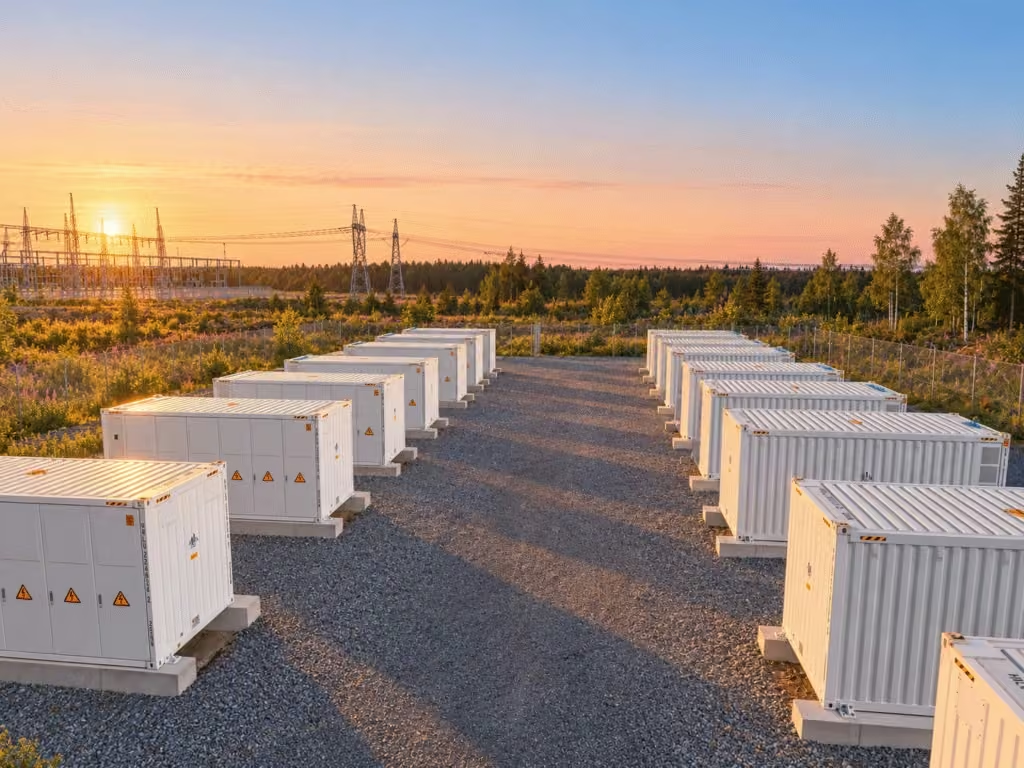
The electricity transmission network manager Elia Transmission Belgium has published the results of three capacity market (CRM) auctions covering the supply periods 2027-2028, 2028-2029, and 2030-2031. In accordance with the volumes set by the Minister of Energy, it has contracted the required capacities to contribute to Belgium’s supply security. During the three auctions, supply exceeded demand, while batteries represent a significant share of the contracted capacities for 2028-2029 and 2030-2031.
Introduced in the context of Belgium’s partial nuclear exit, the CRM financially supports market participants who make electrical capacity available. Open to the entire market and technology-neutral, it contributes to the country’s supply security.
In total, 6.5 GW have been contracted for 2027-2028 under the various CRM auctions, for a total cost of approximately 200 million euros and a weighted average price of 30.944 €/MW/year. No additional capacity was contracted during the Y-1 auction. In fact, the scenario chosen by the Minister of Energy has evolved compared to the previous auctions organized for this delivery period. After taking into account transnational contributions and available capacities on the electricity market but not wishing to participate in the auction, the required volume was reduced to zero.
The Y-2 auction allowed for the contracting of 1.6 GW for 2028-2029, bringing the total secured volume for this delivery period to 5.8 GW. The new battery projects represent approximately 0.5 GW of the selected capacities. Some of these battery projects will enter service earlier than planned under their multi-year contracts and may therefore already contribute to capacity.
As two-hour batteries account for only 5.98% of selected volumes, the results show that four-hour batteries are now preferred and represent 31.74% of volumes, behind combined cycle gas turbines. The auction cost amounts to approximately 34 million euros, for a weighted average price of 21.643 €/MW/year.
The Y-4 auction secured 0.8 GW for 2030-2031. Including long-term contracts already concluded, the total secured volume for this supply period now reaches 4.9 GW. New batteries represent approximately 0.5 GW of the selected capacity, distributed across one-year and multi-year contracts. Following the same trend as the 2028-2029 auction, no two-hour batteries were selected, while four-hour batteries account for 61.75% of volumes, far ahead of other technologies.
The offer exceeded demand by 3.1 GW. The auction cost amounts to approximately 14 million euros, for a weighted average price of 18.143 €/MW/year.
Pvola take
The significant share of battery capacity in recent Belgian auctions signals a structural shift in how grid security is procured. Developers should prioritize storage projects, as the technology-neutral framework now favors assets that can provide reliable capacity without fuel costs. This trend suggests that storage will become a primary revenue stream for investors seeking stable returns in the Belgian market.
Frequently asked questions
What share of contracted capacity in Belgium's 2028-2029 and 2030-2031 capacity market auctions is represented by battery projects?
Battery projects represent a significant share of contracted capacities for the 2028-2029 and 2030-2031 delivery periods. In the 2028-2029 period, new battery projects account for approximately 0.5 GW of the selected 5.8 GW total secured volume.
What was the total contracted capacity and weighted average price for Belgium's 2027-2028 capacity market auction?
A total of 6.5 GW was contracted for the 2027-2028 delivery period at a weighted average price of 30.944 €/MW/year. The total cost for this capacity was approximately 200 million euros, with no additional capacity contracted during the Y-1 auction.
How does the capacity market mechanism in Belgium support supply security during the transition away from nuclear power?
The capacity market financially supports market participants who make electrical capacity available to contribute to Belgium's supply security. It is technology-neutral and open to the entire market, ensuring reliable power supply as the country manages its partial nuclear exit.