Spain: Valencian regional council rejects 38 million euro solar plant in Segorbe, prompting local government to warn of industrial development setback
Key facts
- The Valencian Regional Government denied administrative permits for the 48.30 MW Segorbe Sol photovoltaic plant in Castellón province
- The rejected solar project, valued at nearly 38 million euros, was planned for 80 hectares within the Serra Calderona Natural Park
- Verdenes Solar 5, managed by the French entity Reden Social Internacional, is the promoter of the denied solar installation
- The rejection was based on the lack of substantiation for the plant's location within the Natural Resources Management Plan area
- The local government warned that the permit denial represents a significant setback for industrial development in the Segorbe municipality
COMPANIES
CASTELLÓ. The Valencian Regional Government, through the Directorate General for Energy and Mines, has denied the applications for prior administrative authorization and administrative construction authorization for the Segorbe Sol photovoltaic solar plant, promoted by Verdenes Solar 5, which planned to install a 48.30 megawatt (MW) power plant in the municipality of Segorbe. The project, valued at nearly 38 million euros, was to be located on approximately 80 hectares of land within the scope of the Natural Resources Management Plan (PORN) of the Serra Calderona Natural Park. This specific location was the decisive factor in the rejection of the project, as stated in the resolution of the Directorate General for Energy and Mines published in the Official Provincial Gazette.
According to the document, the denial of the permits is justified by the fact that "the unavoidable need for the location of the aforementioned photovoltaic plant within the PORN area is not substantiated, and its production is not considered necessary to provide local service to residential units or population centers within said area." These are two requirements established by Article 59.2 of the PORN to allow electricity generation facilities in this space. In fact, according to the resolution of the Directorate General for Energy and Mines, the Environmental Impact Declaration, issued in May 2025, explicitly conditioned the project's viability on compliance with these requirements. However, according to the energy body, the documentation submitted by the company "did not identify the municipalities within the protected area that would require such supply and relied on a favorable report from the Segorbe City Council, whose urban core lies outside said area."
The Segorbe city council had supported the development of this project, citing the "socioeconomic benefits it will bring to the municipality and its surrounding area." Mª Carmen Climent, the mayor of the town, viewed the blockage of this photovoltaic facility negatively, stating that it "involved a significant energy expansion that would have been highly beneficial for our future industrial development." Climent expressed regret that "industrial growth in Segorbe and its surrounding area is being halted," at a time when "we have high demand for land for business establishment, given our strategic location next to the Mudéjar highway and close to the Sagunto industrial and energy hub." The mayor of Segorbe believes that the project does not pose a severe impact on the Sierra Calderona Natural Park, as "the plant's location is right at the boundary of the PORN," and insists that a project of this nature represents "an opportunity for our region to grow and generate employment by leveraging our strategic position."
More than 85,000 photovoltaic modules
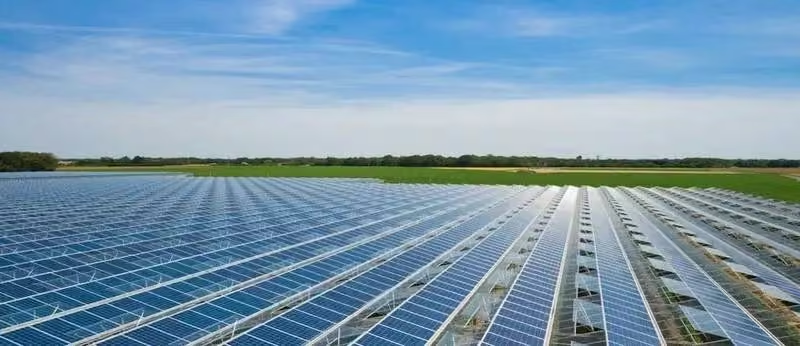
The Segorbe Sol photovoltaic plant, promoted by Verdenes Solar 5, is planned with an installed capacity of 48.30 megawatts (MW) and an investment of approximately 38 million euros, including the power plant and the substation. The facility is projected in two areas within the municipality of Segorbe, in the areas of Mas Quemado, La Foya, Yelto, and Llanos de Argillas, near Algímia d'Alfara and Sot de Ferrer. The promoting company is managed by the French entity Reden Social Internacional and belongs to the Dutch company Kenergy Solar Developments.

The project has undergone several modifications since its initial proposal. The first revision reduced the fenced area from 124 to 98 hectares and the number of photovoltaic modules from 91,770 to 85,650, while maintaining the capacity of 48.3 MW. It also altered the evacuation solution: the connection via a line of nearly 16 kilometers to the Sagunto substation was removed from this file and is now being processed separately. Subsequently, a new addendum submitted in April 2025 reduced the area occupied by the plant to 78 hectares and proposed connecting the facility to the distribution grid at a point near the installation, within Segorbe.
The environmental approval process has been marked from the outset by objections from various administrative bodies and opposition from environmental organizations, neighborhood associations, and private individuals, who filed objections during the public information period. Among the objections were the plant's location within the scope of the Natural Resources Management Plan (PORN) for the Sierra Calderona, its proximity to isolated dwellings, and the occupation of forest land.
One of the main obstacles was outlined in the Environmental Impact Statement issued on May 12, 2025. The Directorate General for Urban Planning, Landscape and Environmental Assessment established around twenty conditions for the development of the facility, including compliance with Article 59.2 of the Sierra Calderona Special Urban Plan (PORN). This provision requires justifying the "unavoidable necessity" of locating the plant within the protected area and demonstrating that the generated energy is necessary to supply homes or population centers situated within that zone.
In response, the project developer submitted a legal report from the Segorbe City Council, in which the local government positively assessed the project's location and configuration, and defended its necessity on grounds of climate emergency and economic revitalization. However, the Directorate General for Natural Environment and Wildlife reiterated in various reports that the competent authority in energy matters must justify the unavoidable nature of the site selection.
Despite the additional documentation submitted by the company, the fundamental requirement was not met, according to the resolution of the Directorate General for Energy and Mines. In December 2025, the Territorial Service for Industry, Energy and Mines of Castellón issued a proposal for a denial resolution. The landscape and territorial planning services also reiterated in July 2026 that non-compliance with certain landscape integration measures and forest land protection requirements persisted.
Finally, the Directorate General for Energy and Mines has denied the prior administrative authorization and construction permit for Segorbe Sol. This decision, however, does not conclude the administrative process, allowing the company to file an appeal with the Autonomous Secretariat for Environment and Territory.
BUSINESS AND INNOVATION NEWSLETTER.
All business news from Castellón, consolidated into a single weekly email to keep up with current events without wasting time. Subscribe to the newsletter for free here.
Pvola take
This rejection highlights the critical importance of early environmental compliance for solar developers in Spain. Projects located within protected natural parks face significant regulatory hurdles, as authorities strictly enforce requirements for local service necessity. Developers must prioritize site selection outside sensitive zones to avoid costly administrative delays and permit denials.
Frequently asked questions
Why did the Valencian Regional Government reject the permits for the Segorbe Sol solar plant?
The permits were denied because the project's location within the Serra Calderona Natural Park was not substantiated as necessary. The resolution stated that the plant's production was not required to provide local service to residential units in that specific area.
What is the installed capacity and estimated value of the rejected Segorbe Sol project?
The Segorbe Sol project was planned to have an installed capacity of 48.30 MW. The total investment value for this photovoltaic plant was estimated at nearly 38 million euros, with the site covering approximately 80 hectares of land.
What are the next administrative steps available to the developer after the permit rejection?
The company can file an appeal with the Autonomous Secretariat for Environment and Territory. This decision does not conclude the administrative process, allowing the promoter to challenge the denial through the established legal channels.