Greece: Energy autonomy on the islands: Why technology alone is not enough for the transition to renewables
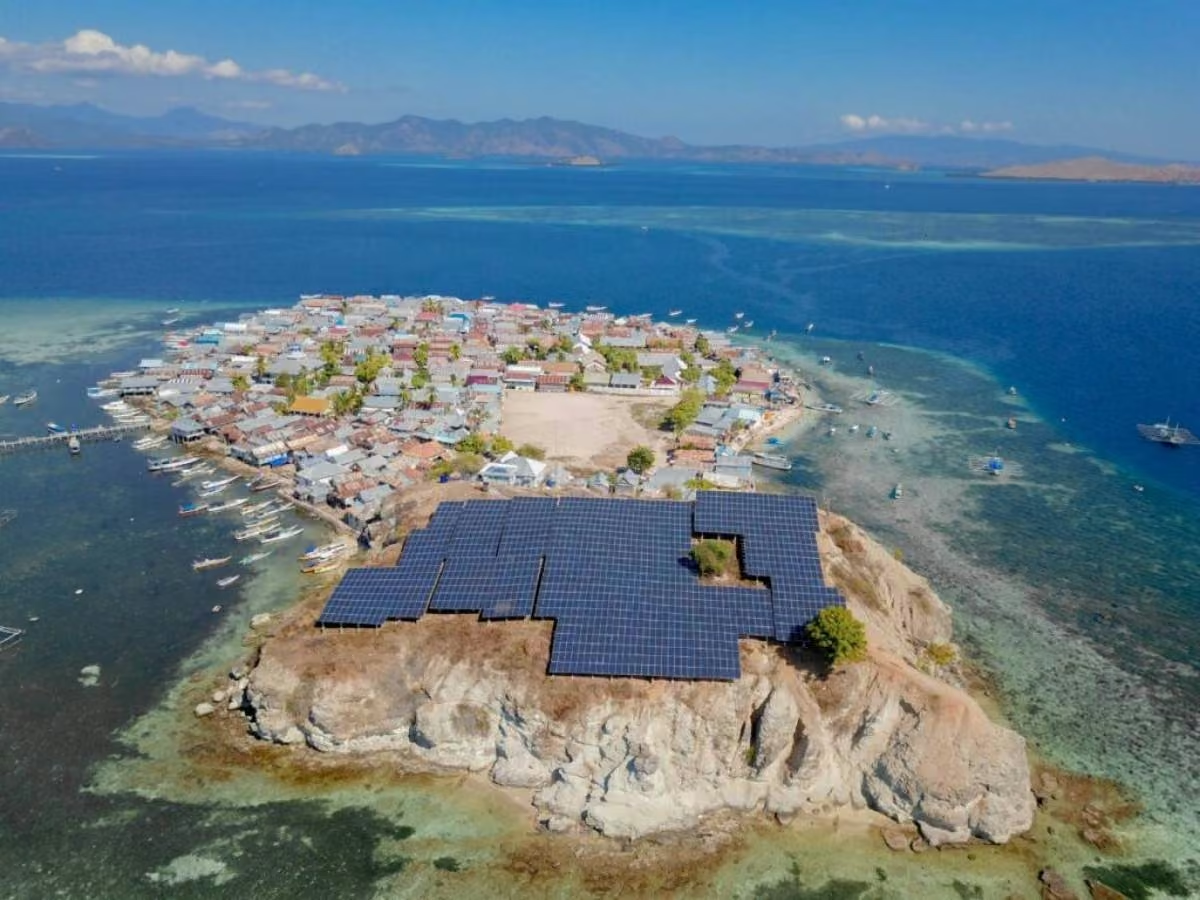
Key facts
- IEA-PVPS study of 11 islands shows near-100 percent renewable electricity requires strong local leadership and social consensus
- The report states that adequate financing and early planning are as critical as technology for achieving renewable power goals
- Nearly half of the identified success factors relate to preparation stages before installing any wind or solar equipment
- The study warns that replicating successful island models is difficult for smaller, remote, and lower-income regions in the Global South
A study by the IEA-PVPS program covering 11 islands highlights that achieving nearly 100 percent renewable electricity generation relies as much on strong local leadership, social consensus, adequate financing, and early planning as it does on technology.
The report from the IEA-PVPS program, which examines 11 islands, finds that reaching near-total renewable power generation depends equally on robust governance, community engagement, funding, and forward-looking planning, alongside technological solutions.
Although proven technical approaches vary significantly, successful transitions require tailored grid design and sustained institutional support. This makes it particularly difficult to replicate such models in smaller, remote islands and lower-income regions.
Islands are frequently presented as test beds for achieving 100 percent renewable electricity generation because they operate as isolated systems with clearly defined boundaries among stakeholders and, in most cases, lack the ability to draw support from a central electrical grid.
A new report by Working Group 18 of the IEA-PVPS program challenges this perception, analyzing 11 islands that have already achieved or come close to very high levels of renewable energy penetration.
The cases range from the village of Apolima in Samoa, with a population of 88, to Lolland in Denmark, home to more than 57,000 people and connected to the broader Danish grid.
The central finding is that the technology required to operate an island almost exclusively on renewable energy sources already exists and performs effectively across vastly different system configurations.
What ultimately determines whether a project meets its targets are primarily social, political, and organizational factors. Technology alone is insufficient; success depends on how well it is integrated with appropriate social, policy, economic, and organizational conditions. Eleven islands, no single model
The strongest evidence for this conclusion is the absence of a single, unified definition of success in practice.
Kodiak Island in Alaska operates a hybrid hydro and wind energy system managed by a cooperative electric utility with advanced operational capabilities, achieving 99% to 100% of its energy needs from renewable sources.
Samsø in Denmark achieves similar results almost exclusively through community-owned wind turbines and citizen investments. Because it is connected to the Danish grid, it does not rely on local storage systems.
Yakushima in Japan meets 100% of its electricity demand from renewable sources using only small-scale hydroelectric projects, as the mountainous terrain and regional rainfall align with energy demand.
Apolima operates an autonomous photovoltaic system without any storage, as the village is small enough that storage is not required.
Tokelau’s fully solar system, supported by batteries, became feasible thanks to consistent financial assistance from New Zealand.
In the Spanish Canary Islands, El Hierro pairs wind power with pumped storage, while La Graciosa operates a hybrid wind and solar photovoltaic system equipped with batteries. The allocation strategies for this latter system are still being optimized during its operational phase.
The report identifies this diversity as its central finding rather than a secondary observation: no universal guideline exists.
A hybrid wind and pumped storage system designed for El Hierro would be significantly larger and more powerful than what Apolima actually requires.
Similarly, the donor-funded model that enabled Tokelau to meet its entire energy demand through solar power cannot be directly applied to an island like Kodiak, where a utility company plays a leading role. Across all 11 islands, regardless of their specific technological mix or size, a consistent set of non-technical prerequisites emerges. The key lies in preparation, not construction.
To identify these prerequisites, the report’s authors developed a success matrix structured around four phases and five categories. The phases cover preparation, design, implementation, and monitoring and evaluation, while the categories address social, political, technical, economic, and environmental dimensions.
The matrix was subsequently populated through a review of more than 60 academic publications, an analysis of case studies, and five in-depth interviews with professionals operating on islands.
This process identified 111 distinct success factors. The most prominent pattern emerging from the data concerns the phase in which these factors are concentrated: nearly half of the identified factors pertain to the preparation stage, occurring before the installation of the first wind turbine or solar panel.
The report characterizes this process as a parallel combination of educating and informing the local community, assessing available energy resources and grid infrastructure, engaging in early policy coordination, and preparing financing. These activities must be completed well before the system design phase begins.
Islands that invested significant resources in this preparatory stage, including Lolland, Samsø, and El Hierro, established a shared understanding and institutional readiness that facilitated subsequent phases of their projects.
The primary lesson for project developers and financiers is that underfunding the design and community engagement stages remains one of the clearest and most predictable causes of future difficulties, even when the technical design is sound.
Four factors appear almost everywhere
Of the 111 factors identified, 13 were classified as key success factors based on their frequency across multiple interviews. Four of these emerged as nearly universal: two social and political, and two technical.
The first is the presence of local pioneers or leaders—individuals who mobilize community support, sustain project momentum over time, and serve as a bridge between local society, policymakers, and technical bodies.
The energy transition in Samsø is cited as a notable example of this dynamic, where specific individuals linked local identity, citizen investment, and wind energy development.
The second factor is the continuous involvement of stakeholders throughout the entire project lifecycle, not just during the planning phase.
The report highlights that this factor appears in every phase examined, making it one of the most cross-cutting success factors in the study’s data.
Even decisions with a strong technical character, such as the selection of generation technologies or the identification of grid nodes requiring reinforcement, ultimately hinge on the trust of stakeholders to be accepted and implemented in practice.
The above does not imply that engineering design is of secondary importance. Technical factors constitute the largest single category of data, accounting for 41 of the 111 total factors.
The other two near-universal factors are also technical and, in fact, the most frequently cited: long-term system planning and grid reinforcement specifically for the integration of variable renewable energy sources.
The report also identifies specific operational practices that contribute to maintaining high levels of renewable energy participation after the systems have commenced operation.
The report highlights real-time balancing of wind and hydroelectric generation on Kodiak Island, as well as the deployment of flywheels and dynamic resistors on King Island to stabilize a hybrid system that integrates wind and solar photovoltaic power, battery storage, and diesel fuel.
Technical reliability and tailored system design are identified as the backbone of successful energy transitions in island communities. However, technology alone does not determine the outcome.
What distinguishes islands that achieve and sustain high renewable energy penetration from those that do not is whether sound technical design is supported by the social, political, and financial conditions necessary for implementation and operation as intended. Constraints on replicating successful models
Nevertheless, the final section of the report makes clear that its conclusions do not constitute a ready-made list of solutions that can be applied universally without modification.
The authors note that the fundamental prerequisites underpinning the 13 success factors, such as the presence of a local institution capable of sustaining the design process over several years, continuous stakeholder engagement in a multi-year initiative, and funding that does not rely solely on short-term donor support cycles, are not equally accessible across all regions.
In areas where these prerequisites are weak, similar interventions tend to lose momentum rather than failing outright from the start.
Stakeholder participation wanes without a local champion to sustain it, tariff reforms struggle to attract investment under an unstable regulatory framework, and technical designs proven effective on well-resourced islands are difficult to replicate without reliable supply chains or trained personnel for system operation and maintenance.
The authors explicitly warn that this gap in the ability to replicate successful models is likely to disproportionately affect smaller, more remote, and lower-income islands, particularly in the Global South. In these regions, the institutional and financial frameworks already present in the report’s case study areas are far less likely to exist from the outset. (The report is available for download here)

Pvola take
Developers and investors must recognize that technical feasibility is only one component of a successful renewable transition. The report emphasizes that nearly half of the critical success factors occur during the preparation phase, before any hardware is installed. This means that projects in remote or lower-income areas will fail if they neglect early community engagement, policy coordination, and financial planning, as these institutional frameworks are often absent in such regions.
Frequently asked questions
What does the IEA-PVPS report say about the factors required for achieving near-total renewable electricity generation on islands?
The report states that robust governance, community engagement, and funding are as critical as technology. It highlights that nearly half of the success factors occur during the preparation stage before installation.
Why is it difficult to replicate successful renewable energy models from the 11 studied islands in smaller or lower-income regions?
The report warns that institutional and financial frameworks in the case study areas are unlikely to exist in smaller, remote, or lower-income islands. This gap disproportionately affects regions in the Global South lacking established support structures.
How does the IEA-PVPS study characterize the process of transitioning to renewable energy on isolated island systems?
The study characterizes the transition as a parallel combination of community education, resource assessment, and early policy coordination. It emphasizes that tailored grid design and sustained institutional support are necessary for success.