China: Zhongrun Solar Acquires *ST Yijing for 719 Million Yuan in a Reverse Merger Gamble by a Failed IPO Candidate
Key facts
- Zhongrun Solar will invest 719 million yuan to acquire at least 399.5 million shares of *ST Yijing, replacing Ningbo Ruilian as the controlling shareholder
- At the time of the announcement, *ST Yijing's net assets attributable to shareholders were negative 284 million yuan, and the stock carried a delisting risk warning
- Zhongrun Solar is a cell manufacturer that failed three previous IPO attempts before committing over 700 million yuan in cash to this reverse merger
- The transaction designates Long Daqiang and Meng Liye as the actual controllers of the company following the acquisition of the controlling stake
- Yujian Energy notes that *ST Yijing listed in 2011 via a backdoor listing, with the injected equity valued at over 2 billion yuan at that time
Yujian Energy has observed that *ST Yijing recently disclosed a supplementary agreement for its pre-restructuring investment. Under the terms, Zhongrun Solar will invest 719 million yuan to acquire no less than 399.5 million shares, replacing Ningbo Ruilian as the controlling shareholder. Long Daqiang and Meng Liye are set to become the actual controllers of the company. At the time of the announcement, Yijing’s net assets attributable to shareholders stood at a negative 284 million yuan, and the stock already carried a delisting risk warning.
A cell manufacturer that failed three IPO attempts is committing over 700 million yuan in cash to a dormant module shell. This transaction warrants a detailed financial breakdown.
Yujian Energy’s earliest recollection of Yijing dates back to 2011, when it listed via a backdoor listing through Haitong Group, carrying the title of “the first solar stock.” The 100% equity of Changzhou Yijing injected into the shell was valued at over 2 billion yuan, and the accompanying financing scale was significant within the solar industry at the time.
In its initial years of listing, the Changzhou base operated one of the few vertically integrated production lines in East China, with module shipment volumes consistently ranking among the industry’s top tier. At that stage, the concept of delisting was not associated with the company.
The downturn did not occur overnight. Solar production capacity began to spiral out of control from 2022, with overcapacity accumulating across every stage of the supply chain, including silicon material, wafers, cells, and modules. Yijing’s cell segment fell behind, and its module production lines failed to keep pace with the transition to N-type technology.
The 2025 annual report revealed a full-year revenue of 1.927 billion yuan, a year-on-year decline of 44.58%. Net profit attributable to shareholders recorded a loss of 528 million yuan, and net assets at year-end dropped to a negative 79.79 million yuan. Tianjian Accounting Firm issued a qualified opinion on the annual report, citing concerns regarding the company’s going concern capability and contingent liabilities.
The factor that truly pushed Yijing to the brink was the financial dispute at its Quanjiao base. The Quanjiao Economic Development Zone Management Committee proposed terminating the investment agreement and reclaiming 140 million yuan in support funds. Preliminary calculations indicated that the company would need to repay approximately 1.777 billion yuan. As of the end of 2025, Yijing had confirmed a payment obligation of 1.587 billion yuan, while the remaining difference had not been accrued as a provision. Yujian Energy had previously discussed this matter.
If this administrative recovery is finalized, the difficulty of the restructuring will increase significantly. The root cause of Yijing’s descent to the pre-restructuring stage lies in its failure to align production capacity with industry cycles, but the immediate trigger was the local government’s decision to pursue recovery.
Zhongrun Solar’s decision to invest over 700 million yuan follows a logic entirely different from Shunfeng Power’s earlier acquisition of Suntech Power in Wuxi.
Shunfeng valued Suntech for its brand and distribution channels. Zhongrun Solar is interested in Yijing’s module production capacity and listed platform, but neither is the primary reason for the investment.
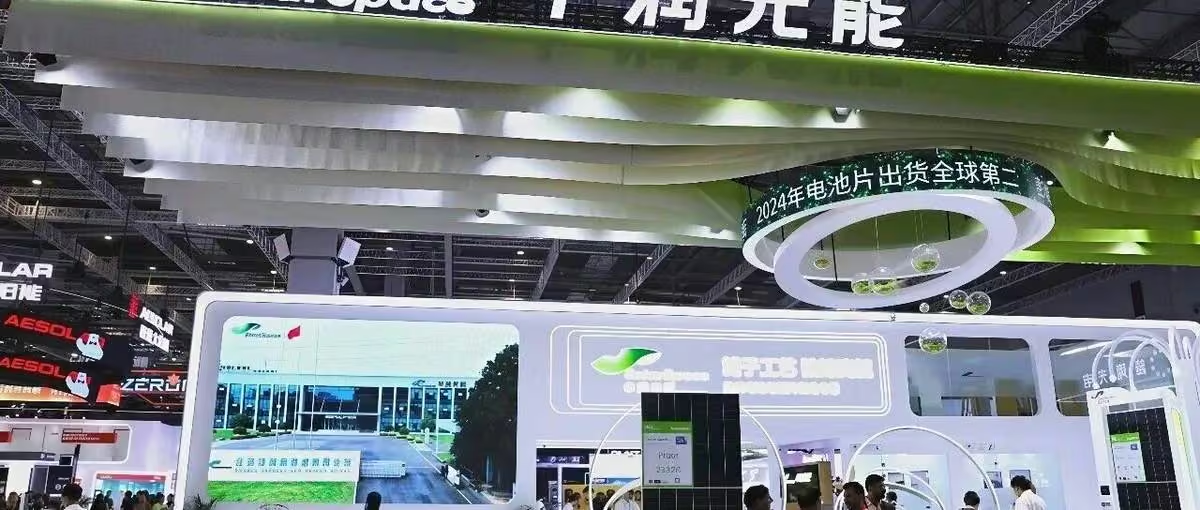
According to data from Frost & Sullivan, based on external shipments of solar cells, Zhongrun Solar ranked second globally in 2024 with a market share of 14.6%. In the first half of 2025, its cell shipment volume also maintained the second position globally. For a cell manufacturer of this scale, the greatest risk is high customer concentration.
If major customers such as LONGi, JinkoSolar, and JA Solar adjust their procurement strategies, Zhongrun’s capacity utilization would face immediate pressure.
Yijing possesses existing module production lines and overseas distribution channels in Changzhou. Although its cell operations have ceased, its module brand and customer relationships remain intact. By integrating its cells into Yijing’s module system, Zhongrun is effectively securing a downstream outlet for its production.
However, the fundamental driver is capital anxiety. Zhongrun Solar’s IPO path has been blocked three times. After passing the review on the ChiNext board in 2023, sponsor Haitong Securities withdrew its sponsorship in June 2024, terminating the A-share listing process.
In March 2025, the company filed for a listing on the Stock Exchange of Hong Kong, but the prospectus expired after six months. A second filing in September 2025 also lapsed in March 2026. The cell manufacturing industry is capital-intensive, requiring continuous funding for technological upgrades and expansion. Relying on bank loans and internal funds is unsustainable in the long term.
Yijing’s listed shell represents a path that Zhongrun Solar could not achieve on its own. Purchasing a shell with negative net assets for over 700 million yuan appears to be a gamble, but it is effectively the only option after the capitalization route has been sealed off.
A provision in the supplemental agreement, easily overlooked but carrying significant weight, mandates that Zhongrun Solar refrain from transferring its shares for 60 months after acquiring control. Furthermore, any reduction in holdings following the expiration of this lock-up period is contingent upon the listed company achieving profitability excluding non-recurring items.
In the context of photovoltaic restructuring, a 36-month period represents the regulatory minimum. The combination of a 60-month lock-up with a profitability-based performance guarantee is unprecedented. By accepting these terms, Zhongrun Solar is signaling to creditors and the court that the capital injection is not intended as a temporary bridge. However, this clause simultaneously seals off any potential exit route for Zhongrun itself.
The rationalization of overcapacity in the solar industry remains ongoing. Zhongrun Solar reported a net loss attributable to shareholders of 1.363 billion yuan in 2024, only turning a profit of 120.4 million yuan in the first half of 2025. The company lacks the capacity to sustain Yijing’s continuous financial hemorrhage over a five-year period without engaging in asset disposals.
The extended duration of the lock-up suggests that the architects of the deal do not believe Yijing can reverse its fortunes within three years relying solely on its existing business. The 60-month wager rests on the assumption that Zhongrun’s cost advantage in cell production is robust enough to revitalize Yijing’s module production lines. If the bet succeeds, Yijing’s distribution channels will become Zhongrun’s export gateway. If it fails, the over 700 million yuan locked for five years will be tied to an asset that no other party can absorb.
Yijing’s creditors have secured an industrial partner willing to commit to a long-term lock-up, while Zhongrun has obtained a listed platform, satisfying the interests of both parties. However, during the bottoming-out phase of the solar cycle, time is both the least valuable and the most valuable asset.
The viability of this transaction does not hinge on the rigor of the agreement’s drafting, but on whether Zhongrun’s cells can maintain their marginal cost advantage over the next two years. With Tongwei expanding and Aiko Solar closing the gap, Zhongrun’s window of opportunity is not as wide as the company may assume.
Pvola take
This high-risk reverse merger signals that established cell manufacturers are increasingly turning to dormant listed shells to secure capital market access after repeated IPO failures. The transaction's viability depends entirely on Zhongrun maintaining a marginal cost advantage against competitors like Tongwei and Aiko Solar, as the acquired entity currently holds negative net assets and faces delisting risks. Investors should view this as a speculative bet on future cost efficiency rather than a stable acquisition of existing assets, given the target's financial distress and the intense competitive pressure in the cell sector.
Frequently asked questions
How much is Zhongrun Solar investing to acquire control of *ST Yijing in this reverse merger transaction?
Zhongrun Solar will invest 719 million yuan to acquire no less than 399.5 million shares of *ST Yijing. This investment replaces Ningbo Ruilian as the controlling shareholder and makes Long Daqiang and Meng Liye the actual controllers.
What is the current financial status of *ST Yijing regarding net assets and delisting risk before the acquisition?
At the time of the announcement, *ST Yijing’s net assets attributable to shareholders stood at a negative 284 million yuan. The stock already carried a delisting risk warning, indicating significant financial distress prior to the restructuring.
Why is customer concentration considered a major risk for Zhongrun Solar following its acquisition of *ST Yijing?
Zhongrun Solar faces high customer concentration with major buyers like LONGi, JinkoSolar, and JA Solar. If these customers adjust their procurement strategies, Zhongrun’s capacity utilization would face immediate pressure, impacting the viability of the merged entity.