Segorbe Sol 48.3 MW Solar Project Denied in Spain
The short answer
The Valencian regional government denied permits for the 48.3 MW Segorbe Sol solar project in Castellón province. The rejection halts a 27.4 million euro development due to environmental incompatibility with the local Natural Resources Management Plan.
Key facts
- Capacity
- 48.3 MW
- Stage
- Permit denied
- Owner or developer
- Verdenes Solar 5
- Grid connection
- Proposed 66 kV tap into existing line near plant
- Location
- Segorbe, Castellón province, Spain
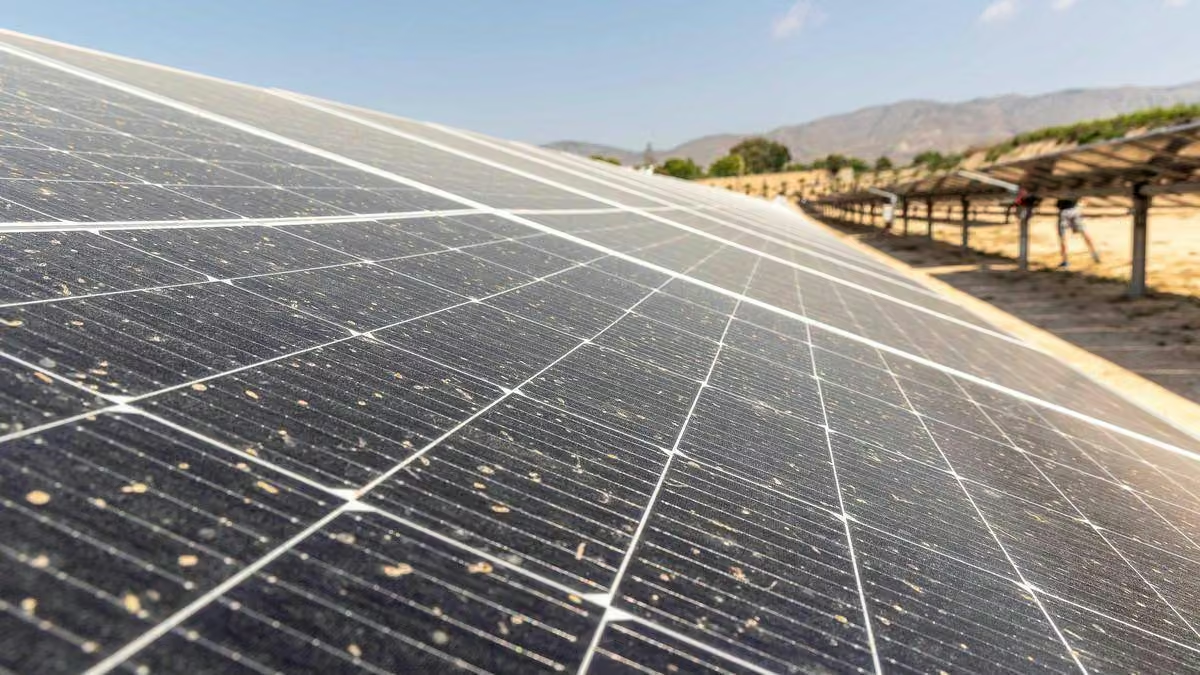
The Valencian regional government has rejected one of the major solar projects planned for Castellón province. The Directorate General for Energy and Mines has denied the necessary permits to build Segorbe Sol, a 48.3-megawatt (MW) facility that was designed to incorporate 85,652 photovoltaic modules with an estimated budget of 27.39 million euros.
Developed by Verdenes Solar 5, the plant was to be located entirely within the municipality of Segorbe and had been in the approval process since February 2023. The decision, published in the Official Journal of the Valencian Community (DOGV), refuses both the prior administrative authorization and the construction authorization, including for the associated power evacuation infrastructure.
Documents made available for public inspection in March 2025 provide further detail on the project’s scale. Segorbe Sol was planned to install 85,652 panels, each rated at 730 watts, along with 161 inverters of 300 kW, to achieve a nominal capacity of 48.3 MW. The budget listed in those documents was precisely 27,389,928.65 euros.
La Serra Calderona, el principal escollo
The primary reason for the project's rejection lies in its compatibility with the Natural Resources Management Plan (PORN) for the Serra Calderona.
The environmental impact declaration stipulated as a condition that the "unavoidable necessity" of siting the facility within the PORN jurisdiction must be justified, and that its power generation was required to provide local service to residences or population centers located within the protected area.
However, technical experts concluded that this requirement had not been substantiated. The Territorial Service for Industry, Energy and Mines determined that there was no justification for the plant necessarily being located within the protected zone, nor that the electricity produced was intended to meet the energy needs of the communities situated within it.
The developer submitted objections during the public consultation phase, but the documentation provided was insufficient to alter the administration’s position. Authorities noted that the affected municipalities within the PORN framework could not be identified, making it impossible to assess their supply requirements. Additionally, the favorable report submitted by the Segorbe city council referred to an urban center located outside the protected area.
Dozens of objections
The administrative process has been lengthy, characterized by significant public participation. During the initial public exposure period in 2024, 589 objections were received.
Numerous agencies and local governments issued statements during that phase. The Segorbe city council initially issued a conditional report, requiring an archaeological survey to be conducted. Meanwhile, the councils of Sagunto and Algímia d'Alfara submitted unfavorable reports. The latter municipality warned, among other concerns, about the impact on the landscape due to the project's proximity to the Serra Calderona natural park.
The General Directorate for the Natural and Animal Environment also issued unfavorable reports, concluding that the project failed to meet the requirements set by the PORN, particularly the obligation to demonstrate the necessity of siting the facility in that specific area.
The project had to be modified
The sequence of unfavorable and conditional reports prompted Verdenes Solar 5 to submit a substantial modification to the Segorbe Sol project.
The initial proposal included a 66 kV high-voltage aerial and underground transmission line spanning nearly 20 kilometers, designed to transport energy to the Sagunto substation while crossing municipal boundaries in the provinces of Castellón and Valencia. The company ultimately abandoned this approach and instead proposed connecting to the distribution grid in an area near the plant, within the municipality of Segorbe, by tapping into the existing 66 kV line that links the Segorbe and Sagunto substations.
This change necessitated a second public consultation period in the spring of 2025. During this phase, an additional 771 objections were filed, bringing the total number of recorded submissions across both processes to 1,360.
The Segorbe city council issued a favorable legal report, while other agencies submitted reports with conditions. The management of the Serra Calderona natural park, however, again highlighted the need to demonstrate that the site selection was "unavoidable" to comply with Article 59.2 of the PORN.
Paleolithic Remains
Archaeological constraints also emerged during the processing of the application. The Territorial Culture Service confirmed the presence of Middle Paleolithic lithic material, made of flint and quartzite, in two plots within the area planned for the plant.
The Culture department requested that the archaeological survey of the facility and its perimeter strip be repeated by an archaeologist with proven experience in Paleolithic lithic industries to determine the extent of any potentially affected remains.
Landscape integration remained a significant point of contention. A report issued in July of this year reiterated the necessity to preserve small groves and forested land, remove panels from the northern foothills of the Serra Calderona due to their high visual fragility, and implement measures to prevent the so-called "tunnel effect" on either side of roads and trails.
Despite the additional documentation provided by the company, the Territorial Service reaffirmed its proposal for denial in July, a stance originally formulated in December 2025. The technical staff concluded that no new elements existed that would allow for a modification of the criteria regarding the non-compliance with the environmental condition related to the PORN of the Serra Calderona.
The resolution, dated October 19, thus halts a project comprising 85,652 solar panels, 48.3 MW of capacity, and a budget of nearly 27.4 million euros, following more than three years of administrative processing. The decision may still be appealed to the Autonomous Secretariat for Environment and Territory within a one-month period.
Pvola take
This rejection highlights the growing friction between large-scale solar developments and strict environmental zoning in Spain. Developers must now rigorously prove local necessity to sit within protected areas, a hurdle that has stalled this project after years of administrative review.
Frequently asked questions
Why did the Valencian government reject the permits for the Segorbe Sol solar plant in Castellón province?
The Directorate General for Energy and Mines denied the permits due to compatibility issues with the La Serra Calderona area. The decision refused both prior administrative authorization and construction authorization for the 48.3 MW facility.
What were the specific technical specifications and budget for the rejected Segorbe Sol solar project?
The project was designed to install 85,652 photovoltaic modules rated at 730 watts each. The estimated budget for the 48.3 MW facility was precisely 27,389,928.65 euros, including 161 inverters of 300 kW.
How did the proposed power evacuation infrastructure for Segorbe Sol contribute to the project's rejection?
The initial proposal included a 66 kV transmission line spanning nearly 20 kilometers to the Sagunto substation. This infrastructure required modifications due to unfavorable reports, prompting the developer to submit a substantial modification to the project.