Peñasco 190.94 MW Solar Park Files Environmental Assessment in Mexico
Key facts
- Capacity
- 190.94 MWp PV and 240.768 MWh battery storage
- Stage
- Environmental Impact Statement submitted to Semarnat
- Owner or developer
- Transformaes Creación Sostenible
- Grid connection
- 34.5/230 kV step-up substation
- Location
- San Luis Potosí, Mexico
Transformaes Creación Sostenible has submitted the Regional Environmental Impact Statement (MIA-R) for the Peñasco Solar Park to Mexico’s Ministry of Environment and Natural Resources (Semarnat). The facility is planned for the municipality of San Luis Potosí, within the state of the same name. The plant will feature a photovoltaic capacity of 190.94 MWp, an inverter installed power of 176.40 MW, and a nominal capacity of 150 MW at the interconnection point. It will also include a battery-based energy storage system with a capacity of 60.192 MW and 240.768 MWh.
The project is situated on land in the Peñasco community, near the Peñasco-La Mantequilla highway. The solar array will consist of 289,296 Longi Hi-MO 9 bifacial modules, model LR8-66HYD-660M, each rated at 660 W with an efficiency of 24.4%. These modules will be organized into 10,332 strings of 28 panels, mounted on 3,007 Nextracker Horizon single-axis horizontal trackers. Power conversion will be handled by 42 Power Electronics HEM FS4200MH central inverters, each with a capacity of 4.2 MW.
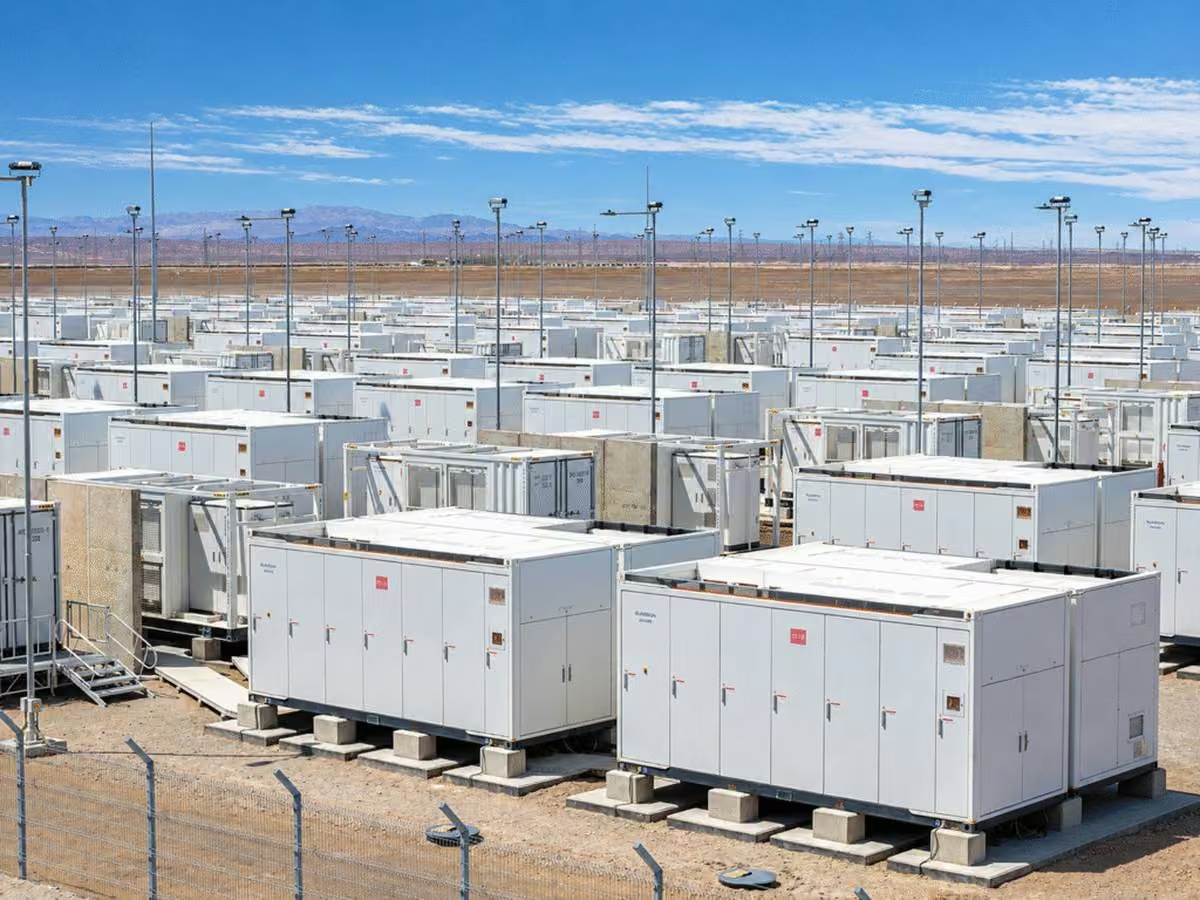
The energy storage system will employ lithium-ion batteries utilizing lithium iron phosphate (LFP) chemistry. The proposed configuration includes 32 Fluence Smartstack containers, each offering 7.524 MWh of energy capacity and 1.881 MW of nominal power. These units will be integrated into eight power stations, with four containers assigned to each station. The installation will feature 160 power conversion systems, along with liquid cooling, battery management systems, and fire protection mechanisms. The documentation notes that equipment from other manufacturers with equivalent technical specifications may be utilized.
The internal medium-voltage grid will operate at 34.5 kV, transmitting electricity to the Peñasco step-up substation, which is designed with a 34.5/230 kV transformation ratio. The technical report included in the project file estimates an annual photovoltaic production of 456.5 GWh during the first year of operation. This calculation, performed using the PVsyst software, assumes a specific production rate of 2,391 kWh/kWp and a performance ratio of 82.66%.
The facility will be developed on a 397.25-hectare site, with 213.38 hectares designated for construction and infrastructure. The layout allocates 207.52 hectares for photovoltaic trackers, 4.36 hectares for internal roads, 1.02 hectares for the energy storage system, and 0.36 hectares for the step-up substation. The environmental impact assessment identifies 175.47 hectares of forest vegetation that would be impacted, primarily consisting of succulent shrubland, microphyll desert shrubland, and mesquite scrub. The project requires obtaining the necessary authorization for a change in land use on forested land.
The documentation outlines an 18-month period for site preparation and construction, an estimated operational lifespan of 30 years, and a 12-month phase for closure and dismantling.
Transformaes Creación Sostenible has also submitted other solar projects in Mexico. In August, the San Agustín Solar Park, with a capacity of 64.47 MWp and 48.88 MWh of storage, entered the environmental evaluation process in Zacatecas. In February, the company had filed for La Encantada, a 75 MW project, in the municipality of Fresnillo.
Pvola take
The submission of the MIA-R signals that Peñasco is moving from planning into the regulatory approval phase, a necessary precursor to financial close. With 175.47 hectares of forest vegetation impacted, the project faces significant environmental scrutiny that could influence its timeline. The inclusion of substantial LFP storage highlights the growing importance of hybrid configurations in Mexico’s renewable energy pipeline.
Frequently asked questions
What is the total photovoltaic capacity and storage size of the Peñasco Solar Park project in San Luis Potosí?
The Peñasco Solar Park is planned with a photovoltaic capacity of 190.94 MWp and a battery storage system of 240.768 MWh. The facility will feature an inverter installed power of 176.40 MW and a nominal capacity of 150 MW at the interconnection point.
Which specific solar modules and tracking systems are specified for the Peñasco Solar Park installation?
The project utilizes 289,296 Longi Hi-MO 9 bifacial modules, each rated at 660 W with 24.4% efficiency. These panels are mounted on 3,007 Nextracker Horizon single-axis horizontal trackers, organized into 10,332 strings of 28 panels.
What battery chemistry and inverter technology are proposed for the energy storage system at the Peñasco site?
The energy storage system employs lithium iron phosphate (LFP) chemistry with a capacity of 60.192 MW and 240.768 MWh. Power conversion is handled by 42 Power Electronics HEM FS4200MH central inverters, each with a capacity of 4.2 MW.