China: Chinese solar module maker Sunport files for bankruptcy restructuring
The short answer
Sunport Power filed for bankruptcy restructuring in Wuxi on Nov. 12, 2026, after ending 2025 with CNY 1.19 billion in liabilities. The filing highlights the financial risk for manufacturers of niche PV technologies facing overcapacity and low demand.
Key facts
- Location
- Wuxi, Jiangsu province, China
- Investors
- Wuxi Industry Development Group holds 62.11% stake
- Use of proceeds
- Reorganize debt and attract new investors as alternative to liquidation
Chinese solar cell and module manufacturer Sunport Power has filed for bankruptcy restructuring, highlighting the mounting financial pressure on manufacturers specializing in niche PV technologies amid persistent overcapacity in China’s solar industry.
According to China’s national enterprise bankruptcy and restructuring information platform, Sunport Power submitted the application to the Wuxi Intermediate People’s Court in Jiangsu province. The case, numbered (2026) Su 02 Po Shen 45, was publicly disclosed on Nov. 12.
Sunport Power itself filed the application, rather than its creditors. As of Nov. 26, pv magazine had been unable to verify whether the court had formally accepted the application. The company did not respond to emailed requests for confirmation and comment.
Founded in 2012, Sunport Power was among the first Chinese manufacturers to commercialize metal wrap-through (MWT) solar technology. State-owned Wuxi Industry Development Group holds a 62.11% stake in the company.
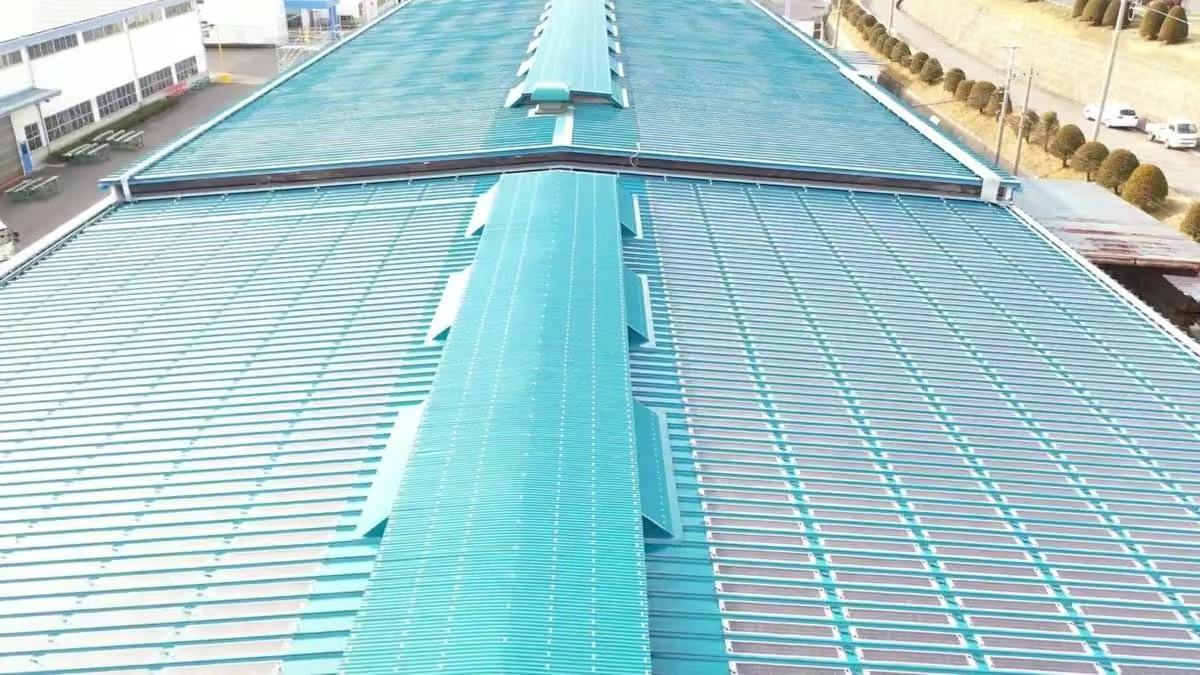
MWT technology routes front-side electrical contacts through small holes in solar cells to the rear, reducing front-side shading and enabling rear-side interconnection via conductive backsheets. Sunport Power developed the technology for lightweight and flexible solar modules targeting industrial rooftops with limited load-bearing capacity, curved surfaces, and other specialized applications.
The company lists around 4 GW of module manufacturing capacity across production facilities in Wuxi, Xuzhou, and Nanjing. However, its controlling shareholder’s latest bond disclosure identifies just 300 MW of dedicated lightweight module production capacity.
Chinese financial media, citing the group’s bond disclosures, reported that Sunport Power ended 2025 with total assets of CNY 575 million ($86.2 million) and liabilities of CNY 1.19 billion, resulting in negative equity of CNY 614 million. Its net loss of CNY 182 million exceeded annual revenue of CNY 162 million.
An August 2026 bond due diligence report prepared by Soochow Securities attributed the company’s losses to limited demand for lightweight modules, a lack of economies of scale in conventional module manufacturing, and falling selling prices.
The company reduced production to limit cash losses, leading to lower factory utilization rates and impairment charges on manufacturing equipment and inventories.
Sunport Power’s difficulties were already apparent in May 2025, when the company told pv magazine at The smarter E Europe trade show in Munich, Germany, that high MWT production costs and low module prices had prompted it to adopt mass-produced n-type solar cells for its latest lightweight module. The company also said some of its manufacturing capacity was idle.
The restructuring application highlights the challenges facing manufacturers pursuing niche PV technologies. While specialized products can command price premiums in applications unsuitable for conventional modules, limited demand makes it difficult to achieve the economies of scale enjoyed by mainstream manufacturers.
As major solar manufacturers increasingly introduce products tailored to specific applications, smaller manufacturers face growing pressure to maintain price premiums while securing sufficient production volumes to cover fixed costs.
Under China’s Enterprise Bankruptcy Law, if the court accepts the application, restructuring could enable Sunport Power to reorganize its debt and attract new investors as an alternative to liquidation.
Sunport Power opened its first 1 GW solar module factory in September 2017, following an investment in back-contact manufacturing equipment from Dutch supplier Eurotron in 2013. The company subsequently diversified its product portfolio, introducing flexible modules for building-integrated photovoltaics (BIPV) in 2020 and bifacial MWT modules in 2021.
Pvola take
This filing underscores the structural risk for niche PV manufacturers. Without economies of scale, high production costs make it impossible to sustain price premiums against mainstream competitors. Investors should scrutinize the demand pipeline for specialized technologies before funding further rounds.
Frequently asked questions
Why did Sunport Power file for bankruptcy restructuring in China?
Sunport Power filed for bankruptcy restructuring due to mounting financial pressure and persistent overcapacity in the solar industry. The company reported negative equity of CNY 614 million and a net loss exceeding its annual revenue in 2025.
What were Sunport Power's total assets and liabilities as of 2025?
Sunport Power ended 2025 with total assets of CNY 575 million and liabilities of CNY 1.19 billion. This resulted in negative equity of CNY 614 million, with a net loss of CNY 182 million.
How does Sunport Power's bankruptcy affect investors in niche solar technologies?
The bankruptcy filing signals high risk for investors in niche PV technologies like MWT. Limited demand for lightweight modules and lack of scale have contributed to the company's financial collapse, prompting a restructuring process.