ADB Allocates $20M for Kyrgyzstan Floating Solar Plant
The short answer
The Asian Development Bank has approved $20 million in financing for the construction of a 15-megawatt floating solar power plant in Kyrgyzstan. This project aims to reduce the country's dependence on imported electricity and strengthen energy security by adding a new domestic renewable source.
Key facts
- Amount
- $20 million total bank financing, including $19.55 million concessional loan and $450,000 from Asian Development Fund.
- Investors
- Asian Development Bank and Government of Kyrgyzstan.
- Use of proceeds
- Construction of 15-megawatt floating solar plant, grid modernization, and staff training.
- Location
- Chakan HPP-5 reservoir near Bishkek, Kyrgyzstan.
The Asian Development Bank (ADB) has approved $20 million in financing for the construction of Kyrgyzstan’s first industrial-scale floating solar power plant.
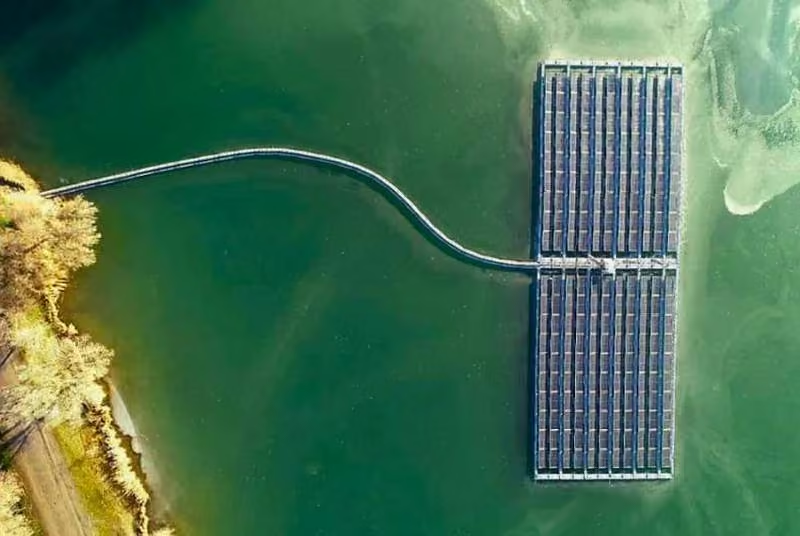
The facility will be installed on the reservoir of the GES-5 hydroelectric station near Bishkek and is projected to generate approximately 20 million kilowatt-hours of clean electricity annually. The project aims to reduce the country’s reliance on imported electricity and strengthen its energy security.
According to the ADB, the total bank financing for the project will amount to $20 million. Of this, $19.55 million will be provided as a concessional loan from ordinary capital resources, while an additional $450,000 will be granted from the Asian Development Fund. The Government of Kyrgyzstan will contribute an extra $2.02 million to the initiative.
The project entails the construction of a 15-megawatt floating solar photovoltaic plant at the Chakan HPP-5 facility, operated by the joint-stock company Chakan HPP.
The installation will be positioned directly on the existing reservoir and integrated into the current grid infrastructure. Projections indicate the plant will generate approximately 20 gigawatt-hours of electricity annually.
Zheng Wu, the country director of the Asian Development Bank’s permanent mission in Kyrgyzstan, noted that as the national economy expands, the demand for reliable power supply increases correspondingly.
He stated that the initiative will diversify domestic electricity sources, optimize the use of existing resources, and establish a foundation for attracting private investment into the renewable energy sector.
Currently, nearly 90 percent of electricity in Kyrgyzstan is generated by hydroelectric plants. However, rising consumption and climate change, which impacts water resources, create additional challenges for ensuring year-round power supply to the country.
According to ADB data, electricity consumption in Kyrgyzstan has increased by more than 45 percent since 2012. Meanwhile, the country’s dependence on imported electricity has grown, particularly during the winter months.
The floating solar power plant will serve as an additional domestic source of renewable energy, complementing the existing hydroelectric generation capacity.
Beyond the construction of the facility, the project includes the modernization of grid infrastructure and the development of Chakan HPP JSC's capabilities in building and operating floating solar installations.
The experience gained is intended to be shared with other developing countries in Central and Western Asia. The Asian Development Bank believes this approach will help attract private sector participation and expand investments in the region's solar energy sector.
Project implementation is expected to reduce greenhouse gas emissions by approximately 4,628 tons of carbon dioxide equivalent annually.
The initiative also provides for technical training and staff upskilling programs. Particular attention will be paid to expanding women's participation in the renewable energy sector.
Kyrgyzstan will thereby gain a new form of solar generation that utilizes the surface of the reservoir for electricity production, eliminating the need to allocate additional land for the construction of a large-scale solar station.
Pvola take
This financing signals a strategic shift toward diversifying Kyrgyzstan's energy mix beyond hydro, addressing climate-related water risks. By leveraging existing reservoir infrastructure, the project reduces land use barriers and creates a replicable model for private sector investment in the region's solar sector.
Frequently asked questions
How much financing did the ADB approve for the floating solar plant in Kyrgyzstan?
The Asian Development Bank approved $20 million in financing for the project. This amount includes a $19.55 million concessional loan and a $450,000 grant from the Asian Development Fund.
What is the capacity of the floating solar plant near Bishkek?
The project entails the construction of a 15-megawatt floating solar photovoltaic plant. It will be installed on the reservoir of the GES-5 hydroelectric station near Bishkek.
How will the new floating solar plant impact Kyrgyzstan's energy security?
The project aims to reduce the country's reliance on imported electricity. It is projected to generate approximately 20 million kilowatt-hours of clean electricity annually.