Ningxia's richest man Dang Yanbao to take control of China's Yinglite in approximately $146 million deal, inject solar assets
The short answer
Baofeng Group is set to acquire controlling interest in Yinglite for a minimum of $146.2 million, with the proceeds funding the injection of Baofeng Solar assets. This move creates a second A-share platform for Dang Yanbao, separating solar generation from coal chemicals to optimize valuation and financing.
Key facts
- Amount
- 974 million yuan (approx $146.2 million) floor price for 39.41% stake
- Investors
- Baofeng Group, controlled by Dang Yanbao
- Use of proceeds
- Acquire 100% of Baofeng Solar and inject into Yinglite
- Location
- Ningxia, China
Yinglite (000635.SZ), a Ningxia-based Chinese chemicals company, has disclosed two capital moves at once: its controlling shareholder, Guoneng Yinglite Group, has named Baofeng Group as the final buyer of a 39.41% stake, while the company plans to issue shares to Baofeng Group to acquire 100% of Baofeng Solar. With the change of control and the asset injection being pushed forward in the same window, the long-loss-making chlor-alkali producer may be redefined.
According to the announcement, Guoneng Yinglite Group plans to transfer 155.3 million Yinglite shares, or 39.41% of total share capital, at no less than 6.27 yuan per share, for a floor price of about 974 million yuan (approximately $146.2 million). After the deal closes, Guoneng Yinglite Group's stake will fall to 6.93%, Baofeng Group is expected to become controlling shareholder, and control of Yinglite may pass from the National Energy Investment Group system to private capital.
The 974 million yuan is only the floor price for the control transfer, not the total value of the whole transaction. The final price for 100% of Baofeng Solar has not been disclosed; the target assets must be appraised, and the share issue price, number of shares issued and post-restructuring ownership structure will be specified in later plans. As of now, the two sides are still negotiating the share transfer agreement, and both transactions must go through further procedures.
On the other side of the deal is Dang Yanbao, ultimate controller of Baofeng Group. The 2026 Hurun Rich List put his wealth at about 150 billion yuan (approximately $22.5 billion), ranking 21st nationwide, and the market habitually calls him the "richest man in the northwest." Baofeng Group was founded in October 2010 and spans three segments — new energy chemicals, new energy solar power generation and new-type energy storage — with Dang directly holding 95.59% of the equity.
Dang's best-known capital platform is Baofeng Energy (600989.SS). The company listed on the A-share market in 2019 and focuses on coal-to-olefins, extending from coal and coking to modern coal chemicals. If the move into Yinglite goes through, the Baofeng empire will have a second A-share listing platform, giving it two business expressions: coal chemicals and "chlor-alkali chemicals plus solar power generation."
The split has practical logic. Coal chemicals face coal prices, product prices, capacity cycles and environmental constraints, while solar plants hinge on installed capacity, generation efficiency, grid absorption, power prices and financing costs; the two asset types differ markedly in growth cycles and valuation logic. Placing them on separate platforms makes it easier to bring in capital and arrange financing, and lets the market price them on different logic.
Yinglite's own operating pressure cannot be ignored. As an established Chinese producer of calcium-carbide-process PVC, its main business covers polyvinyl chloride, caustic soda and calcium carbide, with an integrated "captive power—calcium carbide—PVC" chain. Since 2023, China's chlor-alkali industry has entered a downturn, PVC prices have kept falling, upstream costs have stayed rigid, and the company has posted losses for years.
Note: In the first three quarters of 2026, revenue fell 15.70% year on year and the net loss widened 71.76%.
The company previously explained that year-on-year declines in PVC and caustic soda selling prices were the main reason for the wider loss. By contrast, Baofeng Group's consolidated revenue was 30.005 billion yuan (approximately $4.5 billion), 35.453 billion yuan (approximately $5.3 billion) and 50.503 billion yuan (approximately $7.6 billion) in 2023, 2024 and 2025, respectively; Baofeng Energy, controlled by Dang Yanbao, posted revenue of 47.088 billion yuan (approximately $7.1 billion) and net profit attributable to shareholders of 14.317 billion yuan (approximately $2.1 billion) in the first three quarters of 2026.
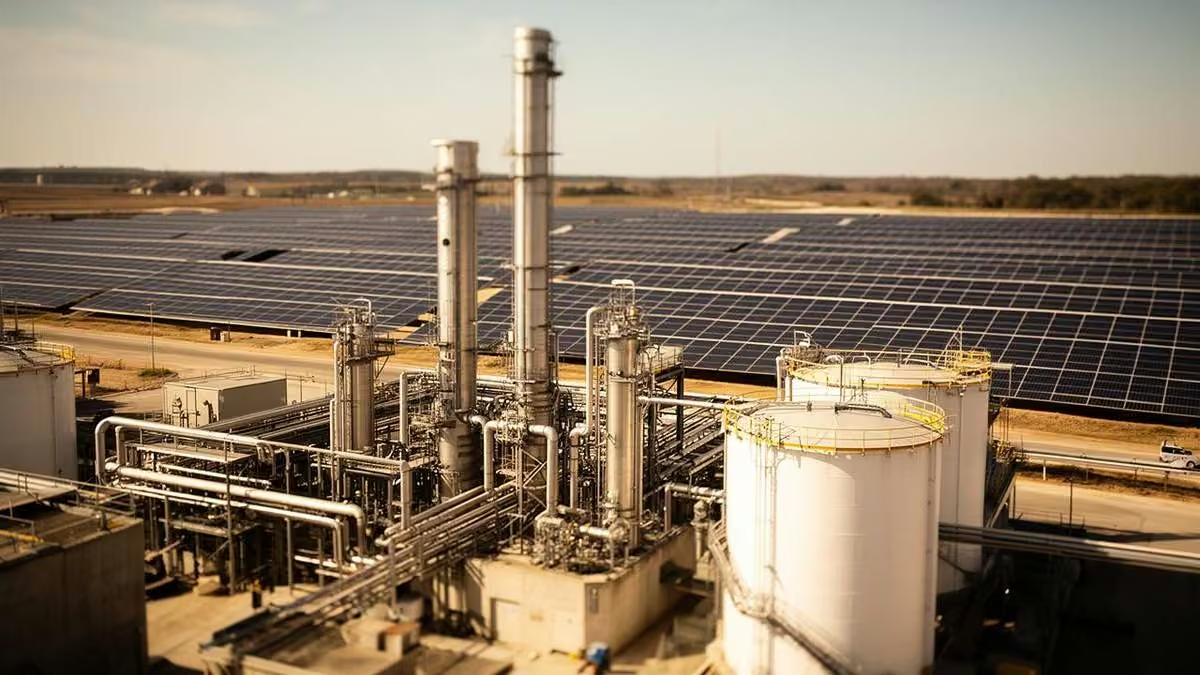
Under the two-step "equity transfer plus asset acquisition" design, Baofeng Group first gains control of the listed company, and then Yinglite issues shares to acquire Baofeng Solar, bringing the solar power assets into the listed system. Li Fenzhenzi, a researcher at Zhongyan Puhua, said in an interview with China Business Journal that Baofeng Solar's green power resources can be supplied directly to Yinglite's calcium carbide and PVC production, reducing purchases of expensive thermal power and lowering energy costs, while also giving Baofeng Solar an A-share capitalization and financing platform.
Chlor-alkali chemicals are an energy-intensive industry, and electricity accounts for a relatively high share of production costs. The analysis holds that low-cost green power can help Yinglite's chemicals business ride out the cycle and aligns with the long-term trend of low-carbon transformation and carbon-footprint control in the chemicals industry.
But cutting costs with green power alone will hardly cure the core problem. Li Fenzhenzi noted that overcapacity in China's PVC industry is now prominent, compounded by weak downstream demand from property and building materials, which keeps product prices under pressure; the profit margin from cost cuts is easily offset by falling selling prices. She also cautioned that returns on centralized solar plants are declining, so the earnings stability of Baofeng Solar's assets is uncertain; solar plants require large upfront fixed-asset investment and have long depreciation cycles, keeping book net profit low and profit volume relatively limited, making it hard to fully offset cyclical losses in the chemicals business.
Li Min, an analyst at Sublime China Information (SCI), told reporters that integrated calcium-carbide-process producers in the northwest, relying on captive power plants and their own calcium carbide units, previously held a cost advantage through a complete industrial chain and could ride out industry cycles. But in 2026 the industry downturn has spread across the board, the calcium-carbide route has lost its profit safe zone, and industry losses have evolved from one-way pressure on the ethylene route to losses on both the calcium-carbide and ethylene routes.
According to SCI statistics, in the third quarter of 2026, companies in Shandong that buy calcium carbide to make PVC lost about 800 yuan per ton on average; in that quarter, weekly operating rates for calcium-carbide-process PVC in China held at 67%–74%, while ethylene-process producers lost more, with weekly operating rates of only 51%–66%. Li Min believes the core problem behind industry losses is insufficient downstream end-user orders: demand from property completions, old-home renovation and infrastructure support has not recovered beyond expectations, leaving PVC prices without upward momentum.
From the state-owned capital perspective, Guoneng Yinglite Group's sale of control is partly to revitalize existing state assets and optimize the state-capital industrial layout, and partly, amid continued losses in the main business, to bring in a strategic investor with industrial resources and asset-injection capability for the listed company. The equity transfer explicitly lists "having industrial synergy capability, being able to inject quality core assets, and being able to improve the listed company's profitability" as priority conditions for intended buyers.
Judging from disclosed announcements, the two sides have not yet published specific arrangements on raw material supply, product sales, customer channels or plant operations; the synergy that can be confirmed so far remains at the capital level of "control transfer plus solar asset injection."
For the market, the deal offers two windows for observation. One is whether Baofeng Solar can deliver new earnings that stand up to appraisal; the other is whether Yinglite's existing PVC and caustic soda businesses can stop losing money. A dual-main-business model may smooth overall earnings volatility, but with the chlor-alkali industry downturn not yet bottoming out, the quality of the assets the new owner brings is the key to whether the valuation can be reshaped.
Once added, BigGo Finance appears first in Google Search Top Stories, so you get the broadest, most up-to-the-minute, and most comprehensive global financial news first.
Pvola take
This transaction signals a strategic decoupling of solar assets from legacy coal chemicals, allowing the market to price generation assets on their own merits. By creating a dedicated solar platform, Baofeng can attract capital more efficiently, as solar valuation logic differs fundamentally from cyclical chemical production.
Frequently asked questions
What is the floor price for Baofeng Group to acquire control of Yinglite in the recent announcement?
The floor price for the 39.41% stake transfer is approximately $146.2 million, or 974 million yuan. This amount covers the equity transfer portion, while the final value for the solar asset injection remains pending appraisal.
How will the acquisition of Baofeng Solar assets affect Yinglite's current business structure and revenue sources?
Yinglite will issue shares to acquire 100% of Baofeng Solar, integrating solar power assets into its listed system. This move aims to diversify the company's revenue beyond its current chlor-alkali production, which is currently facing industry downturns.
What is the strategic rationale for Baofeng Group taking control of Yinglite and injecting solar assets into the company?
The strategy involves using the listed platform to consolidate solar power resources and potentially stabilize earnings volatility. Analysts suggest that the quality of these injected assets will be critical in determining whether the company's valuation can be successfully reshaped.