Mexico: 180.08 MWp Solar Plant with Storage Approved in Campeche
The short answer
Semarnat issued conditional environmental approval on October 29 for the 180.08 MWp Campeche Photovoltaic Plant, which will include battery storage. This regulatory clearance allows the developer to proceed with site preparation and construction within a 20-month window.
Key facts
- Stage
- Conditional environmental approval granted by Semarnat on October 29.
- Grid connection
- 115 kV line to CFE Chicbul switching substation.
- Owner or developer
- Global Solar América 3.
- Location
- Municipality of Carmen, Campeche, Mexico.
Mexico's Ministry of Environment and Natural Resources (Semarnat) has granted conditional approval for the Campeche Photovoltaic Plant project, a development led by Global Solar América 3 in the municipality of Carmen, within the state of Campeche. The decision, issued on October 29 by the General Directorate of Environmental Impact and Risk (DGIRA), outlines a facility to be constructed in two phases. The initial phase will have a capacity of 130.026 MWp, with a subsequent expansion to reach a total of 180.08 MWp, alongside the installation of a battery storage system.
According to the official documentation, the first stage will incorporate 183,135 bifacial monocrystalline photovoltaic modules, each rated at 710 Wp. These panels will be organized into strings of 29 units, supported by 13 transformer centers and 25 inverters. The second phase will add 70,499 additional modules, five more transformer centers, and ten inverters. Upon the completion of both stages, the complex will comprise a total of 253,634 panels, 18 transformer centers, and 35 inverters.
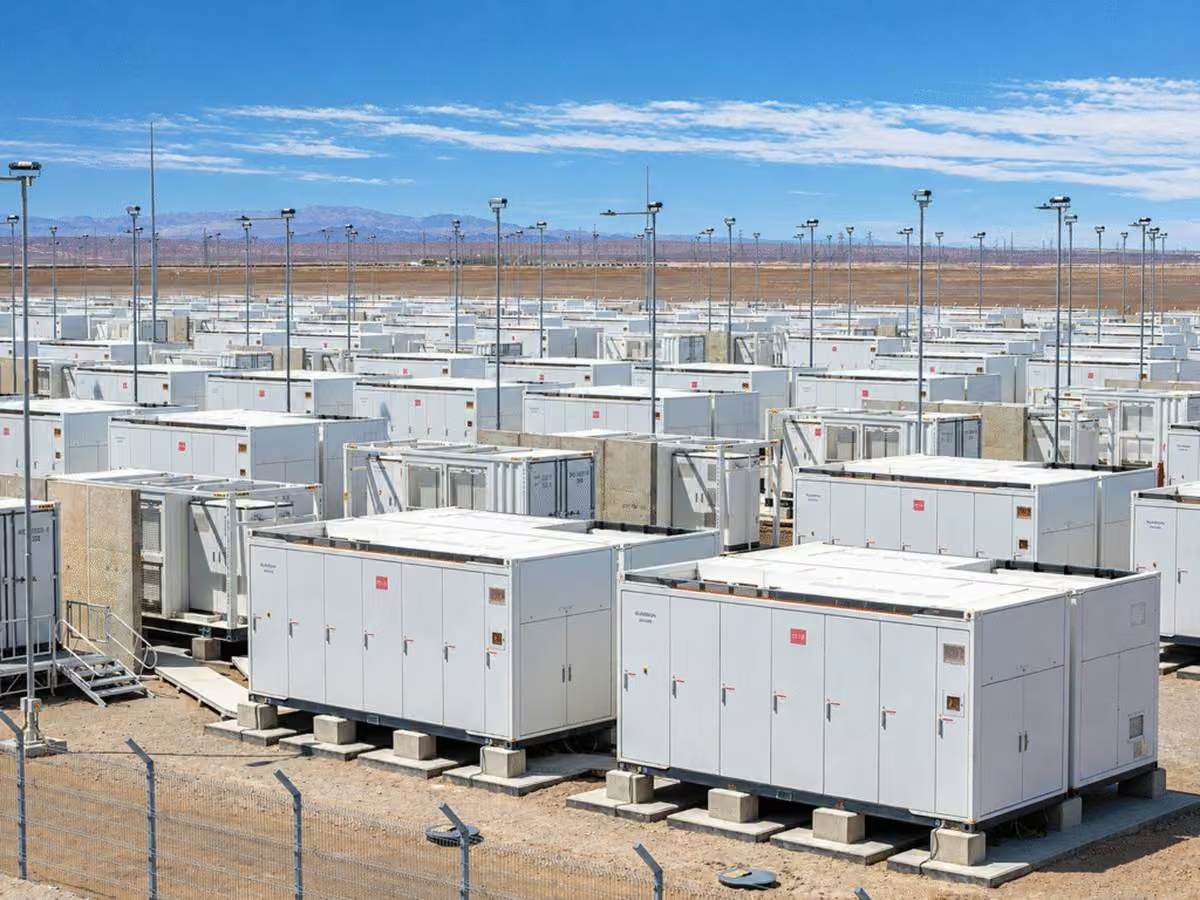
The approved facility will integrate a battery energy storage system (BESS) utilizing Envision ENS-LC16770-5500-00 units. Each container within this system is rated at 5.03 MWh and features liquid cooling, although the regulatory resolution does not disclose the total aggregate storage capacity. Power generated by the plant will be conveyed via an internal 34.5 kV grid to the Global Campeche step-up substation. From there, the electricity will be transmitted through a 115 kV line spanning 26.92 kilometers to the Chicbul switching substation, which is operated by the Federal Electricity Commission (CFE).
The project encompasses a total area of 327.3515 hectares, with 296.0036 hectares designated for permanent use and 31.3479 hectares for temporary occupation. Implementation requires the clearing of forest vegetation across 56.2104 hectares, primarily consisting of secondary shrub and tree cover within subperennifilous medium jungle ecosystems. The developer is obligated to secure authorization for the change of land use in forested areas prior to commencing construction. Additionally, the company must execute a reforestation program covering an equivalent surface area, subject to monitoring for a minimum period of ten years.
The Campeche state Secretariat of Environment, Biodiversity, Climate Change and Energy issued an unfavorable technical opinion during the review process. The agency argued that the facility could impact coastal ecosystems, biological corridors and protected species, while also altering the area’s hydrological conditions. In contrast, the DGIRA determined that the identified mangrove lies within the regional environmental system but outside the project’s footprint. The regulator concluded that the identified impacts could be addressed through prevention, mitigation and compensation measures.
The regulatory conditions require the submission of the Social Impact Manifestation for the Energy Sector to the Ministry of Energy (Sener) and the processing of permits mandated by the National Water Commission (Conagua), particularly given the proximity of the Mamantel River and the planned crossing for the electrical line. The operator is also obligated to implement programs for the rescue and monitoring of flora and fauna, the conservation of the howler monkey, soil restoration, and waste management. The resolution clarifies that the environmental authorization does not, in itself, constitute a permit to commence construction.
The permit grants a 20-month window for site preparation and construction, calculated from the business day following notification, alongside a 35-year term for operation and maintenance and a four-year period for closure and abandonment. The project entered the environmental evaluation process in January 2026. Subsequently, Global Solar 3 Campeche was included among the projects selected by the Federal Electricity Commission (CFE) in its first call for hybrid schemes, which encompassed 6,710 MW of photovoltaic capacity.
Pvola take
The approval signals regulatory progress for a significant hybrid project in a sensitive coastal region. However, the unresolved technical objection from the state environment agency regarding hydrological and ecological impacts remains a material risk for the project's timeline.
Frequently asked questions
What is the total approved capacity of the Campeche Photovoltaic Plant and how is it phased?
The project has a total approved capacity of 180.08 MWp, constructed in two phases. The initial phase will have a capacity of 130.026 MWp, with a subsequent expansion to reach the total capacity.
How many bifacial monocrystalline photovoltaic modules will be installed in the first phase of the Campeche plant?
The first stage will incorporate 183,135 bifacial monocrystalline photovoltaic modules. These panels are rated at 710 Wp each and will be organized into strings of 29 units.
What specific battery energy storage system units are approved for integration into the Campeche project?
The facility will integrate a BESS utilizing Envision ENS-LC16770-5500-00 units. The approval outlines the installation of this storage system alongside the photovoltaic infrastructure.