Buttonbush 800 MW Solar-Storage Signs PPAs in California
The short answer
Avantus executed 20-year power purchase agreements with PG&E for the first two phases of Buttonbush, totaling 800 MW of solar and 3,200 MWh of storage. The contracts provide long-term revenue visibility but remain conditional on California Public Utilities Commission approval before financing and construction can proceed.
Key facts
- Capacity
- 800 MW solar generation and 3,200 MWh battery storage for phases 1A and 1B
- Stage
- Signed PPAs subject to CPUC approval; construction planned for 2027
- Grid connection
- Interconnection planned at PG&E Midway Substation
- Owner or developer
- Avantus, acting as independent power producer
- COD
- Commercial operation expected in 2029
- Location
- Western Kern County, California
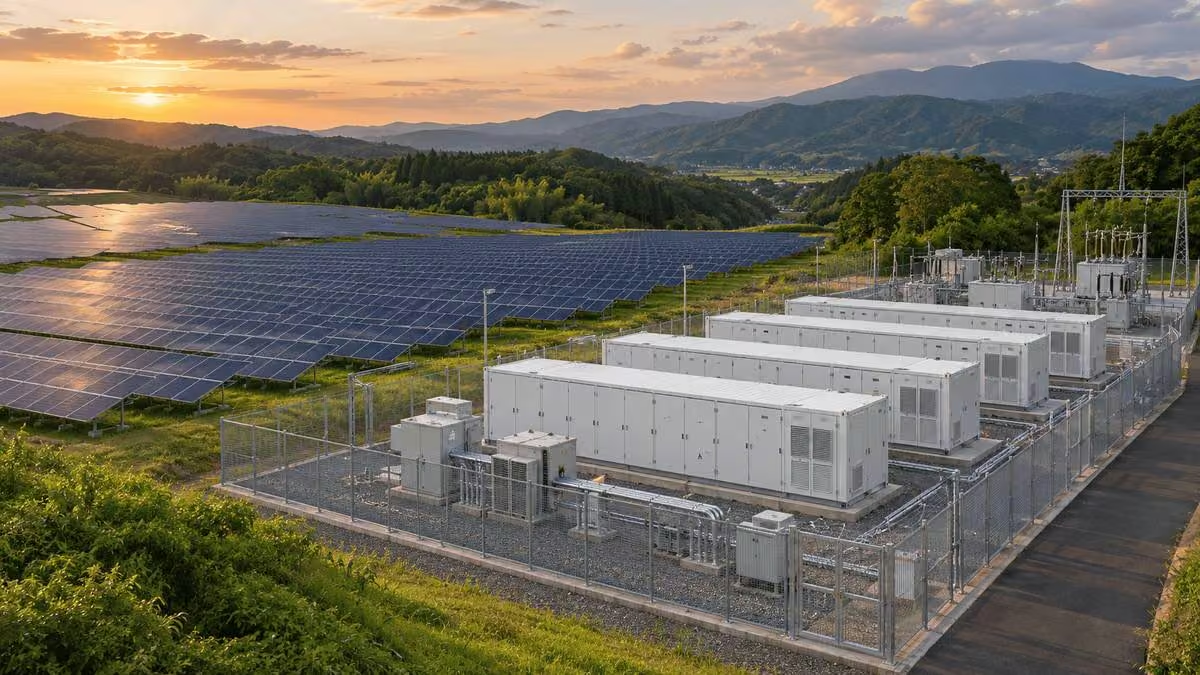
Avantus has signed 20-year power purchase agreements with Pacific Gas and Electric Company for the first two phases of the Buttonbush Solar Center in western Kern County, California. The Buttonbush solar-storage PPAs cover projects planned to combine 800 MW of solar generation with 3,200 MWh of battery storage.
The contracts give Buttonbush 1A and 1B a long-term buyer for electricity, but they remain subject to approval by the California Public Utilities Commission. Avantus expects construction to begin in 2027 and commercial operation in 2029; the projects are not yet operating.
Avantus announced the agreements on November 17 and said it plans to own and operate both phases as an independent power producer. The company estimates that Buttonbush 1A and 1B represent approximately $3 billion of infrastructure investment and would create about 900 union construction jobs.
Buttonbush solar-storage PPAs advance the first 800 MW
The contracts apply to the initial phases rather than the entire Buttonbush development. The official project site identifies Buttonbush as a multiphase project with permits covering as much as 2,000 MW of solar generation. It says the first two phases occupy approximately 4,600 acres combined.
Kern County approved land-use entitlements for the broader development in March 2026. The state’s Notice of Determination covers a project of up to 2 GW of solar and approximately 16 GWh of battery storage across nearly 12,000 acres. The newly announced PPAs therefore commercialize only part of the permitted project.
The 3,200 MWh figure describes stored energy, not the battery’s maximum discharge power. Avantus has not disclosed the contracted phases’ battery power rating in megawatts, so their discharge duration cannot be calculated from the public announcement. The releases also omit the equipment supplier, cell chemistry, usable energy, degradation assumptions and round-trip efficiency.
CPUC approval remains a condition
The announcement describes signed agreements, but its footnote states that the Buttonbush contracts require CPUC approval. That distinction matters because an executed PPA reduces offtake risk without completing the regulatory, financing, procurement, construction or commissioning steps.
A PG&E filing submitted to the CPUC separately identifies Buttonbush as an 800 MW generating facility planned to interconnect at the utility’s Midway Substation. That record supports the project’s grid-connection pathway, but it does not establish that the new PPAs have received commission approval.
The commercial milestone is comparable to the finalized contract supporting the planned Glenrowan battery offtake , where long-term revenue support preceded financing and construction. It differs from the completed Sandrini solar-and-storage facility in Kern County , which has already entered operation.
What the contracts do and do not establish
A 20-year PPA can improve revenue visibility and help a developer obtain construction financing. The public announcement does not disclose the contract price, annual energy obligation, battery dispatch rights, availability requirements, escalation terms, performance guarantees or termination provisions. It also does not state whether PG&E or Avantus will control battery charging and discharge.
The next material milestones are CPUC approval, project financing, equipment selection, a confirmed construction start and progress on the Midway interconnection. Until those steps occur, the Buttonbush solar-storage PPAs should be described as conditional long-term offtake agreements for planned assets—not evidence that 3.2 GWh of storage has been built or added to California’s operating fleet.
Pvola take
The 20-year offtake agreements reduce revenue risk for the initial 800 MW phases but do not guarantee project completion. CPUC approval remains a critical regulatory hurdle that must be cleared before financing closes. Investors should track the commission’s decision as the next material milestone for this development.
Frequently asked questions
What are the capacity specifications for the first two phases of the Buttonbush Solar Center project?
The first two phases are planned to combine 800 MW of solar generation with 3,200 MWh of battery storage. These figures represent the contracted capacity for the initial phases of the development in western Kern County, California.
What is the estimated infrastructure investment and job creation associated with the Buttonbush 1A and 1B phases?
Avantus estimates the project represents approximately $3 billion of infrastructure investment. The development is expected to create about 900 union construction jobs during the build-out phase, which is scheduled to begin in 2027.
What regulatory approvals are required before the Buttonbush solar-storage PPAs can proceed to construction?
The agreements remain subject to approval by the California Public Utilities Commission. Until CPUC approval is granted, the contracts are considered conditional long-term offtake agreements for planned assets that are not yet operating.