Sonagazi 220 MW Solar Project Starts Construction in Bangladesh
The short answer
Electricity Generation Bangladesh has commenced construction on the 220 MW Sonagazi solar project, with completion and grid connection scheduled for June 30, 2028. This facility represents a critical step toward Bangladesh's target of 10,000 MW of renewable generation by 2030.
Key facts
- Capacity
- 220 MW
- Stage
- Construction start
- Owner or developer
- Electricity Generation Bangladesh
- COD
- June 30, 2028
- Location
- Sonagazi, Feni District, Bangladesh
Bangladesh is advancing plans to build its largest solar power plant project, a 220-megawatt (MW) facility in Sonagazi, Feni District, as the country steps up efforts to expand renewable energy generation and reduce reliance on conventional power sources.
The Sonagazi solar power project, being developed by Electricity Generation Bangladesh (EGB), is estimated to cost Tk1,888.10 crore (approximately $155 million). Construction is expected to be completed by June 30, 2028, with electricity generation scheduled to begin around the same time.
The project is expected to generate approximately 441.18 gigawatt-hours (GWh) of electricity annually for Bangladesh’s national grid, making it a significant addition to the country’s utility-scale solar generation capacity.
State Minister for Power, Energy and Mineral Resources Anindya Islam Amit inaugurated a start-up workshop for the project on November 16, 2026. Speaking at the event, he highlighted the government’s ambition to generate 10,000MW of electricity from renewable sources by 2030. Amit also insisted in the need to meet 20% of national electricity demand through renewables.
The government also expects the Sonagazi solar power plant to contribute significantly towards achieving these targets.
Financing and Development of the Sonagazi Solar Power Project
The 220MW solar power plant is being implemented through joint financing. This will see funds from the Bangladesh government, the Islamic Development Bank (IsDB), and Electricity Generation Bangladesh (EGB).
Additionally, a financing agreement between Bangladesh’s Economic Relations Division (ERD) and the Islamic Development Bank was signed on August 3, 2026. This established an important funding arrangement for the project.
The estimated Tk1,888.10 crore investment will support the development of the solar generation facility and its associated electrical infrastructure.
Once complete, the project is expected to strengthen Bangladesh’s domestic electricity supply. This is while diversifying its energy mix through increased investment in utility-scale renewable energy infrastructure.
Technical Scope and Infrastructure
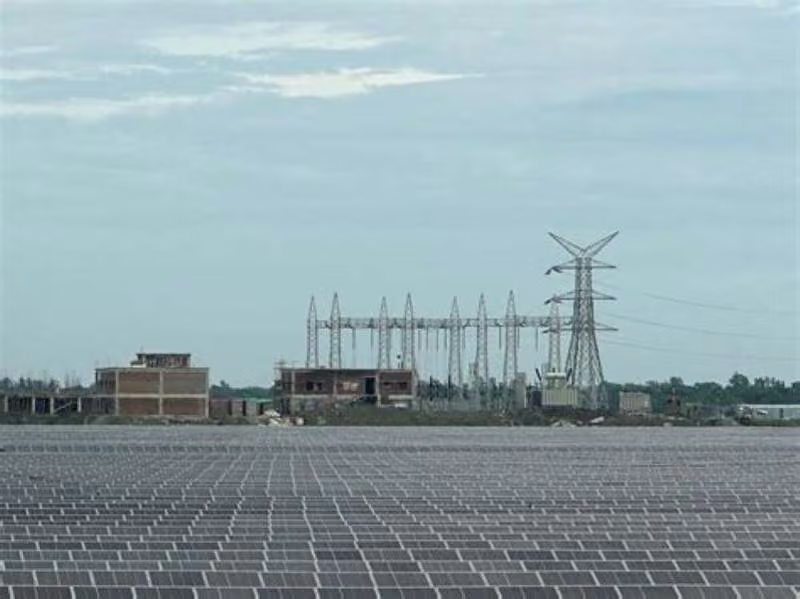
The Sonagazi solar power project will involve the installation of approximately 469,560 solar photovoltaic (PV) modules, 26 inverters, and two substations.
Solar PV modules: Approximately 469,560 units for electricity generation.
Inverters: 26 units to convert the direct current (DC) generated by the solar panels into alternating current (AC).
Substations: Two facilities to support electrical infrastructure and power evacuation into the national grid.
One of the notable features of the development is the proposed incorporation of agri-voltaics. This approach will allow agricultural activities and livestock rearing to take place alongside solar electricity generation on the same land.
The approach could also help address one of Bangladesh’s major challenges in expanding utility-scale solar power: competition between energy infrastructure and agricultural land use.
The project also incorporates a community development component. This includes skills development training for approximately 1,000 unemployed local youths and women. It will also establish computer laboratories, and install rooftop solar panels at local educational institutions.
Sonagazi Emerging as a Major Solar Energy Hub in Bangladesh
The 220MW project is part of a broader ambition to establish Sonagazi as a major renewable energy generation center.
On September 29, 2026, Bangladesh’s Executive Committee of the National Economic Council (ECNEC) approved a separate project involving the acquisition of 386 acres of land for another 130MW solar power plant in Sonagazi.
There are also plans to develop a 150MW floating solar power plant at Muchapur. This will further expand the area’s renewable energy potential.
Together with the 220MW facility, these proposed developments could establish approximately 500MW of additional solar generation capacity in the wider area. This is with a potential combined capacity of around 600MW when existing facilities are considered.
Furthermore, Electricity Generation Bangladesh already operates a 75MW solar power plant in Sonagazi, providing an existing renewable energy foundation for the expansion.
Bangladesh’s Renewable Energy Expansion Plans
Bangladesh is seeking to diversify its electricity generation portfolio amid growing demand for power and concerns over dependence on imported fossil fuels.
The government’s target is to generate 10,000MW of electricity from renewable energy sources by 2030. This is while meeting 20% of national electricity demand through renewables.
The Sonagazi project is one of several large-scale solar initiatives being advanced to support this transition.
Another significant development is the proposed 442MW Rampal solar power plant in Bagerhat District. The Bangladesh Power Development Board (BPDB) is preparing for its construction, with commissioning targeted for June 2029.
The Rampal project is particularly notable because it will use land originally acquired for a coal-fired power development.
With the Sonagazi and Rampal projects, Bangladesh is positioning utility-scale solar power as an increasingly important component of its long-term electricity infrastructure.
What Next for the Sonagazi Solar Power Plant Project?
The immediate priority for Electricity Generation Bangladesh and its financing partners will be advancing project implementation towards the June 2028 completion target.
The start-up workshop inaugurated on November 16, 2026, marks an important project implementation milestone. Subsequent progress will depend on the timely execution of construction activities, installation of the solar generation equipment, completion of the substations, and connection with the national electricity grid.
The project’s expected annual generation of 441.18GWh will also make its actual performance an important measure of Bangladesh’s progress towards its renewable energy targets.
If completed as scheduled, the Sonagazi solar power project will represent a major addition to Bangladesh’s renewable electricity infrastructure. It will also support local employment, skills development, and more efficient use of land through agri-voltaics.
Sonagazi Solar Power Project: Key Facts
Project developer: Electricity Generation Bangladesh PLC (EGB)
Solar technology: Photovoltaic (PV)
Who is Involved in the Sonagazi Solar Power Project?
Economic Relations Division (ERD) – Bangladesh government counterpart responsible for the financing agreement with IsDB.
Ministry of Power, Energy and Mineral Resources
Bangladesh Power Development Board (BPDB)
Source: constructionreviewonline.com All rights reserved. Unauthorized reproduction prohibited.
Pvola take
The project's scale and joint financing structure signal a maturing utility-scale market in Bangladesh. By integrating agri-voltaics, the developer addresses land-use conflicts that typically constrain solar expansion in dense agricultural regions. This model could become a template for future projects in the region.
Frequently asked questions
What is the estimated cost and completion timeline for the Sonagazi solar power project in Bangladesh?
The 220MW Sonagazi solar project is estimated to cost Tk1,888.10 crore, approximately $155 million. Construction is expected to be completed by June 30, 2028, with electricity generation scheduled to begin around the same time.
How much annual electricity generation is projected for the Sonagazi solar facility in Bangladesh?
The project is expected to generate approximately 441.18 gigawatt-hours of electricity annually for the national grid. This addition significantly increases Bangladesh’s utility-scale solar generation capacity.
What renewable energy targets did the State Minister for Power announce regarding the Sonagazi project?
State Minister Anindya Islam Amit highlighted the government’s ambition to generate 10,000MW from renewable sources by 2030. He also emphasized the need to meet 20% of national electricity demand through renewables.