Malaysia Proposes 30% Renewable Quota for Data Centers Under CRESS
The short answer
The Malaysian government proposes requiring data centers to source at least 30% of their energy from renewables, a rule that remains in the proposal stage. This mandate would force operators to secure new solar capacity via CRESS, shifting their procurement strategy away from grid-only supply.
Key facts
- Jurisdiction
- Malaysia
- Instrument
- Corporate Renewable Energy Supply Scheme (CRESS)
- Status
- Proposal under discussion
- Scope
- Data centers, including those using off-grid supply
- Rate or target
- 30% renewable energy usage requirement
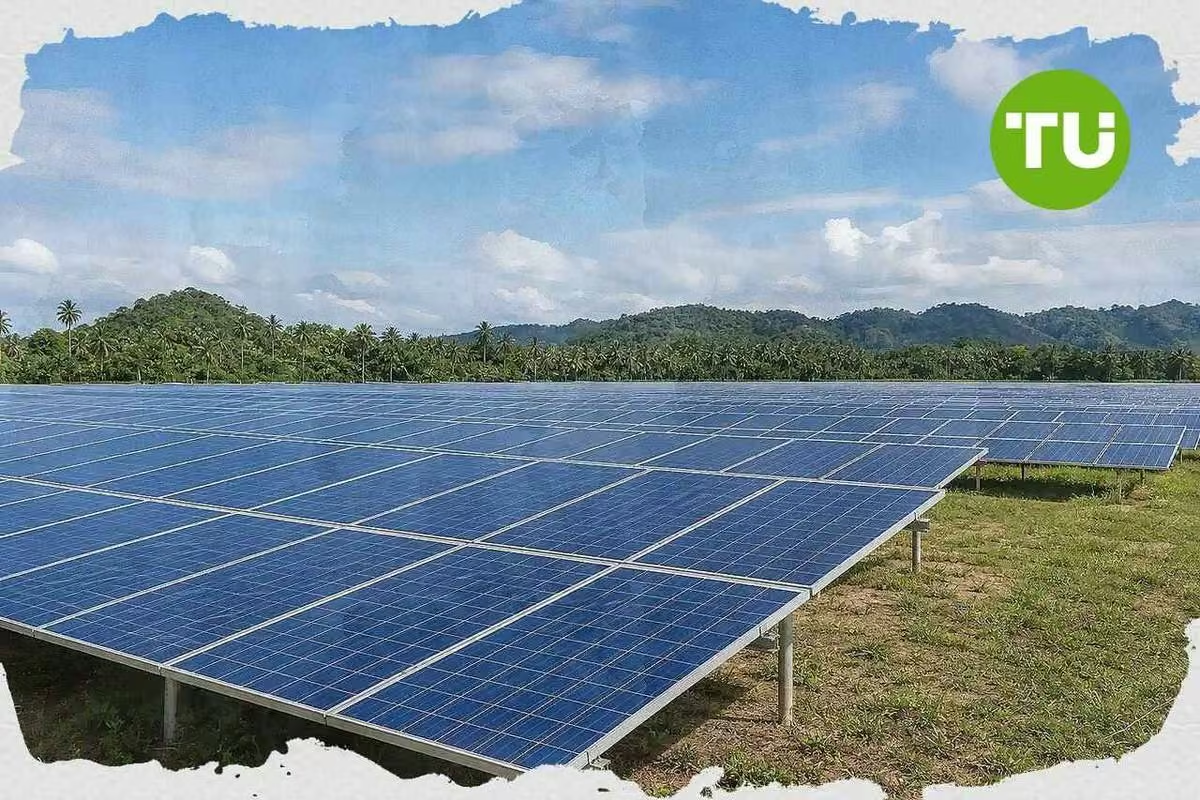
The government’s proposal to require data centers to use at least 30% renewable energy is raising expectations for new demand for solar farms in Malaysia. The requirement could also accelerate adoption of the Corporate Renewable Energy Supply Scheme as data center operators assess the cost of off-grid supply and implementation terms that are still being finalized.
Highlights
This article was translated from the original. Read the original version by our correspondent here .
Renewable energy quota framework and implications for data centers
Industry sources said the threshold has been under discussion since early this year, while data center projects approved on condition that they use off-grid supply may face a renewable energy requirement as high as 50%. Key details, including the precise definition of off-grid supply and the compliance method, are still being finalized.
If implemented, the mandatory requirement could spur the development of new solar farms under the Corporate Renewable Energy Supply Scheme, or CRESS, which allows renewable energy developers to sell electricity directly to industrial customers. So far, CRESS adoption has been slow as data centers compare the cost of solar power and Tenaga Nasional Bhd’s grid usage charges with the cost of drawing power directly from the grid.
Industry players remain cautious, however, as the official requirements have yet to be published. In September, the Ministry of Energy Transition and Water Transformation lowered System Access Charges to 14 sen per kWh from 20 sen, but the Energy Commission later clarified in October that CRESS projects remain subject to an additional charge of 4 sen per kWh. Impact on solar capacity and the energy market The scale of solar capacity required depends on how the 30% quota is measured. If the target is based on total energy used over a given period, a solar farm’s peak capacity would need to be around 80% to 90% greater than the data center’s capacity to account for the intermittent nature of solar generation; a 100MW data center, for example, would require a solar farm of about 180MWp to meet the 30% renewable energy usage target.
Impact on solar capacity and the energy market
Data from the Ministry of Investment, Trade and Industry shows that the government has approved between 23GW and 23.5GW of data center capacity based on maximum demand, including 27 data centers expected to use off-grid electricity, with a combined capacity of around 8GW. As of August, operational data centers had contracted 2.3GW of capacity, while total maximum demand is expected to exceed 8GW by 2030, potentially requiring 14GWp of renewable energy capacity to meet the 30% energy supply requirement.
One of the industry’s key questions is whether schemes such as CRESS will qualify as off-grid supply, or whether only dedicated self-consumption solar installations, or Selco, will qualify. Another concern is whether the Green Electricity Tariff, or GET, which Tenaga sells through the grid at a small premium over the regular tariff, can count as renewable energy for data centers.
GET supply of 6.6TWh has been fully subscribed, according to data from the Malaysia Green Attribute Tracking System. Given the nearly 6GW of existing renewable energy capacity on the grid, the quota could be expanded, but industry players believe the government’s main objective is to create new generation capacity, rather than simply absorb demand through existing supply.
Beyond the data center segment, rising fossil fuel costs continue to support renewable energy adoption. Malaysia’s electricity tariffs have included a fuel surcharge since May, and official projections show that the rate will remain higher in the coming months, potentially rising to 6 to 8 sen per kWh.
This backdrop is also driving interest in CRESS among other industrial users, including a 680MW joint development by Gamuda Bhd, SD Guthrie Bhd and Gentari Sdn Bhd for a U.S.-based technology firm. Meanwhile, data from the Sustainable Energy Development Authority shows that more than 490MW of rooftop solar applications were submitted in the first 10 months of 2026, with 307MW already operational, while the Large-Scale Solar 6 bidding round, which closed at the end of October, offered a total allocation of 2,650MW.
In earlier coverage, we examined Solarvest’s quarterly profit , which reflected sustained demand for renewable energy in Malaysia.
Editor's Picks for You
Latest Malaysia News
Information on the TradersUnion.com website is for informational purposes only and does not constitute any motive or suggestion to visitors to invest money. Moreover, we hereby warn you that trading on the Forex and CFD markets is always a high risk. According to the statistics, 75-89% of customers lose the funds invested and only 11-25% of traders earn a profit. Trading in futures and options carries substantial risk of loss and is not suitable for every investor.
That is why you should only invest money that you are prepared — or can afford — to lose at such high risks. Tradersunion.com does not provide any financial services, including investment or financial advisory services. Also, the Traders Union is not a broker and does not get money for trading in the Forex or CFD markets. Our website only provides information on brokers and the markets and helps its users to select the best brokerage company based on detailed information and objective analysis of brokers.
Traders Union (TradersUnion.com) shall not be liable for the consequences of trading decisions made by the Client and for the possible loss of his capital resulting from the use of this website and information published on it.
Forex market, CFD and cryptocurrency trading involves high risks and is not suitable for everyone. Before investing money, you need to adequately assess the level of your expertise and be aware of the risks, particularly in the context of trading with leverage. The information on this website is not intended for distribution or use by any person in any country or jurisdiction, where such distribution or use would be in violation of the local law or regulation. Any payments by Traders Union (TradersUnion.com) to the users of our website shall be legally interpreted solely as an incentive on our part for the activity on the website in the form of a deduction of a part of the advertising income; they shall not be a subject of any claims of our users or our obligations, a subject of disputes, as well as cannot be considered in relation to the services provided to users by brokers, both in fact and in their completeness and volume. The administration of the website shall not be liable for the content of user comments and reviews about the companies and shall not verify whether the authors of the reviews are indeed real clients of a specific company. All reviews, both negative and positive are published on the website without verification of their reliability; only offensive reviews that call for violence or any kind of discrimination and also reviews published from one group of IP addresses are moderated and removed. The authors of the materials shall be fully liable for the accuracy, completeness and impartiality of any information in the articles and reviews, including in the context of their use or mention of any brand names or trademarks. All mentions of the names of companies and their brands in any materials on the website shall be made in the context of communication of socially important information to the people about their activities by independent journalists, who are the authors. All evaluations and indicators on the website express the subjective opinion of the authors of the reviews (articles) and shall not be viewed as accurate statements and be a subject of disputes and claims against Traders Union.
All the services on the Tradersunion.com website are free for you to use. Our team spends thousands of hours per annum researching brokers and gathering information about them to help investors all over the world to choose reliable companies and to avoid fraudsters.
Indeed, the curating, sourcing, and organization of this process requires substantial financial investment by Tradersunion.com, which the website earns in the form of advertising payments. There are two types of advertising services on the website — direct advertising or partner (broker) participation programs. However, no services purchased by our partners shall affect the recommendations on our website, or our opinions, or ratings. Our ratings are based on our objective rating criteria and methodology; and the results are always equally and fairly applied to each broker. The work of our content authors and research groups does not involve any interaction with our advertisers and they do not have access to data concerning the amount of advertising purchased. For over 10 years we consider our independence, absolute openness, and objectivity as our main priority. Please follow the links to each of our affiliated broker’s websites. This will help Tradersunion.com to continue to provide our services to you for free.
Pvola take
The 30% quota creates a structural demand floor for solar developers, as data centers must secure dedicated generation to meet compliance. With 23GW of data center capacity approved, the resulting solar buildout will outpace current CRESS adoption rates, forcing a rapid expansion of the direct supply market.
Frequently asked questions
What is the proposed renewable energy quota for data centers in Malaysia?
The government proposes requiring data centers to use at least 30% renewable energy. Projects approved on the condition of using off-grid supply may face a requirement as high as 50%.
How might the new quota affect the Corporate Renewable Energy Supply Scheme in Malaysia?
The mandatory requirement could spur the development of new solar farms under the CRESS. This scheme allows renewable energy developers to sell electricity directly to industrial customers like data centers.
What is the current status of the compliance details for the new data center energy rules?
Key details, including the precise definition of off-grid supply and the compliance method, are still being finalized. Industry sources indicate the threshold has been under discussion since early this year.