New Zealand Sets $4,400 Per Hectare Solar Lease Benchmark for Farmland
The short answer
New Zealand solar developers are paying $4,400 per hectare annually for 35-year leases on farmland, a rate confirmed by a recent property sale in Tararua. This benchmark exceeds typical agricultural returns, forcing farmers to weigh long-term energy income against short-term crop yields.
Key facts
- Jurisdiction
- New Zealand
- Instrument
- Solar and wind land leases
- Status
- Active commercial agreements
- Scope
- 10,000 hectares committed to solar, 10,000 hectares in pipeline
- Rate or target
- $4,400 per hectare annually for solar; $25,000 to $30,000 per turbine for wind
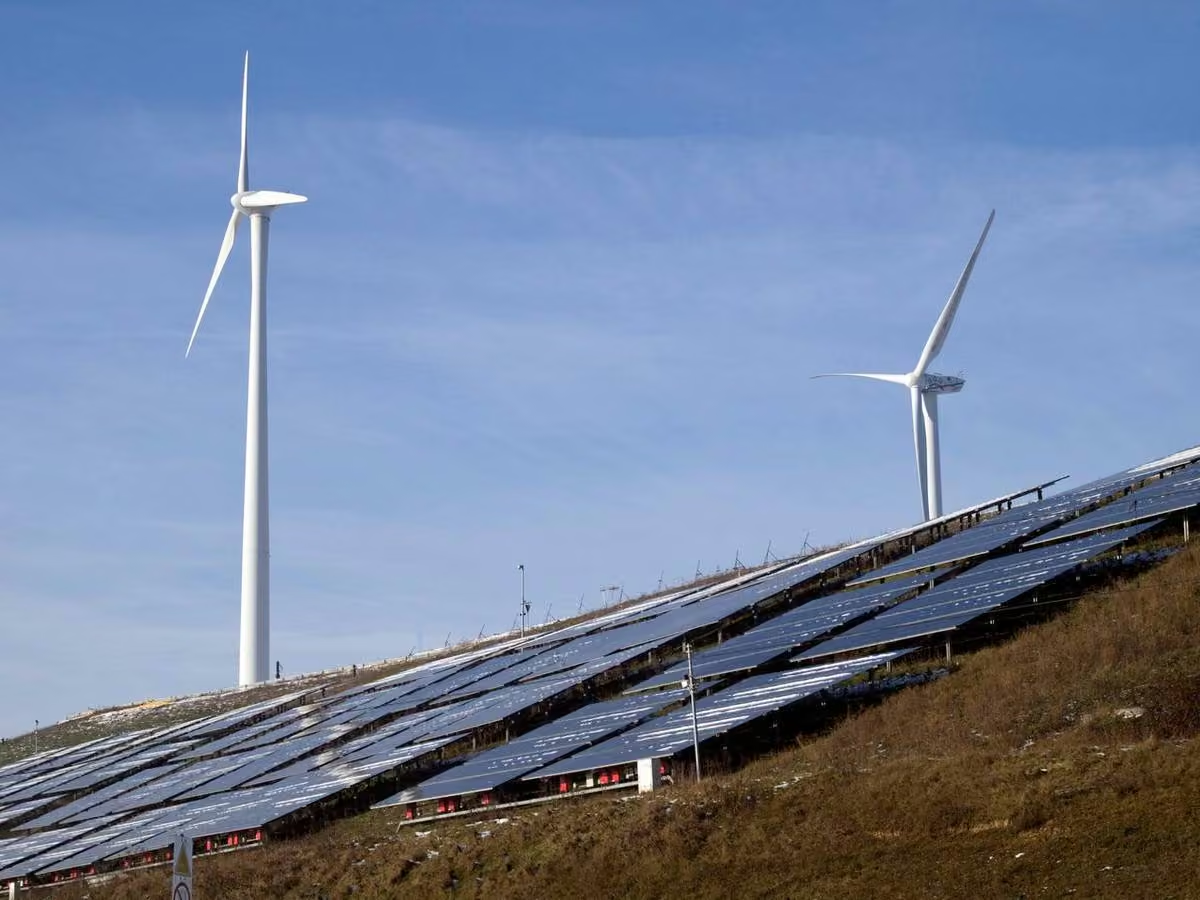
Energy companies installing solar and wind turbines across the country are proving reluctant to outline the price they will pay for having their generation assets on farm land.
Nationally, about 10,000 hectares of farmland are committed to solar energy production, with a further 10,000ha estimated to be in the solar energy development pipeline, including some major projects covering 500ha or more.
There are also seven major wind turbine projects either being commissioned or due for completion over the coming two years.
Farmers Weekly inquiries to energy generators on how much farmers could expect to be paid for having the generation assets on their properties were generally stonewalled by the companies.
NZ Clean Energy Limited, operator of three major solar projects, declined to comment on what solar properties are paid. Lodestone and Lightyears Solar did not respond to Farmers Weekly inquiries.
But a recent advertised sale by Colliers of 90ha of freehold farmland in Tararua provides an insight to what payment could be expected for solar projects.
The property is advertised with a 35-year lease in place to a utility-scale solar developer, with income of $396,855 a year paid monthly in advance, and a CPI-linked rent review every year.
Colliers director and rural sales adviser Hadley Brown said it is unusual to have a property come to market with such a lease arrangement already in place.
“It will be interesting to see how much inquiry we get. It is certainly a good lease to have in place,” he said.
The average per-hectare return of $4400 per hectare ranks well against other land use options. Maize growing, for example, may return between $1500-$1800/ha.
AgFirst director James Allen said his firm has been engaged frequently in solar lease agreements.
“Solar is almost a daily discussion for us now. You have a land use that is relatively new, and Waikato is proving a good place when considering location and distance to market.”
He said annual lease payments between $2500 and $6000 per hectare a year are typical of returns discussed.
“They will typically compare well – $2000 a hectare would be your top-end payment for maize growing, for example.”
He said location in relation to a substation is important, along with distance to the market consuming the energy.
Wind turbine payments prove more opaque, with industry insiders claiming payments of $25,000-$30,000 a year per turbine. Landowners are subject to non-disclosure agreements once signed up.
Farmers Weekly understands landowners in Waikato have been paid $20,000 to grant companies access for initial site investigation and assessment.
Mercury Energy, operator of five turbine sites with a sixth under commission, would not disclose payment details on grounds of commercial sensitivity.
Meridian confirmed it operates its sites on a mix of owned and leased land, without disclosing what its payment values are.
“Agreements are negotiated with individual landowners and will always vary depending on the particular property and project.
“Annual rent is based on either the total installed megawatt capacity or a percentage of total wind generation,” said Meridian’s head of renewable development, Rebecca Nicholson-Knott.
Brad Rooney, chief operations officer of Pioneer Energy Group in Alexandra, said their arrangements are commercially sensitive and between the company and landowner.
He said interest in installing turbines on farmland often goes both ways.
“We get interest from farmers, and we approach them when we see potential in a certain location.”
Waikato farm adviser Rob Macnab has been involved in helping companies meet consent conditions by establishing farm systems where solar panels are integrated with sheep grazing.
He said $4000 per hectare per year for a 30-year solar lease sounds “about right” for what companies are offering.
Pvola take
The opacity of wind payments contrasts sharply with the emerging transparency of solar lease rates, creating an information asymmetry for landowners. With solar returns now documented at $4,400 per hectare, developers face pressure to standardize terms to maintain access to prime farmland.
Frequently asked questions
Why are New Zealand energy companies reluctant to disclose lease payments for solar and wind projects on farmland?
Companies are proving reluctant to outline the price they will pay for having generation assets on farm land. Inquiries to operators like NZ Clean Energy Limited were generally stonewalled or not responded to.
What are the typical annual lease payments per hectare for solar projects in New Zealand according to local experts?
Annual lease payments between $2,500 and $6,000 per hectare are typical of returns discussed by experts. These figures compare favorably to agricultural returns, such as the $2,000 top-end payment for maize growing.
How does the location of a solar project relative to a substation affect lease income for farmers?
Location in relation to a substation is important for determining lease income. A recent sale in Tararua showed a 35-year lease generating $396,855 annually for 90 hectares, highlighting the value of grid proximity.