Flexible electricity generation through battery storage systems
The short answer
Quang Ninh Power Company completed the installation and activation of three battery energy storage systems by October 2026. These assets provide critical flexibility to balance load and stabilize the grid as Vietnam faces projected capacity shortfalls in the northern region.
Key facts
- Duration
- 2 hours per unit
- COD or milestone
- Commissioned and activated by end of October 2026
- Offtaker or owner
- Quang Ninh Power Company
- Location
- 110 kV Trang Bach, Gieng Day, and Uong Bi substations in Vietnam
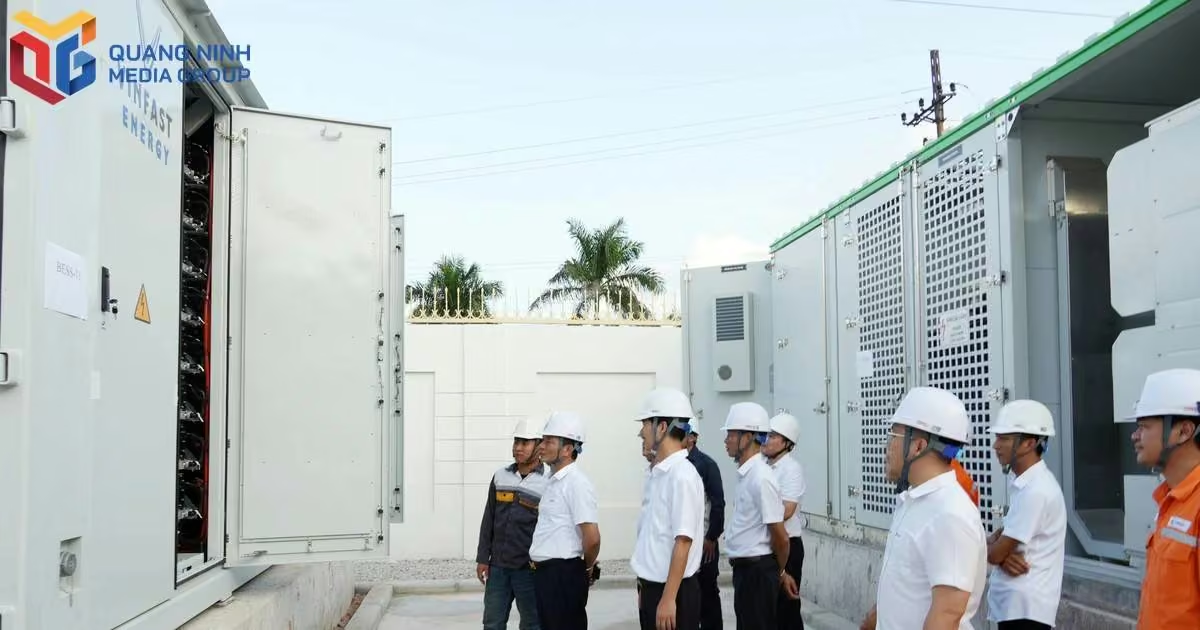
By the end of October 2026, Quang Ninh Power Company had completed the installation, commissioning, and activation of three battery energy storage systems (BESS). Leveraging their flexibility in energy storage and generation, these systems will help balance load, enhance grid stability, and provide the company with an additional tool to proactively manage the increasingly wide fluctuations in electricity demand, thereby progressively advancing the goal of building a smart grid.

The commissioning of the battery energy storage system (BESS) coincided with a period of surging electricity demand in Quang Ninh province. Forecasts for the summer months of 2026 indicate that the city’s peak load will reach approximately 1,200 to 1,400 megawatts, up from the 1,186 megawatt peak recorded in 2025.
Anticipating the shift toward energy storage, Quang Ninh Power Company worked closely with the Northern Power Corporation and its contractors to install, test, and activate three BESS units at the 110 kV Trang Bach substation in Hoang Que commune, the 110 kV Gieng Day substation, and the 110 kV Uong Bi substation. Each system is rated at 5 to 10 megawatts with an energy storage capacity of 10 to 20 megawatt-hours.

Unlike traditional uninterruptible power supply (UPS) units, the battery energy storage system (BESS) is a large-scale energy storage solution connected directly to the electrical grid. The system is capable of recharging during optimal periods and generating electricity again when required. Functioning as a bidirectional energy storage mechanism, the BESS stores power when load is low or when system conditions permit. Conversely, when demand rises or the grid requires support, the system discharges stored energy back into the network. This capability allows the BESS to help flatten the load curve, thereby alleviating pressure during peak hours and enhancing the operational flexibility of the power system.
In the long term, battery energy storage systems do not replace traditional generation sources or grid infrastructure projects. Instead, they serve a complementary role, assisting the system in utilizing existing infrastructure more efficiently. The effectiveness of such equipment depends on several factors, including installation location, output power, storage capacity, control methods, and coordination with the control center.
Consequently, specific operational plans must be calculated prior to commissioning, taking into account the load characteristics, transmission capacity, and safety requirements of each area. This process also serves as the foundation for Quang Ninh Power Company to progressively assess actual effectiveness, refine technical procedures, and prepare the necessary conditions for the future operation of the systems.

Vu Viet Hong, deputy director of the high-voltage grid operator Quang Ninh Power Company, stated that the unit coordinated all stakeholders throughout the entire process, from construction and testing to grid connection, to adopt and master the new technology. He noted that staff directly managing the 110 kV grid in substations actively participated in post-connection testing, gaining familiarity with procedures for handling real-world situations under expert guidance. Operational, incident management, maintenance, and support procedures were also developed to ensure the safe and stable operation of the system.
The Ministry of Industry and Trade reported that progress on energy projects outlined in the Eighth Energy Development Plan remains sluggish. If delays in power generation and transmission infrastructure persist, the national grid could face a shortfall of approximately 4,256 megawatts in capacity and 2.9 billion kilowatt-hours of electricity by 2027. The deficit is projected to widen further between 2028 and 2030, with the burden falling primarily on the northern region. In 2027, this area could experience a capacity gap of roughly 5,680 megawatts, a figure expected to climb to 13,026 megawatts by 2030.
The forecasts outlined above underscore that enhancing the flexibility of the electrical system is not merely beneficial but absolutely essential. With the persistent rise in power demand, particularly across industrial parks, economic zones, manufacturing facilities, and the province of Quang Ninh’s tourist destinations, it is critical to invest in, complete, and prepare for the operational deployment of battery energy storage systems (BESS). Such measures are fundamental to ensuring a secure, stable, and uninterrupted power supply.
When strategically positioned and integrated with advanced control and monitoring systems, BESS can facilitate power regulation, enabling a more effective response to load fluctuations while making efficient use of existing electrical infrastructure. Furthermore, these systems hold the potential to support the integration of renewable energy sources, thereby enhancing the grid’s adaptability to variations in power output and load conditions.
Le Ba Quyen, deputy director of Quang Ninh Power Company, stated that the firm is working with relevant authorities and units to assess requirements and select appropriate locations, capacities, and operational plans for battery storage systems tailored to the specific characteristics of the electrical grid in each area. The company is ensuring that all projects comply with electrical safety standards, fire prevention and control regulations, investment efficiency benchmarks, and integration requirements with the existing power system. Quyen noted that if these systems are properly planned, funded, and managed, they will help improve power supply quality, meet rising demand, and support the city in achieving its economic growth targets for the coming period.
Pvola take
This deployment signals a strategic shift toward using storage for grid stability rather than just backup power. By integrating BESS directly into 110 kV substations, the operator addresses immediate peak load pressures while building operational expertise for future smart grid requirements.
Frequently asked questions
What is the primary operational goal of the three BESS units commissioned by Quang Ninh Power Company?
The systems are designed to balance load and enhance grid stability. They provide tools to manage wide fluctuations in electricity demand and support the development of a smart grid.
What are the technical specifications of the BESS units installed at the 110 kV substations in Quang Ninh?
Each system is rated at 5 to 10 megawatts with an energy storage capacity of 10 to 20 megawatt-hours. They were installed at Trang Bach, Gieng Day, and Uong Bi substations.
How does the commissioning of these storage systems impact grid operators in Quang Ninh province?
The systems help improve power supply quality and meet rising demand. They allow staff to master new procedures for handling high-voltage grid operations during peak load periods.