United States: US unveils three-phase plan to build domestic supply chain, aiming to counter Chinese battery dominance; LG Energy Solution and Samsung SDI expected to benefit
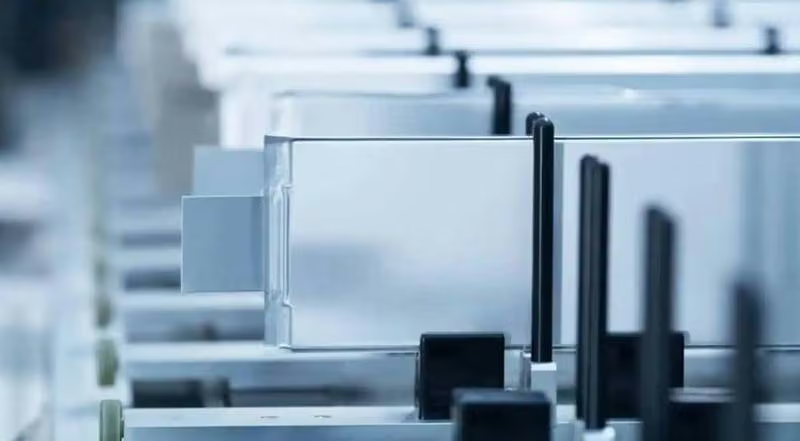
U.S. Moves to Counter China’s Battery Hegemony, Unveils Three-Phase Plan to Build Domestic Supply Chain… LG Energy Solution and Samsung SDI Expected to Benefit
The U.S. Department of Energy announced a national battery strategy to secure a leading position, outlining a three-phase plan to build a domestic supply chain. The strategy aims to complete the U.S. battery supply chain by 2030 and to secure global leadership in technology and manufacturing by 2035.

[The Guru = Reporter Gil So-yeon] The U.S. government has designated batteries as a national strategic industry that determines energy security and future industrial leadership, rather than merely a component, and has begun a comprehensive internalization of its domestic supply chain. The strategy reflects a deliberate intent to reduce reliance on specific countries, such as China, across the entire battery supply chain, while solidifying the U.S. manufacturing renaissance and global technological hegemony. The U.S. strategy to build a domestic-centric battery supply chain excluding China is expected to serve as a testing ground for Korean battery companies, presenting both opportunities and challenges.
According to InsideEVs, a U.S. electric vehicle-focused online media outlet, the U.S. Department of Energy (DOE) announced a national battery strategy on June 6. The strategy aims to complete the domestic battery supply chain by 2030 and secure global technological and manufacturing leadership by 2035, in order to counter China’s battery dominance and strengthen domestic clean energy and energy security.
The national strategy for securing battery leadership presented by the U.S. government is formulated from the perspective of national security industries, encompassing not only the electric vehicle market but also energy storage systems (ESS) for operating artificial intelligence (AI) data centers and stabilizing the power grid, as well as strengthening the defense industry supply chain.
Data from market research firm BloombergNEF indicates that battery demand is expected to quadruple from 179 GWh in 2025 to 707 GWh by 2035. Although the U.S. has improved its capabilities in battery cell and pack manufacturing, it still relies on overseas imports for the mining of critical components and raw materials. Consequently, it is advancing a national battery strategy aimed at achieving supply chain independence.
The U.S. national strategy for securing battery leadership centers on responding to the surge in AI data centers and power grid stabilization, while building a complete domestic supply chain.
As the first phase, the U.S. aims to complete supply chain internalization by 2030. It seeks to construct an independent value chain that seamlessly connects the entire process—from critical mineral mining and refining to materials and component production and battery cell manufacturing—within the United States, thereby completely cutting off dependence on China.
As the second phase, the U.S. plans to secure technological and manufacturing leadership by 2035. It intends to promote the commercialization of next-generation battery technologies that are currently at the laboratory level, aiming to hold a dominant position in global battery manufacturing technology.
The Department of Energy explained that "batteries must not only be cheaper, longer-lasting, and higher-performing in specific market segments, but also have reduced dependence on critical minerals." This is interpreted as referring to further advanced forms of all-solid-state batteries or existing lithium-ion technology.
The final third phase involves the comprehensive expansion of battery applications. Rather than limiting battery demand to electric vehicles (EVs), the scope is being extended to key sectors directly tied to U.S. security, including the rapidly growing AI data centers, power grid energy storage systems (ESS), defense, and advanced manufacturing.
This U.S. announcement is expected to serve as a test for Korean battery companies, offering a significant opportunity to monopolize the U.S. market and expand market share, while simultaneously demanding the harsh challenges of supply chain diversification and the internalization of critical minerals.
Domestic battery cell manufacturers such as LG Energy Solution and Samsung SDI, which have proactively established large-scale production infrastructure and supply chains in the U.S. and secured substantial order backlogs, are projected to further consolidate their market share in the U.S. ESS and EV markets as strong policy partners. This is because, in a situation where the U.S. government is aggressively pushing for the construction of a domestic-centric battery supply chain, Korean companies that have already built large-scale production plants and organized raw material supply chains on the ground have secured the most advantageous position.
However, a key task in response is to rapidly reduce dependence on China for raw materials and critical minerals. For some material and component companies whose U.S. investments have been somewhat delayed or which have a high proportion of Chinese raw materials, supply chain diversification and localization strategies are required to enter the U.S.-centric ecosystem.
Most Read News
Canada and Germany are considering splitting the scale of their submarine procurement from 12 to 8 vessels, citing the need to “ensure strategic flexibility.”
U.S. Navy Think Tank: "South Korea's Chungnam-class Frigates Outperform Japan in Supply Speed and Productivity"
[Exclusive] GS E&C and Samsung Heavy Industries on the Verge of Entering the U.S. Market for Floating Small Modular Reactors… U.S. Salt Power Permits to Be Initiated Soon
[Exclusive] Namyang Dairy’s “Baekmi-dang” Secures Exclusive In-Flight Dessert Supply Deal with Korean Air, Overtaking Häagen-Dazs
[Exclusive] Doosan abruptly establishes a 'PCB joint venture base' in China… Shakes up the 'landscape' of the AI accelerator market
X-energy, a partner of Doosan and Korea Hydro & Nuclear Power, has completed its safety review in the U.S.… Accelerating the commercialization of 4th-generation SMRs
Choi Sung-an, Vice Chairman of Samsung Heavy Industries, made a surprise visit to China's Zhangjian Shipyard, opening the door to a "smart shipbuilding honeymoon."
U.S. moves to block Chinese battery dominance, announces three-phase plan to build domestic supply chain… LG Energy Solution and Samsung SDI expected to benefit
K-defense
Shooting Star
U.S. Moves to Counter China’s Battery Dominance, Unveils Three-Phase Plan to Build Domestic Supply Chain… LG Energy Solution and Samsung SDI Expected to Benefit
[The Guru = Reporter Gil So-yeon] The U.S. government has designated batteries as a national strategic industry that determines energy security and future industrial leadership, rather than mere components, and has begun a comprehensive effort to internalize its domestic supply chain. This strategy reflects a deliberate intent to reduce dependence on specific countries, such as China, across the entire battery supply chain, while solidifying the U.S. manufacturing renaissance and global technological hegemony. The U.S. strategy to build a domestic-centric battery supply chain that excludes China is expected to serve as a testing ground for Korean battery companies, presenting both opportunities and challenges. According to InsideEVs, a U.S.-based online media outlet specializing in electric vehicles, on the 6th, the U.S. Department of Energy (DOE) announced a national battery strategy aimed at countering China’s battery dominance and strengthening domestic clean energy and energy security. The strategy sets goals to complete the U.S. battery supply chain by 2030 and secure global technological and manufacturing leadership by 2035. The national strategy for securing battery leadership proposed by the U.S. government is formulated from the perspective of national security industries, encompassing not only the electric vehicle market but also energy storage systems (ESS) for operating artificial intelligence (AI) data centers and stabilizing the power grid, as well as strengthening the defense industry supply chain. According to data from market research firm BloombergNEF, battery demand is
CNBC: "Korean defense companies face a new test... long-term outlook remains positive"
[TheGuru = Reporter Gil So-yeon] U.S. economic news channel CNBC reported that, following the reconfiguration of modern warfare around non-traditional weapon systems such as drones and artificial intelligence (AI) in the wake of the war in Ukraine, South Korean defense companies that have enjoyed a boom in exports of traditional ground weapons like tanks and self-propelled howitzers now face a new test: evolving toward advanced technologies. Although K-Defense has established a strong global position in ground firepower and mobility systems, the need to bolster technological capabilities in advanced weapon systems and unmanned systems—identified as game-changers for future battlefields—has emerged as a core challenge for long-term growth. Attention is now turning to whether K-Defense can successfully transform from a traditional conventional weapons manufacturer into a technology-centric enterprise.
According to CNBC on the 6th, K-Defense companies, previously centered on tanks and self-propelled howitzers, now face the challenge of proving their technological competitiveness and real-world validation as global defense procurement priorities shift toward anti-drone and air defense systems.
Hwang Kyung-jae, an analyst covering South Korean automotive and industrial sectors at Bank of America, assessed that “global defense procurement priorities are evolving toward drones, anti-drone systems, and air defense systems.”
David Roux, a strategist at Quantum Strategy,
The U.S., moving to counter China's battery dominance, announced a three-phase plan to build its domestic supply chain… Expecting benefits for LG Energy Solution and Samsung SDI
K-nuclear
[Exclusive] GS E&C and Samsung Heavy Industries on the Brink of Entering the U.S. Market for Floating Small Modular Reactors… U.S. Salt Power Permits to Begin Immediately
[TheGuru = Reporter Hong Seong-hwan] Denmark-based small modular reactor (SMR) company Salt Force (formerly Civo Technologies) has initiated the licensing process for a floating reactor in the United States. Collaboration with domestic companies such as GS E&C and Samsung Heavy Industries is expected to intensify. On the 5th (local time), Salt Force announced, "We have submitted a letter of intent to the U.S. Nuclear Regulatory Commission (NRC) to begin pre-licensing consultations regarding the licensing of our maritime floating 'Compact Molten Salt Reactor (CMSR).'" This document formally expresses the intent of a nuclear power developer to commence consultation and review procedures with the regulatory body before filing a formal licensing application. Salt Force plans to submit an additional regulatory consultation plan to the NRC in the first quarter of next year. The company explained, "We will be the first advanced reactor developer to obtain approval under the NRC's new nuclear power licensing framework, '10 CFR Part 53,' which will mark the world's first licensing case in the field of maritime floating SMRs." The "10 CFR Part 53," released in March of this year, is a licensing framework applicable to various next-generation reactor technologies, including high-temperature gas-cooled reactors and sodium-cooled fast reactors, moving beyond the traditional light-water reactor-centric regulations. It is expected to act in a direction that mitigates the uncertainty surrounding SMR licensing.
X-energy, a partner of Doosan and Korea Hydro & Nuclear Power, has completed its safety review in the U.S.… Accelerating the commercialization of 4th-generation SMRs
[The Guru = Reporter Gil So-yeon] X-energy, a U.S. next-generation small modular reactor (SMR) and nuclear fuel developer that partners with Doosan Enerbility and Korea Hydro & Nuclear Power, has received safety approval from the U.S. Nuclear Regulatory Commission (NRC) for its fourth-generation SMR, the Xe-100. This development is expected to accelerate the commercialization of North America’s first grid-scale advanced reactor. Following the passage of an environmental impact assessment in May, the recent approval of the safety review has sped up the permitting process, paving the way for full-scale construction.
According to X-energy on the 2nd, the NRC has completed its safety review for the initial deployment of the Xe-100 high-temperature gas-cooled reactor (HTGR). The NRC’s Final Safety Evaluation Report (FSER) provides a comprehensive review of the Xe-100 plant’s key design criteria, preliminary design, safety analysis, probabilistic risk assessment, and research and development program. The report states that the NRC’s technical staff has concluded that the proposed plant and site meet the safety requirements to begin construction under the U.S. Code of Federal Regulations (10 CFR Part 50). The Advisory Committee on Reactor Safeguards (ACRS), an independent body that advises the NRC Commission, has also separately reviewed the NRC’s technical staff evaluation, and the construction permit...
Publisher: 4th Floor, Hamaru Building, 81 Yeouinaru-ro, Yeongdeungpo-gu, Seoul | Registration No.: Seoul A 05006 | Registration Date: 2018-03-06 | Publication Date: 2018-03-06 | Main Phone: 02-6094-1236 | Fax: 02-6094-1237 | Title: THE GURU | Publisher/Editor-in-Chief: Yoon Jeong-nam. All content (videos, articles, photos) of THE GURU is protected by copyright law, and unauthorized reproduction, copying, or distribution is prohibited. Copyright © 2019 THE GURU. All rights reserved. mail to [email protected]
Frequently asked questions
What are the specific timeline targets for the U.S. Department of Energy's new domestic battery supply chain strategy?
The strategy aims to complete the U.S. battery supply chain by 2030. It also seeks to secure global leadership in technology and manufacturing by 2035.
How does the new U.S. battery policy impact LG Energy Solution and Samsung SDI in the context of Chinese dominance?
The strategy is expected to serve as a testing ground for these Korean companies. It presents both opportunities and challenges as the U.S. moves to reduce reliance on China.
Why has the U.S. government designated batteries as a national strategic industry rather than just a component?
Batteries are viewed as critical for energy security and future industrial leadership. The designation supports a comprehensive effort to internalize the domestic supply chain and reduce dependence on specific countries.