India: Delhi Bets on ULA Model to Meet 230,000 Rooftop Solar Target by 2027
Key facts
- The Delhi government increased the capital subsidy for a 3-kilowatt rooftop system from Rs 30,000 to Rs 78,000
- Combined with the central government grant, the total financial support for a 3-kilowatt installation in Delhi is now Rs 1.56 lakh
- The Utility-Led Aggregation framework includes a clause withholding 5 percent of vendor payments until a five-year maintenance period concludes
BW Communities
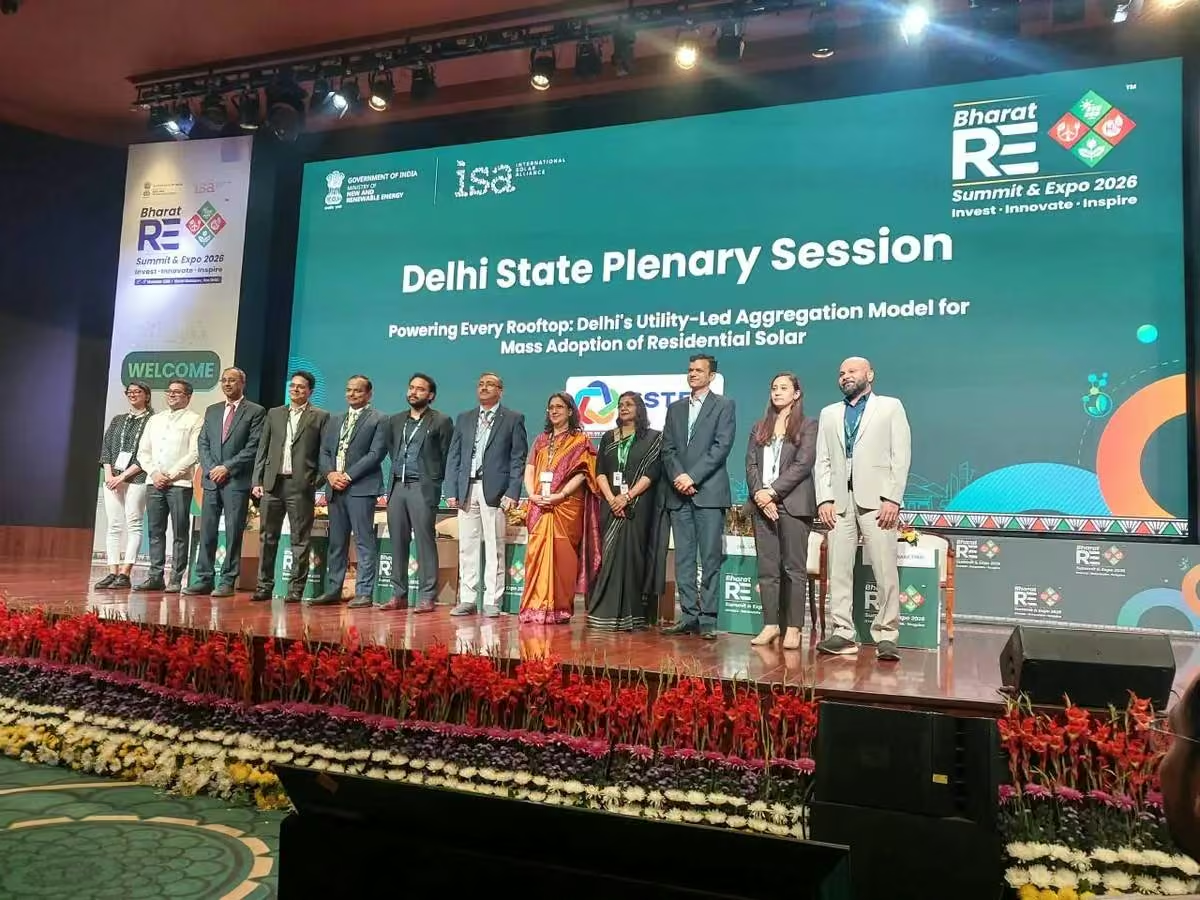
The capital’s goal of installing 2.3 lakh residential rooftop solar systems by March 2027 has exposed significant gaps in its execution capabilities, as only approximately 15,000 units have been deployed to date under the PM Surya Ghar Muft Bijli Yojana. To overcome hurdles in customer acquisition, financing, and installation, the administration is shifting toward a utility-led aggregation framework that relies on centralized procurement and project delivery.
Nandini Paliwal, Secretary (Power) for the Government of Delhi, noted that the scheme has attracted interest from roughly 1.2 lakh consumers since registration and consent processes began. Nevertheless, actual adoption rates have fallen short of projections despite the financial incentives on offer. The state has boosted its capital subsidy for a 3-kilowatt rooftop system from Rs 30,000 to Rs 78,000. When combined with the central government’s matching grant of Rs 78,000, the total financial support for such installations now stands at Rs 1.56 lakh.
The Utility-Led Aggregation (ULA) framework involves the government consolidating consumer demand, managing procurement processes, and coordinating installations via a tendering system. This approach incorporates five years of operations and maintenance (O&M) support, designed to alleviate the initial financial and administrative pressures on individual households.
The central government has approved approximately 1.10 lakh residential units under this scheme, while the Delhi administration is advancing a tender for 2.2 lakh rooftop solar installations. According to Paliwal, the proposed aggregated capacity totals roughly 605 megawatts (MW) spread across 55 divisions, with an estimated investment of Rs 3,500 crore. By transferring the responsibilities for documentation, procurement, and coordination from individual households to government agencies and utilities, the model streamlines the implementation process.
Under the new framework, residents are required to provide only their rooftop space, with the system handling all other aspects of the project, according to Sunny Singh, Special Secretary (Power) for the Government of Delhi. The Power Department retains responsibility for policy formulation, while IPGCL has been assigned the task of managing the tendering process. The government will hold ownership of the infrastructure for an initial five-year period, after which distribution companies (DISCOMs) will serve as trustees for the subsequent 20 years.
Bridging the gap between registrations and actual installations remains a significant hurdle in implementation. Abhishek Ranjan, chief executive officer of BRPL, noted that the Delhi solar portal has logged approximately 1.19 lakh registrations. To boost consumer enrollment and ensure completed installations, BSES has deployed field teams across its operational divisions and implemented a tiered incentive structure for its staff. Ranjan emphasized that the distribution companies were involved in the policy development process and are currently focused on converting these registrations into functional solar installations.
Santosh Srivastava, vice-president at BYPL, noted that the ULA framework effectively resolves affordability concerns, prompting significant consumer interest in rooftop solar adoption. The utility reported receiving 1.2 lakh registrations within 45 days of launching its solar portal. Srivastava contrasted this surge with the utility’s historical performance under the net metering scheme, which has been active since 2015. Despite nearly a decade of implementation, total installations under the previous model have reached only 3,400, whereas the new initiative attracted 36,000 registrations in the same 45-day period.
The ULA structure offers free rooftop solar installations to consumers whose monthly electricity consumption remains below 400 units. For households exceeding this consumption threshold, the cost of installation is capped at Rs 50,000. Additionally, the model incorporates virtual net metering (VNM) provisions to accommodate group housing societies and consumers who do not have access to individual rooftop space.
Consumer and vendor hurdles remain significant, as public awareness does not automatically lead to system installation. A study conducted by the Council on Energy, Environment and Water (CEEW) indicated that 66 per cent of residents in Delhi were aware of rooftop solar technology, a figure higher than the national average of approximately 57 per cent. Despite this high level of awareness, only 12 per cent of those surveyed expressed a willingness to proceed with installation.
Bhawna Tyagi, senior programme lead at CEEW, noted that the primary obstacle is no longer a lack of information. “Awareness is no longer a challenge. Consumers are aware that rooftop solar is a beneficial investment for them, but still only 12 per cent showed interest in terms of taking the next step,” Tyagi said. The survey data revealed that 32 per cent of respondents felt that reduced electricity bills diminished the financial motivation for adopting the technology, while 30 per cent identified a lack of suitable rooftop space as a key constraint. The high initial capital expenditure continued to serve as a major deterrent for potential adopters.
TPDDL has flagged vendor quality and execution capability as key operational risks. Kiran Gupta, the utility’s chief for customer experience, commercial and government affairs, noted that past vendor quotations had diverged by a factor of three. To address this, the new tender aims to standardize technical specifications while tightening requirements for vendor qualification, execution capacity and long-term maintenance. The framework also incorporates staged inspection protocols and payment structures tied directly to performance metrics.
A specific retention clause within the contract stipulates that 5 per cent of the total vendor payment will be withheld until the installation is complete and the five-year maintenance period has concluded. This mechanism is designed to align financial disbursements with the system’s sustained performance throughout the warranty phase. Gupta added that the tender further mandates stage-wise inspections and binding performance guarantees to ensure that the installed systems maintain their rated efficiency over time.
The utility-led aggregation framework faces structural limitations, particularly for residents in high-rise complexes who do not have exclusive rooftop rights. Sachin Singh, associate director at TERI, argued that the capital needs to shift its focus from aggregating consumers to aggregating solar resources. “Delhi should move from utility-led consumer aggregation to utility-led solar resource aggregation first of all,” he said.
Executing the planned expansion will demand tight coordination among procurement teams, consumer onboarding processes, vendor performance metrics, and distribution network upgrades. The critical challenge for the Delhi model now is determining whether the surge in registrations can be converted into actual installations quickly enough to hit the March 2027 deadline.
Kapil Saini
Also Read
The capital’s air quality deteriorated sharply in the days leading up to the Diwali festival, with the city recording some of the highest pollution levels observed globally. The Air Quality Index (AQI) surged to 581, a figure that places Delhi at the top of the list of the most polluted cities in the world.
This spike in particulate matter and other pollutants coincided with the period preceding the Hindu festival of lights, a time when traditional practices and increased industrial activity often exacerbate environmental conditions. The extreme readings underscore the persistent challenge the city faces in managing its air quality, particularly during seasonal transitions.
Local authorities and environmental agencies have noted that such high AQI values pose significant health risks to residents, including those with respiratory and cardiovascular conditions. The situation has drawn attention to the need for more robust measures to mitigate pollution sources, including vehicular emissions, construction dust, and crop residue burning in surrounding regions.
Despite ongoing efforts to improve air quality, Delhi continues to struggle with severe pollution episodes, particularly during the winter months when meteorological conditions trap pollutants close to the ground. The recent data highlights the urgency for coordinated action across multiple sectors to address the root causes of the city’s air quality crisis.
The Delhi Pollution Control Committee has warned that air quality in the capital could deteriorate to severe levels during the Diwali festival, with conditions expected to worsen further in the days following the celebrations. Experts cited by the committee highlighted the anticipated spike in firecracker usage and industrial emissions as primary drivers for the projected decline in air quality.
The state government of Odisha has outlined a comprehensive plan to expand its electrical grid infrastructure, with an estimated investment of 19,348 crore rupees. This strategic initiative is designed to support the state’s ambitious energy transition goals, specifically targeting the addition of 10.96 gigawatts of renewable energy capacity by the year 2030.
The proposed grid expansion is a critical component of the state’s broader strategy to integrate large-scale renewable energy sources into the existing power network. By modernizing and strengthening the transmission and distribution systems, Odisha aims to ensure the reliable and efficient delivery of clean energy to consumers across the region.
Officials emphasized that the infrastructure upgrades are necessary to handle the increased load from new renewable energy installations. The plan focuses on enhancing grid stability and reducing transmission losses, which are key factors in making the energy system more resilient and cost-effective in the long term.
The 10.96 gigawatt target for renewable capacity by 2030 represents a significant step in Odisha’s commitment to sustainable development. This goal aligns with national directives to increase the share of non-fossil fuel energy in the country’s power mix, while also addressing local energy security concerns.
Investment in grid infrastructure is seen as a prerequisite for the successful deployment of renewable energy projects. Without a robust and flexible grid, the full potential of solar and wind energy resources in the state cannot be realized, making the 19,348 crore rupee investment a vital enabler for future growth.
The state’s energy authorities are working closely with central agencies and private sector partners to ensure the timely execution of the grid expansion project. Coordination on technical standards, regulatory frameworks, and financing mechanisms is ongoing to streamline the implementation process and meet the 2030 targets.
This move by Odisha underscores the importance of holistic energy planning, where generation capacity and grid infrastructure are developed in tandem. By prioritizing grid expansion, the state is positioning itself to attract further investment in renewable energy and contribute significantly to India’s climate change mitigation efforts.
Pvola take
This shift to a utility-led aggregation model signals a move away from fragmented, consumer-driven sales toward centralized procurement and performance-based contracting. For developers and installers, the inclusion of long-term maintenance retention clauses and staged inspections raises the operational bar, requiring robust after-sales service capabilities to secure payment. Investors should note that while demand interest is high, the execution gap highlights the critical need for reliable project delivery partners in this market.
Frequently asked questions
What is the total financial support for a 3-kilowatt rooftop solar system in Delhi under the current scheme?
The total financial support for a 3-kilowatt system is Rs 1.56 lakh. This combines the state's increased subsidy of Rs 78,000 with the central government's matching grant of Rs 78,000.
How does the Delhi ULA framework ensure vendor accountability for long-term maintenance of rooftop solar installations?
The framework includes a retention clause withholding 5% of vendor payment until the five-year maintenance period concludes. It also ties payment structures directly to performance metrics and staged inspection protocols.