Hungary: Electricity bills may fall as solar panels could be installed on balconies and roofs of apartment blocks
Key facts
- Two legislative proposals submitted to the Romanian Senate on November 4 aim to streamline solar panel installation in block housing
- The drafts, initiated by APCE, could impact more than 6.5 million residents of prefabricated housing blocks in Romania
- The first proposal would allow balcony solar systems with inverters up to 800 VA and one to four panels, optionally with battery storage
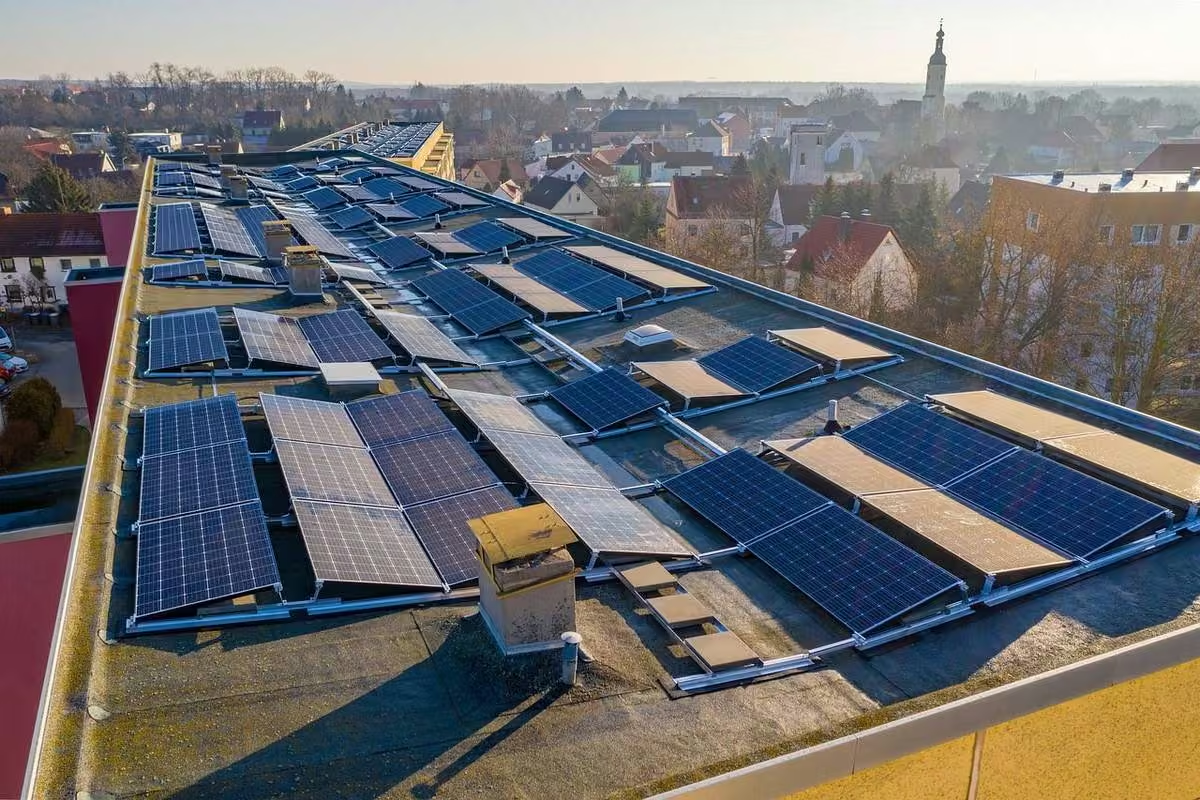
- Rooftop solar installations in shared areas require approval from two-thirds of all co-owners and a decision on financing and maintenance
Residents of prefabricated housing blocks could reduce their electricity bills by installing personal solar panels, while housing cooperatives might lower shared maintenance costs through power generated on their rooftops. Two new legislative proposals aim to streamline the installation of photovoltaic systems, enabling revenue from electricity production to directly offset residents' expenses.
Eva Szolar
Residents of block housing may gain greater access to self-generated electricity after two legislative proposals were submitted to the Senate on November 4.
The drafts, developed at the initiative of the Association of Romanian Energy Producers and Energy Communities (APCE), could impact more than 6.5 million residents of block housing, many of whom currently lack adequate opportunities to install their own solar systems. The first proposal would introduce balcony solar panels as a distinct category within the legal framework, permitting the installation of systems equipped with inverters featuring a continuous output power of up to 800 VA and comprising one to four panels. These systems could optionally be connected to battery storage units.
The electricity generated could be consumed directly within the dwelling, thereby reducing the volume of power purchased from the grid.
According to estimates by the APCE, a properly oriented system equipped with a battery could reduce electricity bills by up to 40 percent, though actual savings would depend on the number of sunny hours, household consumption levels, and the availability of energy storage. Homeowners would need to finance the investment from their own resources, as the draft does not provide for any specific state subsidies.
When is neighbor consent required?
Simplifying the permitting process would be a key step in easing the rollout of balcony solar installations, as it would eliminate the need for owners to obtain individual technical connection permits, commission separate grid studies, or pay connection fees.
Under the proposed framework, owners would only need to notify the electricity distributor in advance, following a procedure to be defined later, and inform the local municipality. The system would not, however, be permitted to feed surplus energy back into the public grid.
Whether neighboring residents’ consent is required would depend on where the panels are installed. If the panels are placed on the interior side of the balcony and do not affect shared building elements, approval from the housing community for facade use would not be necessary. However, if the panels are mounted on the exterior of the railing or on the facade,
safety regulations stipulate that such equipment may only be installed on metal railings or reinforced concrete parapets, with additional securing measures.
Solar panels could also help lower common maintenance costs.
The electricity generated could power elevators, stairwell lighting, pumps and other shared building facilities. By covering part of the common energy consumption, this approach would help reduce overall maintenance costs.
Cooperative housing associations would also become prosumers, able to feed surplus electricity back into the grid and earn revenue from it. Up to 85 percent of that income could be applied to lower residents’ monthly common charges, with the remainder directed to a repair and maintenance reserve.
For example, if a cooperative earned 1,000 lei from selling electricity and chose to apply the maximum allowable rate, it could credit 850 lei to owners and set aside 150 lei for refurbishments. The savings would not be distributed equally across units; instead, they would be calculated based on each owner’s share of the common property. Any amount exceeding the monthly obligation would be carried over to the following month.
A two-thirds subsidy would be required for rooftop solar panels
Installing solar panels on shared roof areas would require the approval of two-thirds of all co-owners.
The owners’ association would first need to decide on the financing of the investment, the costs of installation and maintenance, and how the generated energy and any potential revenue would be utilized.
The draft legislation would also streamline the permitting process. Except for historic monuments and protected areas, a building permit would no longer be required; it would suffice to notify the local municipality and comply with technical and safety standards.
Two legislative proposals developed at the initiative of the APCE were submitted to the Senate on November 4. The bills are currently at the initial stage of the parliamentary process, and the new rules will only become applicable after their adoption and entry into force.
Previously reported
Radio GaGa
Csicsik
Gyergyószék
Harmszék
Marosszek
Udvarhelyszék
Dance
Disco Classic
Gold
100% Hungarian
Rock
Further articles in this section
Romania recorded more than 68,000 cases of respiratory infections over the past week.
Romania reported 68,284 respiratory infection cases between October 26 and November 1, a 13.5 percent decrease from the 78,876 cases recorded in the previous week, according to the National Institute of Public Health (INSP) on Thursday.
The weekend brought significant cold, with temperatures dropping sharply across the region. We are highlighting the specific locations that recorded the lowest temperatures in the country.
Paul Cioban, a duty meteorologist at the Southern Transylvania Regional Meteorological Center in Cluj-Napoca, told Agerpres that the country's lowest temperature of minus 10.5 degrees Celsius was recorded in Sighetu Marmaș on Sunday morning.
Free or paid? New rules may be introduced for laboratory tests
The government is set to review the criteria for natural gas price subsidies, with a focus on redefining which households qualify for assistance and adjusting the scale of financial support provided.
Energy Minister Dumitru Chisăliță announced on Saturday in Cernavodă that the ministry intends to restructure the support system for vulnerable consumers and gradually prepare for the liberalization of the natural gas market.
The Democratic Alliance of Hungarians in Romania (RMDSZ) issued a statement expressing opposition to the planned merger of small settlements in Romania.
The Democratic Alliance of Hungarians in Romania (RMDSZ) issued a statement opposing the planned merger of small settlements in the country. The document was adopted on Friday in Törökbágyy by RMDSZ officials from localities with populations of fewer than 1,500 residents.
A severe railway incident occurred when several grain transport wagons began moving without a locomotive driver.
A serious rail incident occurred on Saturday within the jurisdiction of the Suceava County regional directorate of the Romanian State Railways (CFR).
The government is seeking to avoid the introduction of new taxes and levies, though the final decision hinges on a wide range of factors.
The government is keen to avoid introducing new taxes and fees in 2027, but a final decision on the matter can only be made during the drafting of next year's budget, Luca Niculescu stated on Saturday.
Further schedule changes are set to affect trains operating between Budapest and Romania, with details provided on which specific services will be impacted.
Timar: The schedule of several international trains operating between Budapest and Romania will be modified on two consecutive weekends in November.
The Cernavodă nuclear power plant has been restarted, feeding this amount of electricity into the grid
Official: Motorcyclists may be allowed to move up in traffic at red lights
Starting Friday, November 6, new traffic regulations take effect in Romania, permitting motorcyclists, moped riders, and cyclists to filter past stationary vehicles at red lights under specific conditions.
Pvola take
This legislative shift creates a significant new market segment for small-scale residential solar and storage solutions in dense urban environments. By legally recognizing balcony systems and clarifying rooftop approval processes, the proposals reduce regulatory friction for developers and installers targeting the multi-family housing sector. This opens a pathway to monetize underutilized roof and balcony space, potentially lowering customer acquisition costs for energy providers serving large residential blocks.
Frequently asked questions
What do the new Romanian legislative proposals allow for balcony solar installations in apartment blocks?
The proposals introduce balcony solar panels as a distinct legal category, permitting systems with up to 800 VA continuous output. These systems can comprise one to four panels and may optionally be connected to battery storage units.
What approval threshold is required for installing rooftop solar panels on shared housing areas in Romania?
Installing solar panels on shared roof areas requires the approval of two-thirds of all co-owners. The owners’ association must also decide on financing, installation costs, and maintenance responsibilities before proceeding.
How many residents could be impacted by the new solar installation rules in Romanian block housing?
The legislative drafts could impact more than 6.5 million residents of block housing in Romania. Many of these residents currently lack adequate opportunities to install their own solar systems due to existing regulatory barriers.