China: Revisions to the Export Control Technology Catalog: How Do Photovoltaic Companies View It?

Recently, the Ministry of Commerce and the Ministry of Science and Technology issued a public notice soliciting comments on the revision of the “Catalogue of Technologies Prohibited or Restricted from Export in China” and implementing temporary registration management for the export of relevant technologies. According to the announcement by the two ministries, this revision proposes to add 40 key technologies across three fields: artificial intelligence, biomedicine, and photovoltaics.
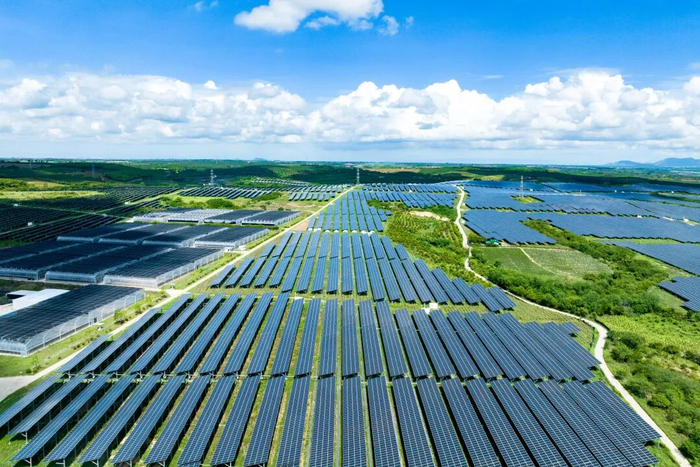

The photovoltaic (PV) sector is one of the primary industries affected by this revision. The announcement indicates that the PV domain involves 12 technologies related to polysilicon manufacturing, wafer manufacturing, and cell manufacturing. The scope of technical management also includes critical and core equipment that carries these relevant technologies.
A spokesperson for the Ministry of Commerce stated that the proposal to add 12 PV technologies from stages such as polysilicon manufacturing, wafer manufacturing, and cell manufacturing to the catalog is based on the following considerations: First, to safeguard national security and interests. In recent years, the application of PV technology in sensitive fields such as aerospace, national defense, unmanned equipment, and high-security-level infrastructure has continuously expanded. The national security risks potentially arising from PV technology exports are rising, making it necessary to implement timely and moderate regulation.
Second, to support the sharing of green technology. The scope of technologies subject to this control is limited; other technologies that do not meet the control indicators can still be exported freely. The announcement lists a small number of critical PV equipment items, targeting only those that carry technologies meeting the control indicators. Other PV equipment not listed in principle does not fall under the requirements of this announcement.
Third, to improve the technical export supervision system. The export of key PV technologies often occurs alongside the export, installation, commissioning, improvement, and upgrading of PV production lines. Export operators engaged in such activities must apply for a technology export license in accordance with regulations and use the license to complete relevant procedures for foreign exchange, banking, taxation, and customs.
The China Photovoltaic Industry Association believes that the revision of the catalog of prohibited and restricted export technologies, which classifies advanced technologies such as high-purity polysilicon preparation, large-size thin wafer preparation, and the preparation of high-efficiency crystalline silicon cells and perovskite cell modules (including process packages comprising equipment, drawings, algorithms, and process documents) as restricted export technologies, serves two purposes. On one hand, it distinguishes these from applications in the semiconductor field; on the other hand, it focuses on core technologies with generational advantages, aiming to minimize unnecessary impact on the industry while safeguarding national security and industrial advantages. China has consistently adhered to the principles of fairness, reasonableness, and non-discrimination in export controls, implementing licensing management for relevant technology exports in accordance with the law, rather than imposing a "one-size-fits-all" comprehensive ban. From the perspective of corporate practice, as long as applications comply with legal and regulatory requirements and do not involve situations that harm national sovereignty, security, or development interests, normal technology export applications are typically approved.
In the view of Zhao Lei, a researcher at the Institute of Electrical Engineering, Chinese Academy of Sciences, and Director of the Solar Cell Technology Research Department, the revision of the catalog to include core advanced technologies related to space-based photovoltaics within the scope of control is a crucial measure to safeguard China’s national space energy strategic security and prevent the leakage of leading technologies that constitute a defensive advantage. It strengthens policy guarantees for maintaining national economic security and development interests. China’s advantage in space-based photovoltaic technology is built upon decades of technical accumulation in the ground-based PV industry. Large-size silicon wafers, ultra-thin PV cells, and large-area specialized coating equipment have been fully domestically produced, reflecting the core competitiveness China has already established. Implementing licensing controls on space-based PV technology to restrict the outflow of frontier technologies and manufacturing equipment, while encouraging the export of space-based PV products and mature advanced equipment, not only curbs the disorderly sale of advanced technologies at low prices and standardizes the order of overseas competition in the industry, but also blocks the possibility of foreign countries replicating and mastering China’s advanced high-end technologies in the short term. This helps preserve the technological barriers China has built through arduous efforts in space energy, while maintaining China’s trade exports in space-based PV-related fields and facilitating normal international technical exchanges and cooperation.
Xu Xiaohua, Chairman of Anhui Huasheng New Energy Technology Co., Ltd., noted that the revision of the catalog adheres to a strategy of classified measures and precise management. Based on generational technological differences, it implements targeted controls on relevant equipment. For equipment that has entered the mature commercialization stage and has sufficient market supply, normal international trade space is maintained. For core equipment at the technological frontier with high sensitivity, prudent management is applied. In his view, a company’s international competitiveness ultimately stems from its own process capabilities, mass production experience, and continuous innovation. The revision maintains a relatively open stance toward mature equipment, reflecting a policy orientation that balances security and development.
Cutting-edge photovoltaic equipment often involves complex underlying processes, making it highly susceptible to intellectual property infringement disputes both domestically and internationally. Chen Gang, Chairman of Shanghai Aiko New Energy Co., Ltd., argued that the technology export license application system essentially serves as a national mechanism to help companies conduct preliminary compliance checks. This ensures that technology exports are compliant and standardized while safeguarding national security. This framework will compel companies to abandon low-level redundant construction and shift their focus from competing on scale and price to competing on quality and value.
Frequently asked questions
How many photovoltaic technologies does the revised Chinese export control catalog propose to restrict across manufacturing stages?
The revised catalog proposes to restrict 12 specific photovoltaic technologies. These restrictions cover critical stages including polysilicon, wafer, and cell manufacturing to safeguard national security interests.
What operational shift does the new export control framework compel Chinese photovoltaic companies to make regarding their competitive strategy?
The framework compels companies to abandon low-level redundant construction and shift focus from scale and price competition to quality and value. This ensures exports remain compliant while safeguarding national security and development interests.
How does the temporary registration management system for technology exports function for Chinese photovoltaic companies under the new regulations?
The system serves as a national mechanism for companies to conduct preliminary compliance checks on technology exports. It ensures standardized and legal export processes without imposing a comprehensive ban on all technology transfers.