CATL's ESS battery lasts 25 years in fewer containers to reduce land use
Key facts
- CATL unveiled the Tener+ energy storage system at All Energy Australia 2026, featuring lithium batteries with a 25-year design life
- The Tener+ system delivers 9 MWh of capacity per container, reducing the number of containers required for projects by up to 40 percent
- CATL offers cell configurations optimized for high desert temperatures, including a specific option that promises three years without degradation
- The system includes an intelligent thermal management system and superior exhaust design to maintain nominal output power in extreme heat
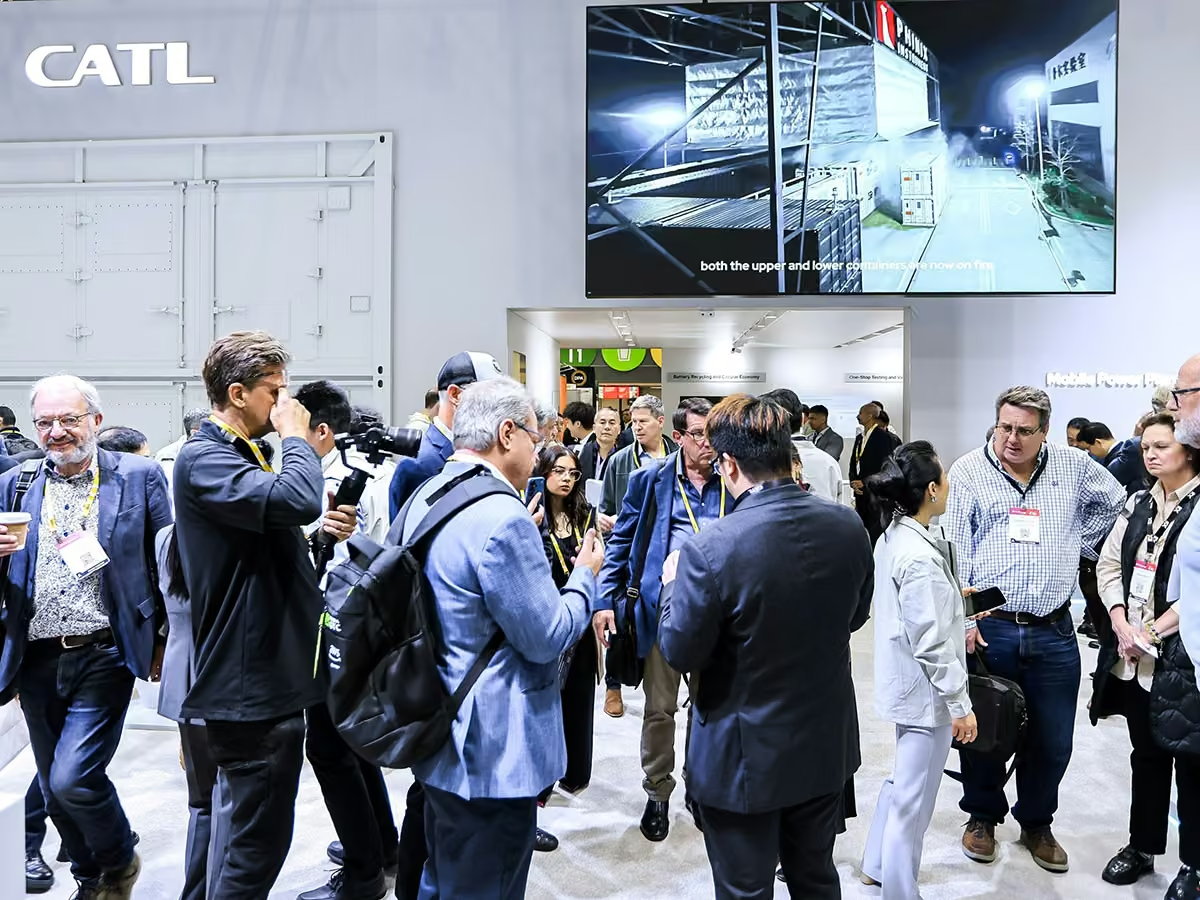
CATL has unveiled the Tener+, its next-generation energy storage system (ESS) featuring lithium batteries capable of lasting 25 years without significant capacity degradation. At the All Energy Australia 2026 exhibition in Melbourne, CATL explained that the ESS delivers 9 MWh of capacity per container and is designed for long-term grid projects, with energy density as its primary selling point.
The Tener+ ESS can reduce the number of containers required for a project by up to 40 percent compared to conventional solutions, significantly decreasing the total land footprint. Fewer containers mean less land, less cabling, and a simpler installation process, a critical advantage when developers are building at GWh scale.
Longevity is another standout feature, as CATL announces a 25-year design life, based on proprietary technology cells manufactured to slow degradation. Buyers can choose, for example, between cell configurations optimized for the high temperatures of the desert or one that promises three years without degradation, as the no-degradation option is not available in all configurations of the Tener+.
CATL’s ESS designed for high ambient temperatures, such as those at desert facilities, features a superior exhaust design that directs hot air upward and away from nearby equipment. This ensures that power conversion systems maintain their factory nominal output power even during extreme summers. An intelligent thermal management system further improves full-cycle efficiency and reduces auxiliary energy consumption. Multiple units can also be commissioned simultaneously with a single click.
The Tener+ succeeds the 6.25 MWh Tener from April 2024 and the 9 MWh Tener Stack from May 2025. CATL also showcased the Tener Sodium in Australia for the first time, an ESS featuring sodium-ion batteries that delivers over 30 MWh of grid-scale capacity and is designed to withstand high ambient temperatures of up to 55°C (131°F), such as those experienced in local desert regions.
In Australia, CATL’s energy storage projects have already surpassed 17 GWh of installed capacity. The world’s largest electric vehicle battery manufacturer also leads the global ESS market with a 27% share and is clearly striving to maintain its advantage over rivals like BYD through systems such as the Tener+, which occupy significantly less space and offer an industry-leading warranty. ESS projects concerned about excessive reliance on Chinese technology would now have a quarter of a century to address their diversification before CATL’s cells reach their degradation threshold.

Pvola take
Developers scaling to GWh levels gain a significant operational advantage from the reduced land footprint and simplified installation process. The 25-year design life provides a long window for operators to manage supply chain diversification risks without immediate replacement costs. This extended lifespan shifts the economic focus toward initial capital efficiency and long-term grid stability rather than frequent hardware turnover.
Frequently asked questions
What is the design life and capacity per container for CATL's new Tener+ energy storage system?
The Tener+ system features a 25-year design life and delivers 9 MWh of capacity per container. CATL states this configuration is designed for long-term grid projects with minimal capacity degradation.
How does the CATL Tener+ system reduce the land footprint for large-scale energy storage projects?
The system reduces the number of required containers by up to 40 percent compared to conventional solutions. This decrease in container count significantly lowers the total land footprint and simplifies the installation process.
What thermal management features does CATL include in the Tener+ for high-temperature environments?
The system uses a superior exhaust design to direct hot air away from nearby equipment. This ensures power conversion systems maintain factory nominal output power even during extreme summer conditions.