Russia: Blackout Protection: Who, Where, and at What Price Are Installing Solar Panels in Stavropol Krai
Key facts
- Demand for solar installations in Stavropol Krai increased two- to threefold in 2026, driven by grid instability and energy transfer to new territories
- Local installation teams are fully booked for the coming month, with capacity to equip only three to four sites during that period
- A minimum system capacity of 3 kilowatts is required to meet standard household energy needs, though most installations include surplus for winter conditions
- Stavropol Krai allocated 1.5 billion rubles in subsidies to public utility providers to cover the gap between justified and actual tariffs
- The average electricity price increase effective October 1, 2026, was 15.8%, lower than the 22% projected by the federal government due to regional subsidies
The boom continues
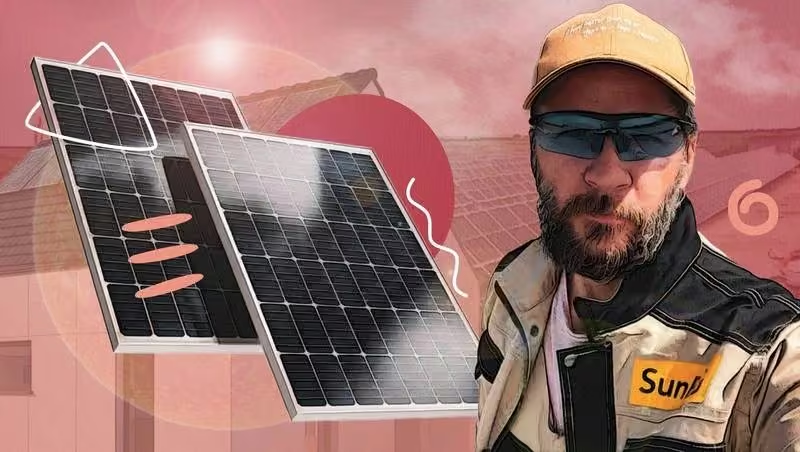
Interest in solar power plants in southern Russia surged in 2026, according to the Association for the Development of Renewable Energy, citing data from Smart Energy. In Stavropol Krai, demand for such installations has increased two- to threefold.
Our partners in Stavropol have been increasing their purchases of power plant kits, while their installation teams are fully booked with orders for the coming month. In that timeframe, they can equip three to four sites with the necessary equipment.
Dmitry Konyaev, the company's development director, told Pobeda26.

According to him, the popularity of solar panels is on the rise due to power station failures and the transfer of energy capacity to Russia’s new territories. Residents are equipping their homes with independent power systems out of fear of a blackout.
Moreover, the fuel crisis has led many to lose confidence in gasoline and diesel generators.
“During the summer, when a gasoline shortage emerged, the equipment in the warehouses was immediately sold out, and future deliveries began to be reserved,”
Fyodor Kondratkov, a manager at the Pyatigorsk branch of Teslum, confirmed the surge in demand.
According to him, the boom is still ongoing, and due to high demand, every shipment of components from China is becoming more expensive.
Three types of power plants
Dmitry Konyaev identifies 5-6 kW systems, priced between 650,000 and 700,000 rubles including installation, as the most sought-after option. He notes that project costs can be reduced to the 480,000-500,000 ruble range by opting for less expensive equipment. Scaling up capacity to 10 or 15 kW results in a proportional increase in total cost.

The cost of a solar power system varies significantly depending on its configuration. Grid-tied installations collect the direct current generated by the panels, convert it into alternating current using an inverter, and feed the electricity directly into the public grid. In this setup, the home draws power from its own solar array rather than relying on external sources. However, these systems are entirely dependent on the stability of the main grid; if the external power supply is interrupted, the inverter automatically shuts down to prevent back-feeding.
A second category consists of hybrid systems, which offer greater flexibility. These installations can export surplus energy to the grid while simultaneously storing excess power in battery banks. This dual capability ensures that the property maintains a continuous power supply even when the external grid fails. The third option involves fully autonomous stations that operate independently of the public grid, relying exclusively on stored battery energy to power connected loads.
According to estimates provided by Fyodor Kondratkov, a complete equipment package for a 5-kilowatt grid-tied or hybrid system starts at 330,000 rubles, while a fully autonomous setup begins at 310,000 rubles. These baseline figures can increase substantially if the customer opts for premium-tier panels, inverters, or battery storage units.
An additional 30 percent of the total package cost must be allocated for turnkey installation, while roughly 10 percent covers the remaining components, such as wiring and automatic switches.
Other firms, including ArtSolar and Stavsolar, also supply solar power plants to the Stavropol region. Classifieds platforms list 6-kilowatt kits priced between 180,000 and 200,000 rubles, with some equipment available as used. Buyers can select panels, inverters, and batteries individually, then hire a technician to install the complete system.
The outcome hinges on solar irradiance, applicable tariffs, and energy consumption levels.
Dmitry Konyaev explained that the payback period is determined by several factors, including the number of sunny days in a specific region, the cost of electricity, and the tiered pricing structure.
In Stavropol Krai, the first consumption tier, priced at 7.9 rubles per kilowatt-hour, applies to users consuming up to 3,900 kilowatt-hours per month. The second tier, covering consumption from 3,901 to 6,000 kilowatt-hours, is charged at 8.79 rubles per kilowatt-hour, while the third tier, for consumption exceeding 6,000 kilowatt-hours, carries a rate of 13.73 rubles per kilowatt-hour. Solar panels can reduce overall consumption and shift users into a lower pricing tier, thereby shortening the investment payback period.

Private residences typically consume relatively modest amounts of electricity, generally staying within the 1,000 kilowatt-hour mark or slightly above. In regions where this figure represents the upper limit of the first tier, such as Krasnodar Krai, solar panel installations achieve a faster return on investment compared to Stavropolie. Commercial facilities with significantly higher energy demands also experience shorter payback periods.
Balcony power
Starting in September 2026, solar panels will be permitted on the electrical grids of multi-unit residential buildings, provided a decision is reached at a general meeting of residents. However, such requests remain extremely rare across the country. Nevertheless, there is no prohibition against installing a mini-station within an individual apartment. Evgeny Savenko, an installer from Pyatigorsk, has previously mounted solar panels on a balcony.
The homeowner purchased two 600-watt panels, while the team assisted with the design and installation. The total cost for her came to approximately 150,000 rubles. Two panels are sufficient to meet the energy needs of a household using standard appliances, such as a refrigerator and a television. Although a minimum system capacity of 3 kilowatts is required, most installations include a surplus to account for the winter season, when daylight hours are shorter and overall solar irradiance is lower.

However, he does not see the value in installing a power plant in his own apartment. Given a monthly consumption of 100 to 200 kilowatt-hours, a 5-kilowatt system costing 300,000 rubles would take approximately 20 years to pay for itself. In his view, investing in such equipment only makes sense when grid connection is available and monthly consumption reaches 1,000 kilowatt-hours, for instance, when lighting a greenhouse or charging an electric vehicle is required.
The installer believes it is more cost-effective to equip commercial facilities, such as tourist cabins in remote areas without access to the electrical grid. He once installed a 20-million-ruble system on a farm, which is expected to recoup its costs in about five years, or potentially sooner if electricity tariffs continue to rise.
Monetizing power generation
Surplus electricity can be fed back into the grid or offset against bills through net metering arrangements with the local utility. This mechanism is known as the green tariff. The cap on electricity fed back to the grid has been significantly raised in Russia this year.

The previous system-wide cap stood at 15 kilowatts. That limit has since been raised to 50 kilowatts for residential customers and 150 kilowatts for commercial entities. Inquiries are already trickling in, and demand for commercial installations is certain to expand next year.
Dmitry Konyaev is counting on this.
However, the practice of feeding surplus electricity back into the grid is not widespread in Stavropol Krai. According to Evgeny Savenko, utilities purchase excess power at low wholesale rates. Furthermore, executing a contract for the "green tariff" involves a complex bureaucratic process that energy companies are reluctant to undertake.
“It is often said that the process is lengthy, tedious and ultimately pointless, and that there is little to be gained financially from it,”
Mikhail, a resident of the Novotroitskaya settlement in Izobilnensky district, believes that such a setup is essential. He assembled his power station using a mix of components, which he has been gradually upgrading and replacing over time.
DIY
Mikhail could not provide the exact amount he invested in his home solar system, but rough estimates suggest the installation paid for itself over a five-year period.
I initially purchased 200-watt panels to secure basic lighting for my home. I subsequently increased the system's capacity. My current setup includes panels with a total output of 1,400 watts, a 5-kilowatt inverter, and 17 batteries. On sunny days, the system powers all my appliances except for two air conditioners. During periods without sunlight, the battery reserve sustains operations for a couple of days.
A resident of the stanitsa shared his experience.
He advises beginners who plan to assemble a solar power station on their own to thoroughly research the topic and consult with those who have already made mistakes.
Mikhail concluded that lead-acid batteries are unsuitable and recommended purchasing lithium iron phosphate batteries instead. He emphasized the need to ensure tight connections on the wiring, as poor contact leads to significant energy losses and dissatisfaction with low power generation.
In his view, installing solar panels in private homes is necessary when the external power supply is unstable and the absence of electricity could cause damage. For example, if a grid-dependent boiler fails and the entire heating system freezes, or if an incubator shuts down, killing the chicks in the eggs.

According to him, the price of solar panels is a poor indicator of their quality. In some cases, used equipment performs better than new units. Buyers are advised to measure the current and voltage output before making a purchase.
A 100-watt solar panel system equipped with a 12-volt battery served beekeeper Vladimir Chernitsyn from Izobilnensky District for several years, until he decided to close his apiary.
“Sitting in a tree line, with no people or power grids within a 10-kilometer radius. You charge the battery from the sun, and your lighting, electric knife, and honey extractor all keep working.”
He dismissed the idea of using a diesel generator as an alternative, citing the constant noise it would generate throughout the day. In contrast, a solar power system operates silently. Should the stored energy run out before a specific appliance finishes its cycle, the user can simply wait and resume operation a few hours later.
He considers installing such a system in an apartment to be economically unviable. Powering all household devices, including a microwave and a washing machine, requires significantly higher capacity. Consequently, the system would be prohibitively expensive and unlikely to recoup its initial cost.
According to all sources interviewed by Pobeda26, solar power systems have not become cheaper or more accessible over time.
Solar panel prices are expected to rise until new technologies emerge, according to industry observers. While the technology is continuously improving, panels with an efficiency rating of up to 27% are already available, though they command a higher price than standard models, which typically offer an efficiency of 24%.
Earlier, Vladimir Vladimirov, the head of Stavropol Krai, ordered the allocation of 1.5 billion rubles in subsidies to public utility providers to cover the gap between economically justified and actual tariffs. Thanks to this measure, the average price increase effective October 1, 2026, was 15.8%, rather than the 22% projected by the federal government.
Pvola take
Developers and investors should anticipate significant supply chain bottlenecks in Stavropol Krai, as installation teams are already fully booked for the upcoming month. The surge in demand, driven by grid instability and fuel shortages, indicates a strong market for independent power systems, but the limited capacity to equip only three to four sites per month suggests that project timelines will be extended. This scarcity of installation labor may increase project costs and delay revenue generation for new entrants in the region.
Frequently asked questions
Why has demand for solar panel installations in Stavropol Krai increased significantly in 2026?
Demand has surged due to power station failures and the transfer of energy capacity to new territories, causing residents to fear blackouts. Additionally, a fuel crisis has led many to lose confidence in gasoline and diesel generators as reliable backup power sources.
What is the minimum system capacity required for a household solar installation in Stavropol Krai?
A minimum system capacity of 3 kilowatts is required to meet the energy needs of a household using standard appliances. Most installations include a surplus capacity to account for the winter season, when daylight hours are shorter and solar irradiance is lower.
How did the Stavropol Krai government mitigate the impact of rising energy tariffs on residents in 2026?
The regional head ordered the allocation of 1.5 billion rubles in subsidies to public utility providers to cover the gap between justified and actual tariffs. This measure reduced the average price increase effective October 1, 2026, to 15.8%, rather than the 22% projected by the federal government.