Changzhou giant worth 110 billion yuan dumps large chunk of solar assets

On November 2, Trina Solar officially responded to the sale of the controlling stake in its photovoltaic mounting structure subsidiary. The company plans to introduce a strategic partner to fully leverage synergies, consolidate its core photovoltaic and energy storage businesses, and focus on innovation in the coordinated development of AI data centers and power supply.
“The matter is still in the preliminary communication stage, has not met the disclosure criteria, and remains uncertain,” the official statement emphasized.
Trina Solar’s total assets exceed 110 billion yuan. Its actual controller, Gao Jifan, recently reached an agreement with Shenzhen Nanshan Thermal Power Co., Ltd. at the end of October to sell the controlling stake in its subsidiary Trina Pioneering PV Mounting Structures (Trina Mounting), with the equity ratio ranging from no less than 51% to no more than 70%.
Since 2024, Trina Solar’s physical business has posted losses for 10 consecutive quarters, totaling approximately 17 billion yuan, with no signs of a turnaround. Meanwhile, the team is aggressively expanding its energy storage business and exploring applications in AI data center scenarios.
As the photovoltaic sector remains at the bottom of the cycle and new businesses require incubation, Gao Jifan has made the painful decision to divest a segment of its advantageous business.
Painful Divestiture
Since 2018, he has invested approximately 70 million euros in acquiring Nclave, whose mounting structures are primarily used for positioning, installing, and securing photovoltaic modules.
The products sold by Gao Jifan’s team are mainly intelligent tracking systems, which utilize algorithms adapted to terrain and the scattering and reflection of sunlight. Equipped with intelligent control systems, these systems can drive photovoltaic panels to rotate slowly in response to the sun’s position, thereby improving power generation efficiency and revenue during early morning and late evening hours.
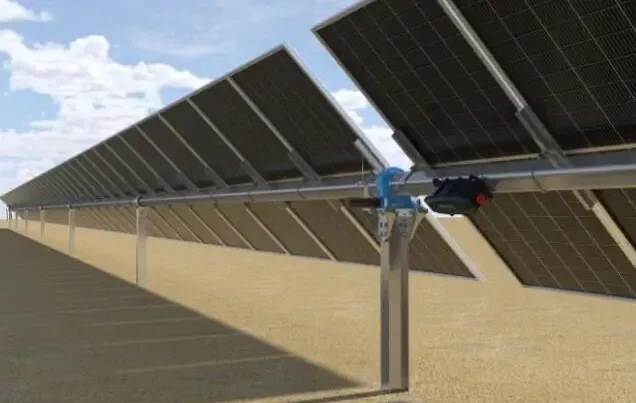
Trina Mounts has also pursued a global footprint, establishing branches across multiple regions, including Asia-Pacific, the Middle East, Europe, and the Americas. The company has set up R&D and engineering centers for mounting systems in both Europe and Asia.
In June this year, a professional institution ranked global tracking system manufacturers based on comprehensive capabilities, placing Trina Mounts in second position worldwide.
Gao Jifan, the company’s chairman, views the mounting system business as a key lever in Trina Solar’s transformation into a smart energy solutions provider. Together with the distributed system business and the centralized power plant business, it forms the core of Trina’s system solutions business cluster.
From January to June, the total assets of this business cluster were approximately RMB 34 billion, with revenue of RMB 9.6 billion and a net loss of RMB 190 million. However, the specific profitability of the mounting system segment cannot be independently determined.
As of September, Trina Solar’s interest-bearing debt stood at approximately RMB 40 billion. After deducting cash resources, its net debt remained above RMB 20 billion. On the path to turning profitable, maintaining ample cash flow is crucial for financial stability.
Nanshan Thermal Power, which has traditionally focused on gas-fired power generation and integrated energy services, acquired a controlling stake in Trina Mounts through this transaction with Gao Jifan. This move instantly positions the company as a global leader in this niche sector and significantly expands its revenue base, although the valuation of the acquired business has not yet been disclosed.
In April, Shanghai Trina Fuhua Energy, a subsidiary of Trina Solar, transferred its residential solar power plants and associated equipment located in Guangdong, Jiangsu, and Anhui provinces to CCB Financial Leasing, a company listed in Hong Kong. The transaction was valued at approximately RMB 2.851 billion, with all assets priced at their net book value.
Energy storage volumes are ramping up
From January to June, Trina Solar’s energy storage shipment volume exceeded 5 GWh, representing a year-on-year increase of 188%. Over 90% of its shipments were destined for overseas markets, with high-value markets such as Europe and Latin America accounting for more than half of the total shipment volume.
Its backlog of orders is sufficient to support the full-year shipment target of 16 GWh. More noteworthy than the volume is the structure of these orders.
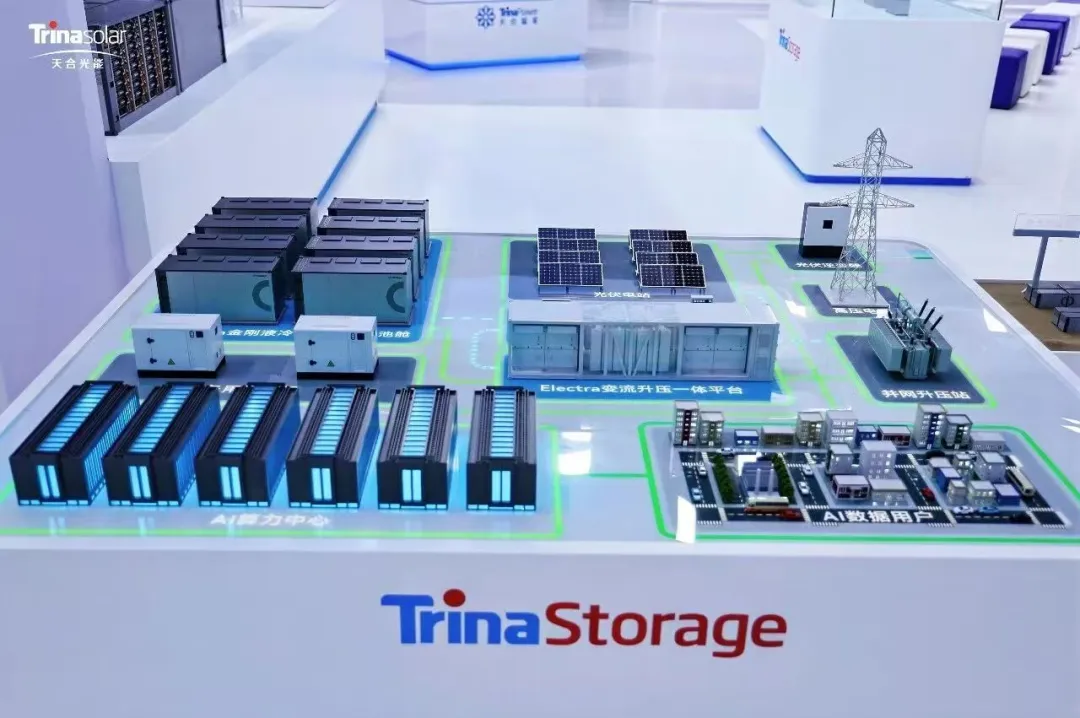
Gao Jifan himself revealed that the company’s comprehensive strength is firmly ranked among the top five globally, with pre-delivery orders reaching 33 GWh, a gross margin exceeding 20%, and overall positive profitability achieved.
In 2019, while most photovoltaic companies were hesitant, he established a joint venture, invested in heavy assets, and expanded into battery cells and system integration, planning 10 GWh of lithium iron phosphate (LFP) battery cell production capacity and a 10 GWh energy storage module production line.
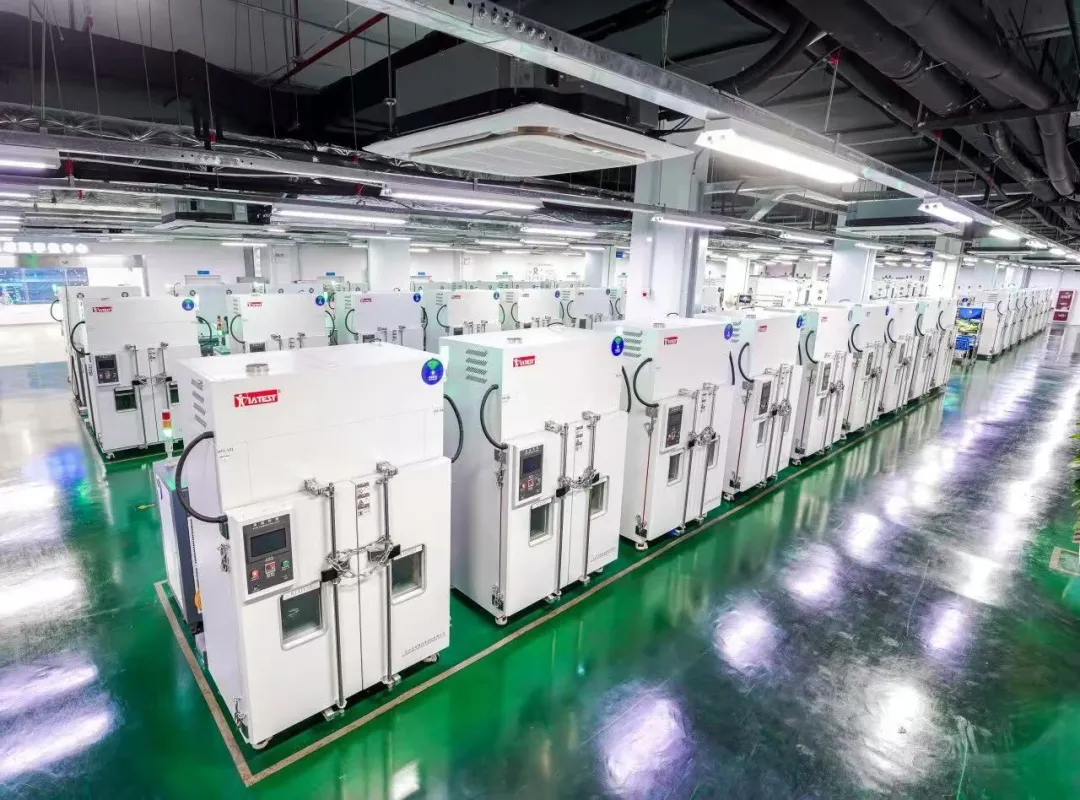
Thanks to this bold strategic move, Trina Storage has become one of the few “core-equipped” integrators in the industry, with its proprietary cells serving as a key differentiator. Subsequently, Gao Jifan elevated this initiative into the “Trina Core” strategy, completing the development of sample cells specifically designed for energy storage, including 150Ah and 280Ah variants.
By the end of 2025, a recovery in energy storage demand triggered a rush to secure cells, and Trina’s in-house production capacity quickly became an “accelerator” for profit realization.
“Industry cycles are irreversible, but companies can choose how they navigate them,” said Yang Bao, president of Trina Storage.
Regrettably, the energy storage segment generated revenue of 2.472 billion yuan in the first half, accounting for only 7.7% of total revenue—insufficient to offset broader challenges, and further affected by multiple external factors.
For instance, on the raw material front, lithium carbonate prices rose to 130,000 yuan per ton between January and June, directly impacting profitability. Management acknowledged that gross margins were noticeably affected by rising input costs and are addressing this through proactive supply chain planning and management, as well as optimizing downstream system delivery and integration.
In any case, for Gao Jifan and Trina Solar, the energy storage business has partially offset losses in the photovoltaic segment.
Awaiting the recovery
From January to September, Trina Solar reported revenue of 48 billion yuan, a year-on-year decrease of 2 billion yuan. The company recorded a net loss of 1.942 billion yuan, representing a reduction in losses of over 50%.
However, this improvement in the bottom line was primarily driven by the disposal and revaluation of its equity stake in T1 Energy Inc., a US-listed company, which generated gains of approximately 2.69 billion yuan. Excluding non-recurring gains and losses, the net loss for each quarter this year remained above 1.2 billion yuan, though it has shown a trend of narrowing.
Since the beginning of the year, three mandatory national standards regarding energy consumption and efficiency for photovoltaic (PV) modules have been issued. The company anticipates that the industry will eliminate approximately 20% of its cell and module production capacity.
"The profitability of the module segment is gradually recovering," the management stated. They believe that future profitability will gradually return to a reasonable level, with leading enterprises expected to achieve higher profit margins.
While awaiting a recovery in the PV sector and expanding its energy storage business, Gao Jifan is also directing his attention to AI Data Centers (AIDC).
"The ultimate limit of computing power is electricity, and the development of computing power requires stable power support," he stated candidly. Trina Solar is preparing to promote the implementation of "computing-power coordination" scenarios, which will significantly increase the application demand for PV and energy storage systems.
The company's key focus is on Solid-State Transformer (SST) solutions for PV energy storage and the distribution side.
Rather than limiting itself to a single product, Trina Solar integrates key power supply and distribution equipment—including green power development, grid-forming energy storage, and SSTs—with computing-power coordination dispatching to form a complete solution. This provides AIDC clients with end-to-end, integrated services for the fusion of computing and power.
Domestically, the Sanjiangyuan Green Power Intelligent Computing Integrated Demonstration Microgrid Project, jointly developed with China Unicom and others, has achieved 100% stable green power supply, with annual power generation exceeding 10 million kilowatt-hours.
Having navigated several PV industry cycles in the past, Gao Jifan remains optimistic. He believes that while the PV industry is subject to cyclical fluctuations, the overarching trend of PV becoming a primary energy source remains unchanged.
Frequently asked questions
What is Trina Solar's strategic rationale for selling its controlling stake in the photovoltaic mounting structure subsidiary to a new partner?
Trina Solar aims to consolidate its core photovoltaic and energy storage businesses while focusing on AI data center innovation. The move is intended to leverage synergies with a strategic partner, though the deal remains in preliminary communication stages.
What specific equity percentage range did Gao Jifan agree to sell in Trina Mounting to Shenzhen Nanshan Thermal Power Co., Ltd.?
The agreement covers an equity ratio ranging from no less than 51% to no more than 70% of the subsidiary. This transaction involves the controlling stake in Trina Pioneering PV Mounting Structures, a key asset within the group's portfolio.
How has Trina Solar's physical business performance impacted its financials over the last ten quarters, and what is its current energy storage order backlog?
The physical business posted losses totaling approximately 17 billion yuan over ten consecutive quarters, showing no signs of turnaround. Despite this, the company holds a backlog sufficient to support a full-year shipment target of 16 GWh for its energy storage division.