Businesses installed more solar panels in October than last year, while the consumer market also showed a cautious recovery

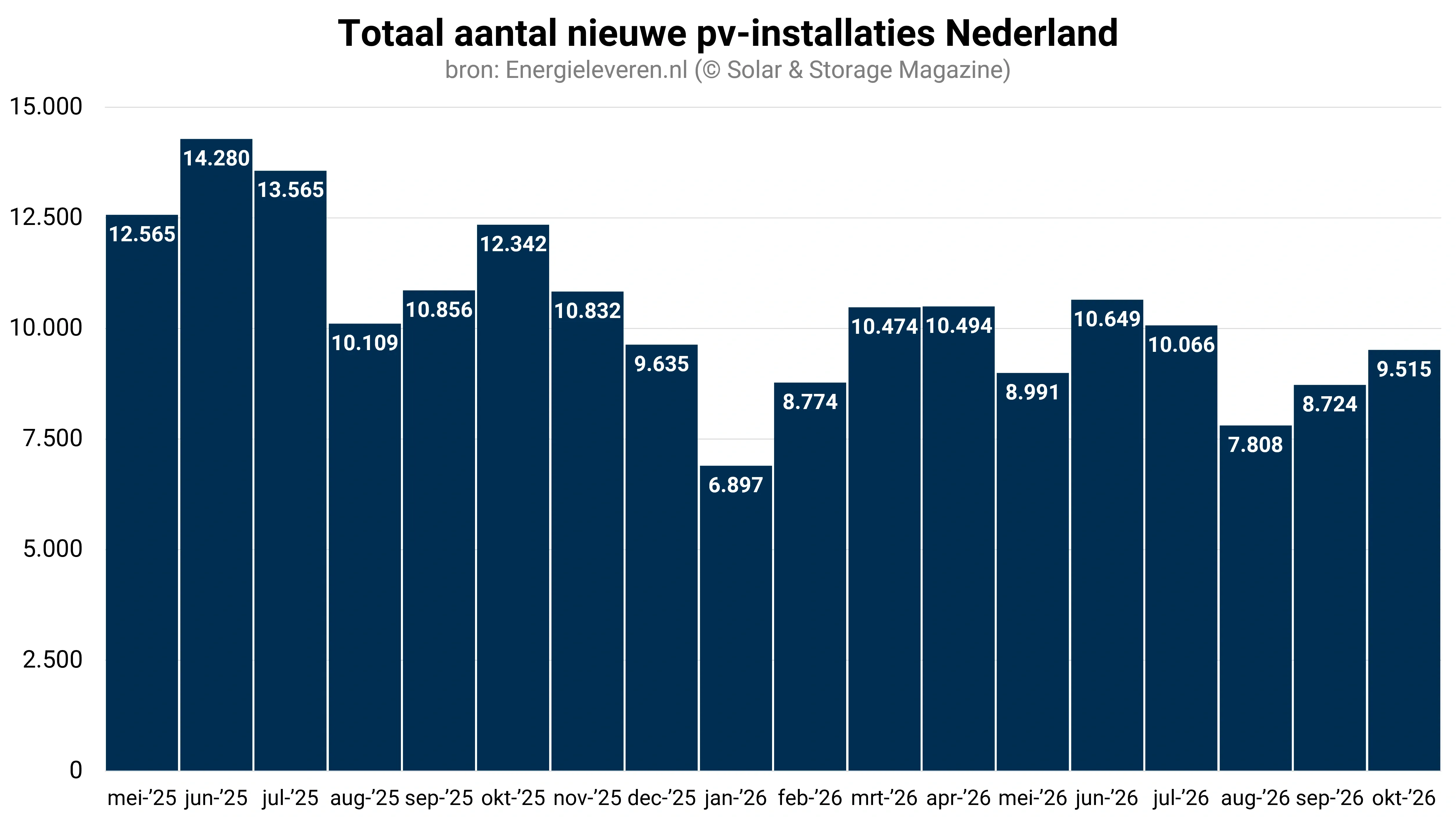
The consumer market is also showing a cautious recovery, as the number of new installations has grown for the second consecutive month. In the first 10 months of 2026, a total of 92,392 new solar panel installations were registered in the grid operators' registration system, compared to 159,955 in the same period last year. As a result, the year-to-date volume as of October 31 is 42 percent lower than in 2025.
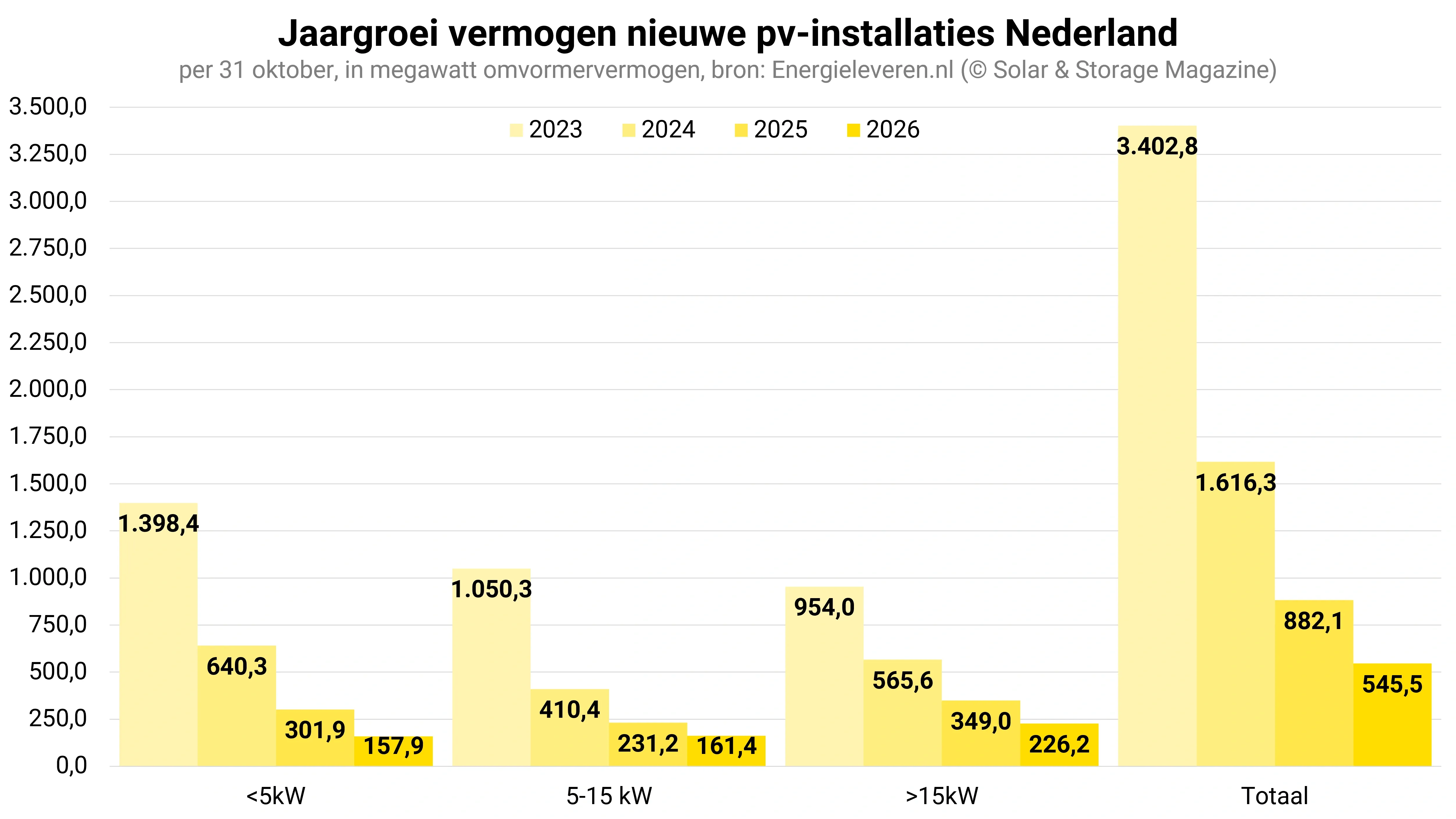
In terms of reported inverter capacity, a similar decline is evident. As of October 31, 2026, the counter stands at 545.5 megawatts of new capacity, compared to 882.1 megawatts in the same period of 2025, 1,616.3 megawatts in 2024, and 3,402.8 megawatts in the peak year of 2023.
Up to 5 kilowatts
The smallest segment, installations under 5 kilowatts typically installed at private residences, recorded 6,644 new registrations in October. This represents an increase of nearly 10 percent compared to the 6,060 units in September, but the year-on-year decline remains significant: October 2025 saw 9,493 registrations in this segment, equating to a 30 percent drop. In the first 10 months of 2026, the counter stands at 66,530 registrations in this segment, compared to 120,680 in the same period of 2025, a near-halving. The under-5-kilowatt segment accounted for 72 percent of all new registrations this year.
Capacity stabilizes
The registered inverter capacity of new installations stabilized in October at 56.7 megawatts, nearly identical to the 56.0 megawatts recorded in September. The year-on-year decline stands at 15 percent – October 2025 recorded 66.8 megawatts – a significantly smaller drop than the 23 percent decline in the number of installations. This discrepancy indicates a further increase in average system size: in October 2026, the average size per new installation reached nearly 6 kilowatts.
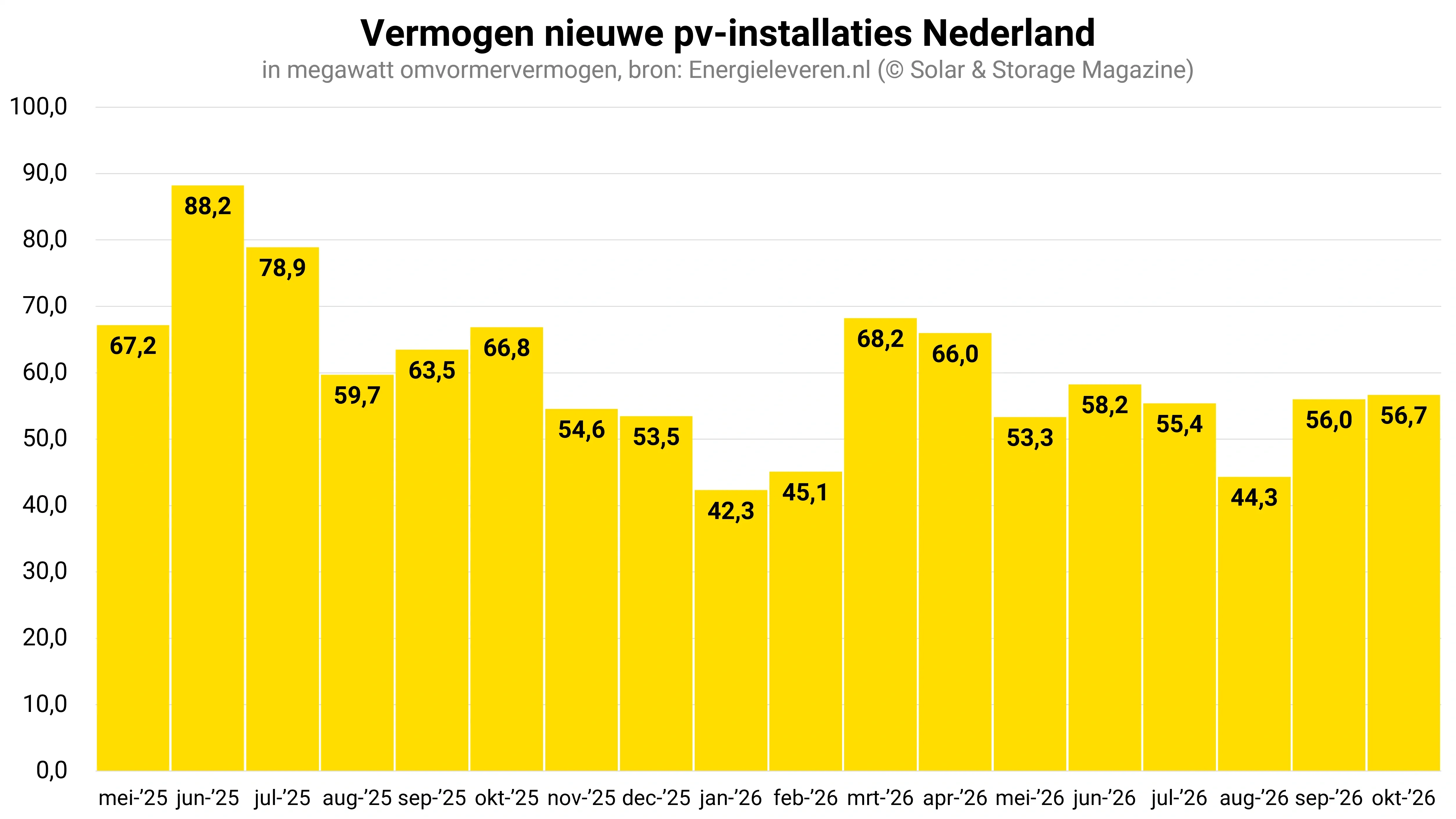
The capacity of installations smaller than 5 kilowatts increased from 14.6 megawatts in September to 16.4 megawatts in October, a 12 percent month-on-month rise. However, the year-on-year decline stands at 29 percent: October 2025 recorded 23.1 megawatts in this segment.
Commercial sector outpaces residential
The annual reports as of October 31 most clearly illustrate the structural shift in the market. Of the 545.5 megawatts of newly registered inverter capacity in the first 10 months of this calendar year, the segment exceeding 15 kilowatts dominates with 226.2 megawatts. The mid-range segment of 5 to 15 kilowatts follows with 161.4 megawatts, surpassing for the first time the segment below 5 kilowatts, which stands at 157.9 megawatts. These proportions have been radically reversed compared to 2023, when the segment below 5 kilowatts was dominant with 1,398.4 megawatts.
The share of installations exceeding 15 kilowatts in newly registered capacity grew from 28 percent in the peak year of 2023, to 35 percent in 2024, and to 40 percent as of October 31, 2025, reaching 41.5 percent as of October 31, 2026. However, the most notable development in October is evident in the year-on-year comparison: the number of installations exceeding 15 kilowatts and the number of large consumers are both above the levels of October 2025, and the registered capacity in the mid-range segment of 5 to 15 kilowatts also exceeds that of a year earlier.
5 to 15 kilowatt
In the mid-range segment, covering installations of 5 to 15 kilowatts, 2,436 new registrations were recorded in October, representing a 6.6 percent increase compared to the 2,286 units in September. The registered inverter capacity rose from 16.8 to 18.2 megawatts. This reveals a notable development: in terms of numbers, October 2026, with 2,436 registrations, is slightly below the level of October 2025, which recorded 2,462 registrations (–1.1 percent). However, in terms of capacity, October 2026, at 18.2 megawatts, exceeds the 16.7 megawatts of October 2025 by 9 percent. The mid-range segment is therefore installing larger systems than a year ago.
Larger than 15 kilowatts
The segment above 15 kilowatts showed a notable recovery in October. The number of registrations increased from 378 in September to 435, a month-on-month rise of 15 percent. More notably, compared with October 2025, which recorded 387 registrations, October 2026 exceeded that level by 12 percent, making it the first month in 2026 in which this segment grew on a year-on-year basis. The associated inverter capacity fell from 24.6 megawatts in September to 22.1 megawatts in October, down 18 percent from the 27.0 megawatts recorded in October 2025. The combination of a higher number of installations but smaller in size than a year earlier indicates a larger share of systems at the lower end of this segment.
Small and large consumers
Among small consumers, households, and small and medium-sized enterprises, 9,379 new solar panel installations were registered in October, an increase of 773 compared to September. This represents a 9 percent month-on-month rise, but on a year-on-year basis, registrations remain 23 percent lower than the 12,239 recorded in October 2025.
In the large consumer segment, which includes installations with an inverter capacity of up to 1 megawatt, the number of registrations increased from 118 in September to 136 in October, a 15 percent rise. Notably, the comparison with the previous year shows that October 2025 recorded only 103 registrations in this segment, meaning October 2026 significantly outperforms the prior year with a 32 percent increase. This marks the second consecutive month of year-on-year growth for large consumers, and October confirms the pattern in which the commercial market is the only segment actually recording more registrations than in the same month of the previous year.
Cumulative number of installations
The total number of registered solar panel installations reached nearly 3.4 million by the end of October.
To 20 gigawatts
The total inverter capacity registered with the regional grid operators reached 19,815 megawatts, or nearly 19.8 gigawatts, by the end of October. The 20-gigawatt threshold remains within sight, but the pace is slowing: at the current monthly addition of approximately 56 to 57 megawatts, this milestone is expected to be reached in early 2027. In the cumulative distribution by segment, the segment exceeding 15 kilowatts stands at 7,641.0 megawatts, the segment below 5 kilowatts at 7,271.5 megawatts, and the mid-range segment of 5 to 15 kilowatts at 4,902.8 megawatts. The gap between the largest and the second-largest segment now amounts to 369.5 megawatts and is steadily widening as commercial new installations increasingly outpace consumer installations.
Important: for this article, the grid operators have only provided figures for solar panel installations with an inverter capacity of up to 1 megawatt.
Frequently asked questions
How did the total number of new solar panel installations in the first ten months of 2026 compare to the same period in 2025?
The total number of new solar panel installations in the first ten months of 2026 was 42 percent lower than in 2025. Specifically, 92,392 new installations were registered in 2026, compared to 159,955 in the same period last year.
What was the registered inverter capacity for new solar installations up to October 31, 2026, and how does it compare to 2025?
The registered inverter capacity for new solar installations up to October 31, 2026, stood at 545.5 megawatts. This figure is significantly lower than the 882.1 megawatts recorded in the same period of 2025, indicating a continued decline in capacity additions.
How has the gap between the largest and second-largest solar installation segments changed, and what does this imply for commercial developers?
The gap between the largest and second-largest segments now amounts to 369.5 megawatts and is steadily widening. This indicates that commercial new installations are increasingly outpacing consumer installations, signaling a shift in market dynamics for developers and investors.