60,000 solar panels for Colombia, but at a higher-than-usual price?

Listen to this article
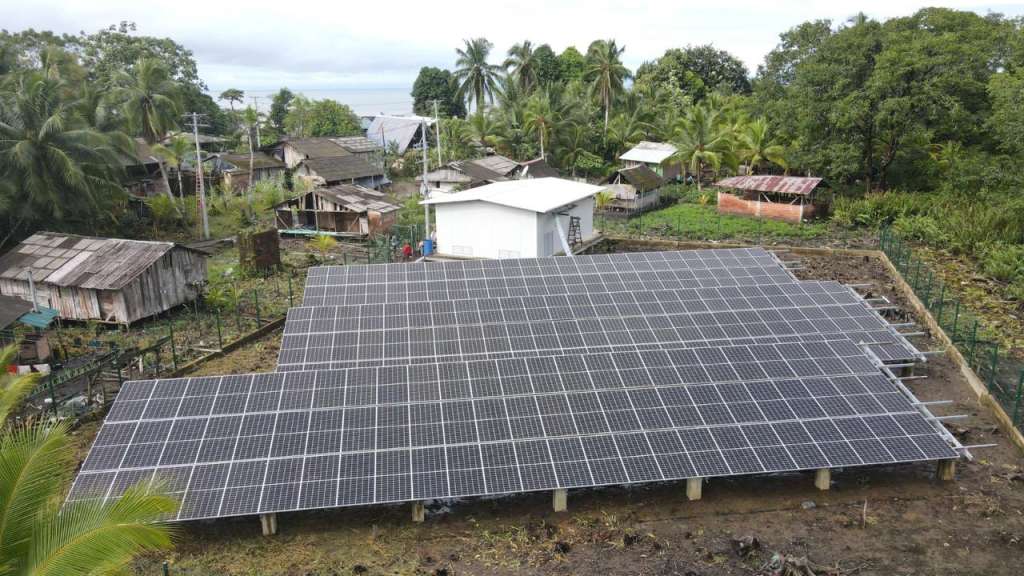
In late 2025, the government of Gustavo Petro signed 17 contracts worth 914 billion Colombian pesos to build more than 2,274 energy communities in Colombia. This is the most ambitious project signed by that administration in its push to “democratize energy” through the installation of solar panels and batteries in 28,544 homes. The goal was to ensure access to the service 24 hours a day.
As El Espectador reported in November 2025, those contracts were to be signed with a two-month execution schedule, between November 1 and the…
As El Espectador reported in November 2025, those contracts were to be signed with a two-month execution schedule, between November 1 and December 31 of that year. Officials, companies, and other industry stakeholders raised several alerts, compiled by this outlet, asserting that such a timeframe was impossible to meet. Following the publication, the Ministry of Mines and Energy postponed the signing of the contracts, which were ultimately awarded in December with a schedule of just over eight months, aiming for completion by July 31, 2026.
Although it was expected that the energy communities could be inaugurated six days before the end of the government term, that goal was not achieved. Today, most of the contracts are below 50% in execution, and all have requested an extension to complete the work by December 31, 2026. Logistical difficulties, prior consultation processes, and delays in the importation of goods are some of the issues contractors have cited to request the extension of the deadline.
However, the delays in the installation of energy communities in Colombia are not the only notable aspect regarding the 17 contracts between the Ministry of Mines and Energy and Gensa, Electrocaquetá, and Dispac, the three public service companies executing the projects. These companies have quotes for the purchase of solar panels at “very high” prices, according to a source in the renewable energy sector who requested anonymity. Although not all projects have reported having purchased the panels, those that have done so do not mention any differences between the initial quotes and the prices they paid.
Environment
The letter that 500 forestry engineers sent to De la Espriella with their concerns
Environment
The largest assessment on restoration is published at COP 17: these are the results
Blog El Río
The enormous debt to the oceans at the close of the COP17 biodiversity conference
El Espectador reviewed the documentation for each project in SECOP II, the state procurement system, and found that in several detailed budgets, solar panels for the same reference were quoted with variations exceeding COP 270,000 per unit. These prices do not include any additional services, such as transportation to the installation sites or the labor required to bring them into operation. In total, the solar power generation systems for the 28,544 households in the country involve purchasing 60,221 solar panels.
But before delving into the details of the figures, a brief explanation of how the power generation systems of energy communities work. Solar panels have different capacities depending on the power requirements of a power generation system: in the case of quotes for energy community contracts, they range from 500 W (watts, which indicate the maximum power they can achieve) to 710 W. To light a household, systems capable of at least 1,100 W are required, so each project needs at least two panels.
With this clarification in mind, one of the most frequently referenced specifications in community energy contracts is 550 W solar panels. These were quoted for some of the projects implemented by Dispac and Electrocaquetá, but the variations in the quotes are notable.
For the solar energy systems in Albania and Maicao, in La Guajira, executed by Dispac, the budgets include quotes for 550 W solar panels at prices ranging from COP 510,279 to COP 519,104. They plan to purchase 21,328 units for 10,664 homes. In these quotes, the variations are minimal.
Meanwhile, the projects being implemented in Norte de Santander, Magdalena, Santander, Nariño, and Cesar, executed by Electrocaquetá, include quotes ranging from COP 505,469 to COP 782,383. In these projects, energy systems will be installed in 8,631 homes, requiring 17,262 solar panels. The difference between the lowest and highest prices for solar panels of the same capacity is COP 276,914.
That means that if all the solar panels were purchased at the lowest quoted price for the projects executed by Electrocaquetá, they would cost more than eight billion pesos (COP 8,725,405,878, to be precise); but at the highest price, they would cost COP 13,505,486,715, a difference of COP 4,780,080,837.
The other quoted references for the projects being implemented in 10 departments of the country are between 600 W and 710 W in capacity, and their prices in the budgets range between COP 580,000 and COP 890,000.
The problem does not lie solely in the price difference. El Espectador requested quotes from different companies, consulted with solar panel distributors and organizations that track the price of this product, and found that the values recorded in the contract budgets are above market rates.
Reference prices in the market
The solar panels arriving in Colombia, as in most of the world, originate from China. It is the leading power in the production of technologies for the energy transition, and solar energy is no exception.
Ember Energy, an organization dedicated to collecting data on the global energy transition, has been tracking the price at which solar panels are imported into Colombia since 2017. Between September and December 2025, the months during which, according to the Ministry of Mines and Energy, the projects were structured, the price of solar panels arriving in Colombia was USD 0.1 per watt (COP 400) of power. In other words, a 600 W solar panel arrived at a port in the country at a manufacturing price of USD 60, or approximately COP 240,000, if the highest exchange rate during those months (COP 4,000) is used as a reference.
But that is not the price at which panels are sold in the country. Edwin Hernández, CEO of Ecoled, a panel distributor that has executed various projects to install solar energy systems in Colombia, explains that once the product arrives in Colombia, they must pay between 30% and 40% of its value in taxes, customs fees, and logistics to have it available in a warehouse for sale. After that, the company’s profit margins are added, which typically amount to around 20%. With this, the value of the panel at that point would reach prices between COP 400,000 and COP 450,000. Hernández prefers to measure it in price per watt, as Ember does: around COP 700 per watt.
Several companies on their websites align with these prices. Emergente, a company with over 10 years of experience in the solar energy sector, displays 550 W solar panels on its website for approximately COP 405,000. Although this reference is currently out of stock at most distributors, as it has not been manufactured for two years, according to several companies consulted by this outlet.
Among the panels currently being manufactured, Emergente offers 625 W options priced between COP 390,000 and COP 519,000, with no discounts. It also offers 715 W alternatives for COP 519,000.
Three commercial executives from different companies confirmed to El Espectador that the prices referenced by Hernández, from Ecoled, and on Emergente’s website correspond to current market rates. They further clarified that distributors typically offer discounts ranging from 5% to 12% for purchases exceeding 700 panels, which is the capacity of a fully loaded shipping container.
These prices align with the market analysis conducted by IPSE, the energy sector entity responsible for reviewing the structuring of renewable energy projects in Colombia. It evaluates the prices of all inputs required to build an energy community and maintains a quarterly historical record of each reference.
According to its inquiry dashboard, during the third quarter of 2025 (the same months in which the projects were structured), the average price of a 550 W panel was COP 424,400. A 600 W panel cost COP 471,367, while 710 W panels were around COP 614,000. These figures not only reflect the average panel prices at that time but also add a 15% margin to account for potential fluctuations in the dollar exchange rate and inflation, according to two people familiar with the construction of this analysis.
So why are there discrepancies between the quotes compiled by El Espectador and those listed in the budgets of the contracts executed by Electrocaquetá, Dispac, and Gensa?
When asked, Minminas stated that “the technical, financial, budgetary, and operational conditions of the projects structured and prioritized for contract signing were based on the economic and market conditions prevailing in the national context during 2025. Therefore, when making comparisons with current quotes, the recorded variations in exchange rates, economic indicators, and costs associated with project execution must be considered.”
However, solar panel prices during the last quarter of 2025, when the contracts were structured and signed, were monitored by IPSE, and an analysis by Ember Energy shows that they remained stable during those months.
In contrast, there was a significant variation in prices in April 2026. Wilmar Suárez, energy analyst for Latin America at Ember, explains that at that time, some tax benefits previously granted by the Chinese government to solar panel manufacturers were eliminated. As a result, a “9% surcharge was added to the cost of panels” from then on.
In other words, although there was a reduction in the exchange rate of the dollar against the peso, which went from COP 4,000 to around COP 3,200, the international price of solar panels increased, from USD 0.1 to USD 0.12 per watt, according to Ember’s monitoring. In practice, for Colombia, import prices went from COP 400 to COP 384 per watt, a reduction of less than 5%. With nationalization and logistics costs, a price monitoring document published by Emergente, with data as of September 2026, indicates that prices for panels between 600 W and 790 W range between COP 560 and COP 790 per watt of capacity.
These are figures very different from those seen in the budgets of contracts signed by the Ministry of Mines and Energy with the country’s three public utility companies: panel prices per watt range between COP 919 and COP 1,717.
However, Dispac, one of the companies executing the projects in La Guajira and Chocó, explained in a response sent via email that “the supervisory body reports that the construction works use 600 W ZNSHINE SOLAR ZXN7-BD144 modules in lots 1, 3, and 4, and 590 W ECO Green Energy EGE-590W-144N modules in lot 2, all of which have the corresponding technical approvals and verifications.”
This implies that the capacity of the solar panels for these projects was adjusted at the start of the contract, even if lower-capacity panels had been quoted. This would reduce the cost per watt of each panel to less than COP 900, a price closer to what is charged in the market.
This explanation, however, does not cover the projects of the other two companies. El Espectador also consulted Electrocaquetá, which is responsible for the projects with the largest price variations for the same reference, and Gensa, which is responsible for the projects with the highest prices, including 710 W panels at COP 890,000 and a project in which 500 W panels were quoted at COP 858,904. The latter are included in the budget of the Valle del Guavio in Putumayo, which included the cost of VAT, despite the fact that the panels are exempt from paying this tax. As of the close of this edition, we have not received responses from either of the two companies.
Additional costs of the project
Edwin Palma, former minister of that portfolio, and Víctor Paternina, former vice minister of Energy, who were in charge of those projects from their signing in December 2025 until August 6, 2026, agree with the Ministry of Mines and Energy on one point: the projects were structured based on the cost per user, rather than the prices of each individual input required to install the solar systems.
“The average cost per user for an individual solar photovoltaic system was approximately COP 31,503,303, with a reference range of COP 29 million to COP 33 million for rural residential projects under the FAZNI program (projects intended for non-interconnected zones). This total cost includes: the supply, installation, and commissioning of modules, batteries, inverters, structures, and protections; river or air transport to dispersed rural settlements; social and technical support, project oversight, and user training,” Paternina explains in a document sent to El Espectador.
While it is true that the projects were initially contracted based on that metric, the budgets currently available on SECOP II provide a detailed analysis of prices, distinguishing between the cost of each material, such as solar panels, and the expenses for transporting them to the installation site and the labor required to commission them. All the prices mentioned so far in this article are identified in the detailed budgets as unit prices for the panels, excluding transportation, installation labor, and other materials necessary for their operation.
A source who requested anonymity and is well-versed in the development of renewable energy projects stated that “the cost per user is an outcome. However, the planning principle in public procurement requires verifying that this value is grounded in market reality. Therefore, a market study is conducted, which also reviews these prices and structures the project by analyzing the cost of each item.”
The market studies that form part of the contract documentation in SECOP II for each project list the same unit prices as those included in the detailed budgets, on the basis of which the Ministry of Mines and Energy approved the projects and signed the inter-administrative agreements.
When asked about alerts regarding potential cost overruns in the contracts, the ministry stated that “to date, the Ministry of Mines and Energy has not identified any findings in this regard. As previously noted, the contracts are under permanent supervision and are in the process of review and verification. Should any situation arise that warrants action, the appropriate measures will be taken to safeguard public resources and ensure the fulfillment of the project’s objectives for the benefit of the communities.”
Former Vice Minister Paternina, for his part, insists that the price per user must be the reference point when measuring the cost of the projects. “A difference of 100,000 to 300,000 pesos per module equates to between 200,000 and 600,000 pesos per user in Valle del Guamuez (two modules per solution) and between 300,000 and 900,000 pesos in Cartagena del Chairá (three modules). In the worst-case scenario, this represents less than 2% and less than 3% of the cost per user, respectively. Both projects would remain within the same reference range used for their evaluation. Therefore, I maintain that there was no overcost in the cost of the solution per user, which is what the State acknowledges.”
Furthermore, he asserts that the funds for each contract are held in a fiduciary trust, which pays the contractors only after it has been verified that the systems are functioning and the supervisory body has approved them. He also explains that the price per user cannot be exceeded in any of the contracts.
For the former vice minister, the 2% difference in per-user costs across the projects does not mean they fall outside the expected range during the project structuring phase. However, an estimate of the difference between the quoted prices for the projects and those available in the market suggests that the gap would be at least COP 10 billion.
Today, most of the community energy projects that were expected to be completed by July 31 are experiencing delays in their execution. Although several of these projects mention in their reports that they have already purchased the solar panels, none of those documents refer to any price changes compared to the budgets quoted in 2025.
Frequently asked questions
Why did the Colombian Ministry of Mines and Energy postpone the signing of 17 energy community contracts in late 2025?
The ministry postponed the contracts because industry stakeholders deemed the original two-month execution schedule impossible to meet. Officials and companies raised alerts that the timeframe was unrealistic, leading to a delay until December when a longer schedule was established.
What was the average market price for a 550 W solar panel in Colombia during the third quarter of 2025?
The average price for a 550 W solar panel was COP 424,400 during the third quarter of 2025. This figure was recorded in the inquiry dashboard as the historical average for that specific panel capacity during the months the projects were structured.
How does the current delay in Colombia's energy community projects affect the transparency of solar panel procurement costs for developers?
The delays have created a lack of transparency regarding price changes, as project reports do not reference budget adjustments. Although panels were purchased, the absence of updated pricing data prevents a clear comparison against the 2025 budgets and market averages.