Remote access to solar panel operations: Risky inverters added to ban list from November 1, older models must be replaced

The deadline expired on November 1: from this point forward, inverter suppliers classified as high-risk must be excluded from solar, wind, and energy storage projects connected to the EU power grid and financed with EU funds. For systems already in operation, a gradual transition to equipment from manufacturers deemed safer is required, according to the Hungarian Solar and Solar Collector Association, citing a report by Euronews.
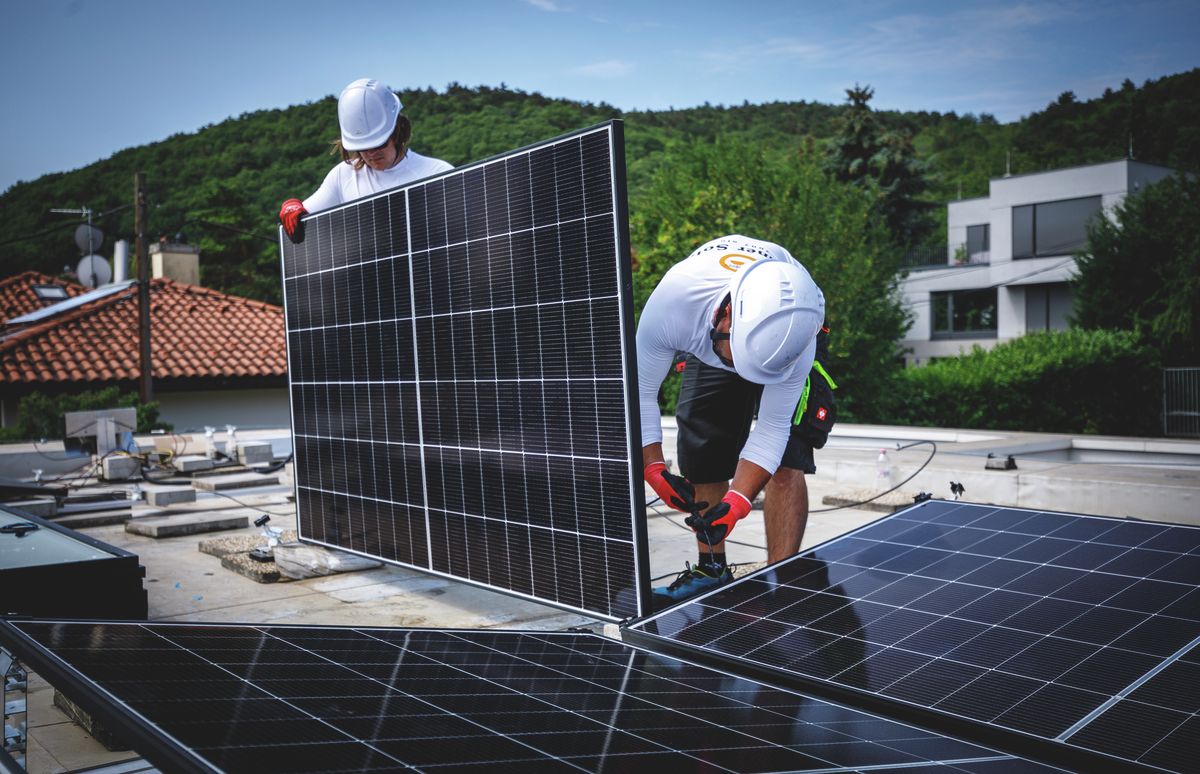
There are alternatives available for replacing the Chinese-made inverter.
According to the European Commission, a viable supply of non-Chinese inverters is already available today, and the security of Europe’s energy infrastructure justifies the additional costs. At the same time, some industry stakeholders continue to hope that the Commission will grant case-by-case exemptions rather than completely blocking funding for individual projects. Exemptions are most likely to be granted in cases where delays arise for unforeseeable reasons, such as prolonged permitting processes.
The Commission adopted an interim policy guidance in spring 2026, which includes two clarifications that are also significant for the domestic market. First, the restriction is not limited to conventional solar inverters; it also covers power conversion systems (PCS) for energy storage systems, as well as standalone storage units and those installed alongside solar power plants. Second, the high-risk designation is not exclusively tied to China: the published criteria list entities under the jurisdiction of, or owned or controlled by, Russia, Iran, and North Korea, in addition to China.
The restriction primarily applies to financing provided by the European Investment Bank (EIB) and the European Investment Fund, including the EIB’s €2 billion renewable energy framework. The significance of this scope is underscored by the fact that in 2025, the EIB financed approximately one-fifth of the EU’s solar capacity expansion.
Why the inverter, specifically?
The inverter is the control element of the modern energy system: it does not merely convert direct current into alternating current, but maintains continuous grid communication, operates with remotely updatable firmware, and is typically monitored and parameterized remotely via the manufacturer’s cloud service – explains the MNNSZ. It is precisely this capability that poses the risk: the manufacturer can, in principle, access the devices remotely and intervene in their operation.
The simultaneous, coordinated disconnection or parameter change of a large number of devices could endanger the stability of the power system and, in extreme cases, lead to a widespread operational disruption.
The risk is amplified by the degree of dependence. According to an estimate made in the European Parliament, approximately 80 percent of solar inverters imported into Europe are of Chinese origin; the share of Chinese manufacturers in the global inverter market is of a similar magnitude. The EU economic security doctrine published on December 16, 2025, therefore specifically identified solar inverters as a high-risk dependency, highlighting four factors:
At the same time, the Commission promised targeted exemptions for cases involving delays exceeding one year, or for compelling political or security considerations.
The guideline is, in itself, a set of financing conditions, not an import ban: it directly regulates what EU funds can be used for. However, current EU law points in the same direction on several points, and these provisions bind market participants regardless of financing.
The Hungarian market is affected through three channels
All domestic solar, wind, and storage projects that rely on funding from EU institutions—primarily the European Investment Bank (EIB) or the European Investment Fund (EIF)—fall under the scope of the November 1 deadline. The explicit naming of storage power converters means that this rapidly expanding domestic storage market is also directly affected.
Cybersecurity has become a mandatory pre-qualification criterion for renewable energy auctions. This means that supplier cybersecurity compliance is not an administrative task to be handled after contract signing, but a prerequisite for participating in the bidding process.
Documented management of supply chain risks, review of remote access permissions, and control of firmware update processes are now matters of regulatory compliance. Accordingly, for projects in the preparation phase that rely on EU funding, it is advisable to audit whether the equipment lists include suppliers that can be classified as high-risk, and to verify whether an exemption notification has been filed.
It is advisable to include in supply contracts the option to change suppliers and the allocation of associated costs, as the transition affects not only the equipment price but also the warranty and maintenance structure. Operators must reassess the scope of the manufacturer’s remote access, who controls the operation, and where grid operational data is processed—the latter is also a prerequisite for pre-qualification in tenders.
Frequently asked questions
What specific restriction applies to high-risk inverter suppliers in EU-funded solar projects starting November 1?
High-risk inverter suppliers must be excluded from solar, wind, and storage projects connected to the EU grid. This ban applies to projects financed with EU funds, requiring operators to transition to safer equipment.
How does the European Commission justify the additional costs of replacing Chinese-made inverters with non-Chinese alternatives?
The Commission states that the security of Europe’s energy infrastructure justifies the extra expenses. A viable supply of non-Chinese inverters is already available, ensuring grid stability without relying on high-risk remote access.
What operational factors must solar operators reassess regarding manufacturer remote access and data processing for tender pre-qualification?
Operators must evaluate the scope of remote access, control mechanisms, and data processing locations. These factors are prerequisites for pre-qualification in tenders, as coordinated device disconnection could endanger power system stability.