India's Battery Storage Push Brings Bidding and Localization Frictions Into Focus

BW Communities
India has allocated 14,500 crore rupees to 92 GWh of grid-scale energy storage, a move that highlights the direction of its renewable energy transition. Expanding solar and wind capacity is no longer the sole challenge. The more difficult task is delivering that intermittent power when the grid requires it. The Union Cabinet has approved a Viability Gap Funding (VGF) scheme for 92 GWh of Energy Storage Systems by 2030-31, comprising 60 GWh of pumped storage, 30 GWh of Battery Energy Storage Systems (BESS), and 2 GWh of emerging technologies. The scheme is expected to attract approximately 97,600 crore rupees in total investment. “India is now shifting from renewable energy to reliable energy. Energy storage is the need of the hour,” said Kannan Krishnan, Managing Director of Jakson Green. India's storage requirement is estimated at around 411 GWh by 2031-32, meaning the new scheme covers only a portion of that demand. The larger question is whether the industry can convert the government's financial support into projects that can be bid competitively, connected to the grid, financed, and supplied from a domestic manufacturing base. This issue became apparent during a roundtable held at the Bharat RE Summit and
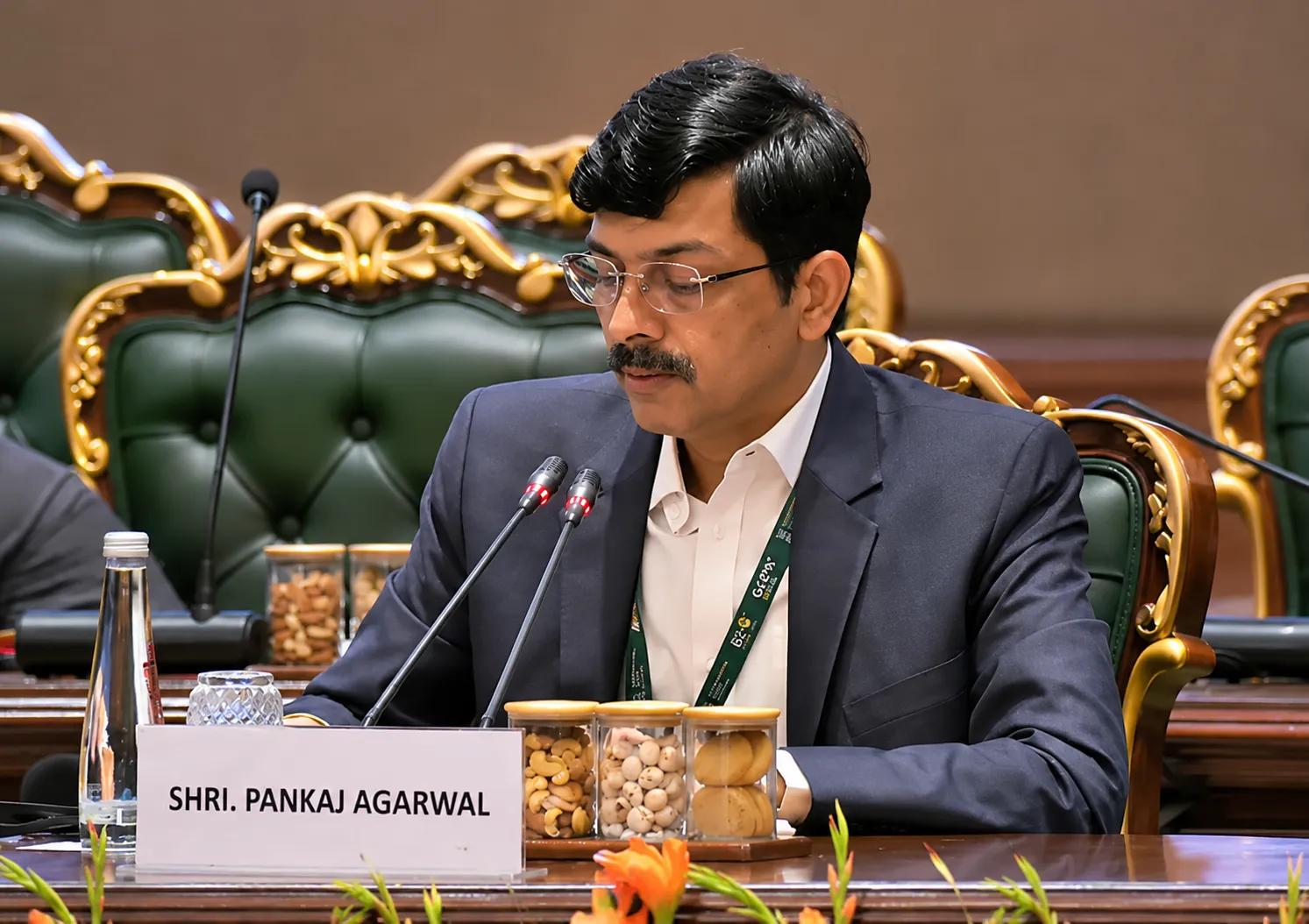
Expo 2026, convened by the Ministry of New and Renewable Energy (MNRE) and the Ministry of Power, brought together industry leaders from storage manufacturing, project development, financing, and technology. Their concerns highlight a market that has moved beyond the question of whether India needs storage. It now has to resolve how storage projects will be built and financed at scale. The need for storage is also linked to the changing nature of renewable power. Pankaj Agarwal, Secretary, Ministry of Power, stated that India’s renewable energy story is dominated by solar, which is available for 6 to 8 hours a day, while customers require a 24/7 power supply. “We initially encouraged developers to propose at least two hours of battery storage. In the non-rooftop segment, we are asking developers to consider a minimum of four hours of storage,” said Agarwal. The shift to longer-duration storage increases the capital committed to each project and makes the commercial model more critical.
Bidding Tests Project Economics The first pressure point is the way storage projects are being procured. Aggressive bidding can make a project appear viable at the tender stage while leaving developers with insufficient returns to support financing and execution. Bharat Saxena, CEO of Inox Clean Energy, said bidders from outside the sector are entering tenders without always having the capability to deliver projects.
“The present bidding system has to be looked into. Anybody comes and bids for the projects, whichever bid comes. People from the road infrastructure sector come and bid and they are not able to do the projects. The returns are coming in a single digit,” said Saxena. The financing threshold is also becoming clearer. Lenders require 12 to 15 per cent equity or a debt service coverage ratio (DSCR) of 1.2 to 1.25 before supporting projects.
That makes procurement discipline critical. A low tariff may reduce the immediate cost of storage procurement, but a bid that cannot attract financing can delay execution and weaken confidence in the market.
Deployment Faces Process Delays Even bankable projects have to move through a grid and regulatory process that developers say can take months. Deepak Gupta, Executive Vice President and Head Commercials, Utility Projects, ReNew Power, said ReNew has added more than 10 GWh in recent quarters and plans to add another six to seven GWh over the next two to three quarters. But project development timelines remain exposed to grid approvals.
The issue becomes more relevant as the government pushes developers towards longer-duration storage. Tax adds another cost layer. Gupta said BESS attracts 18 per cent Goods and Services Tax (GST), compared with 5 per cent for solar, and argued that a lower rate could improve the economics of storage.
For commercial and industrial consumers, the impact can be more direct. K V Subrahmanyam, Chief Commercial Officer at Radiance Renewables, stated that GST becomes a cost when it cannot be invoiced on power. He also pointed to delays between state policy announcements and the regulations required to implement them. These are not merely administrative issues. For a capital-intensive technology that requires long-term financing, every additional approval period, tax burden, or logistics delay affects project economics.
Localisation Needs Demand
The third constraint sits in the supply chain. India wants the storage build-out to create a domestic manufacturing ecosystem, but manufacturers need sustained demand to justify investment in local capacity. The new VGF scheme attempts to link the two by requiring at least 40 per cent domestic content for BESS projects. “We welcome the 40 per cent domestic content requirement, which will help Indian manufacturing grow,” said Rajesh Kaushal, Power & Energy Solutions Business Group Head, Strategic Business Platform, India & SAARC Region, Delta Electronics India.
The requirement could create a stronger market for Indian suppliers, but the industry says localisation is not yet consistent across storage procurement. Srinivas Badam, Vice President - BESS, Tata AutoComp Systems, said that apart from NTPC, most tenders do not carry a localisation requirement. “Most of the tenders, I can say, are still being driven by China. I'd say maybe 90–95 per cent of the containers or systems are still coming from China. China has also found a way to deal with this situation right now: to go through Indonesia or to go through Vietnam, where they can source to India. This is where I see that it is a very difficult situation for the local Indian BESS manufacturers to really establish their footprint in India,” he said.
The same issue extends to cell manufacturing. “The PLI scheme, at best, was supposed to support 50 GWh. We know the challenges that are there in that scheme. Now this allocation of 50 GWh is not commensurate with what we are projecting for the Indian market, like 3,000 GWh by 2050,” said Chintan Sanghani, Head - Business Strategy, Amara Raja Advanced Cell Technologies.
India therefore faces a sequencing problem. Storage deployment requires competitively priced equipment, but domestic manufacturers need predictable demand before they can reach the scale necessary to compete with established overseas supply chains. “Against that backdrop, cell manufacturing, which is the core of the entire market, whether for stationary or mobility applications, at just 50 GWh is not really sufficient,” said Sanghani.
Storage Still Needs A Revenue Model The operational and supply-chain constraints ultimately feed into the bigger question of bankability: how does a storage asset generate revenue over its operating life? A BESS can provide balancing, flexibility, and grid-support services, but the market does not yet fully value all those services.
“When we started with BESS, it was all about revenue stacking. And frankly, you may have bankability for a few projects for established developers. But if you really wanted to reach the scale we are talking about, stacking of revenues is important. And for that, capacity markets are important. Deepening your ancillary market is important,” said Mani Khurana, Senior Energy Specialist, World Bank Group.
The issue is therefore not only the cost of batteries. It is whether the power market creates enough revenue streams to justify the capital required for storage. “You’re not valuing storage as to the number of revenue streams it can give you. If we start valuing it, you will have a lot more players,” said Khurana.
Government Pushes Scale The government is responding by expanding both the volume and duration of storage procurement. Agarwal said the government has already supported 43 GWh of battery capacity under the Ministry of Power's scheme, with storage elements also included in PM-KUSUM and the Green Energy Corridor programme. The government has also approved another 30 GWh of BESS deployment linked to domestic manufacturing.
The government is also preparing a larger procurement pipeline. Agarwal said NTPC is likely to issue a 40 GWh tender, while the Solar Energy Corporation of India (SECI) has already issued 16 GWh and has been asked to seek another 24 GWh. Storage mandates alongside renewable energy projects are also expected to feature in standard bidding documents and Central Electricity Authority regulations.
That gives the sector visibility on demand. It does not, however, remove the commercial risks that sit between a tender award and a functioning storage asset. India has now put substantial public money behind storage. The next test is whether procurement can become more disciplined, approvals faster, localisation more meaningful and revenue streams deep enough to support long-term capital.
Frequently asked questions
What specific storage capacity and funding amount did the Union Cabinet approve for India's energy storage systems by 2030-31?
The Union Cabinet approved a Viability Gap Funding scheme for 92 GWh of storage systems, including 30 GWh of BESS. This initiative is expected to attract approximately 97,600 crore rupees in total investment to support the grid.
How does the approved 92 GWh storage scheme compare to India's estimated total storage requirement by 2031-32?
The approved 92 GWh scheme covers only a portion of India's estimated 411 GWh storage requirement by 2031-32. This gap highlights the significant scale of additional capacity needed to manage intermittent renewable power effectively.
What operational challenges must developers overcome to convert India's new storage funding into functional, competitive grid assets?
Developers must navigate complex approval processes, tax burdens, and logistics delays that affect project economics. Success depends on disciplined procurement, faster approvals, and meaningful localisation to support long-term capital investment.