Floating Solar Panels: Clean Energy That Is Not Without Risk

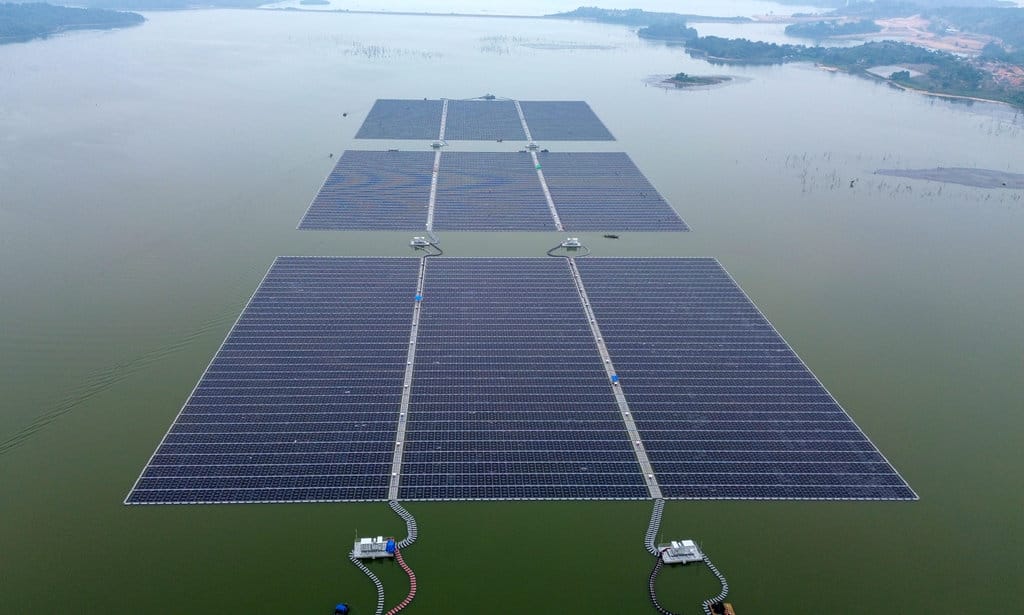
tirto.id - Solar power plants or solar panels do not necessarily have to be built on land. In many countries, solar panels are now installed on the surface of water bodies such as reservoirs or lakes to save land. However, these clean energy installations on water still have ecological consequences.
When solar panels cover too large an area of the water surface, they can block sunlight from penetrating below the surface and may affect the habitats of organisms living beneath them.
Understanding Floating Solar Panels and Their Benefits
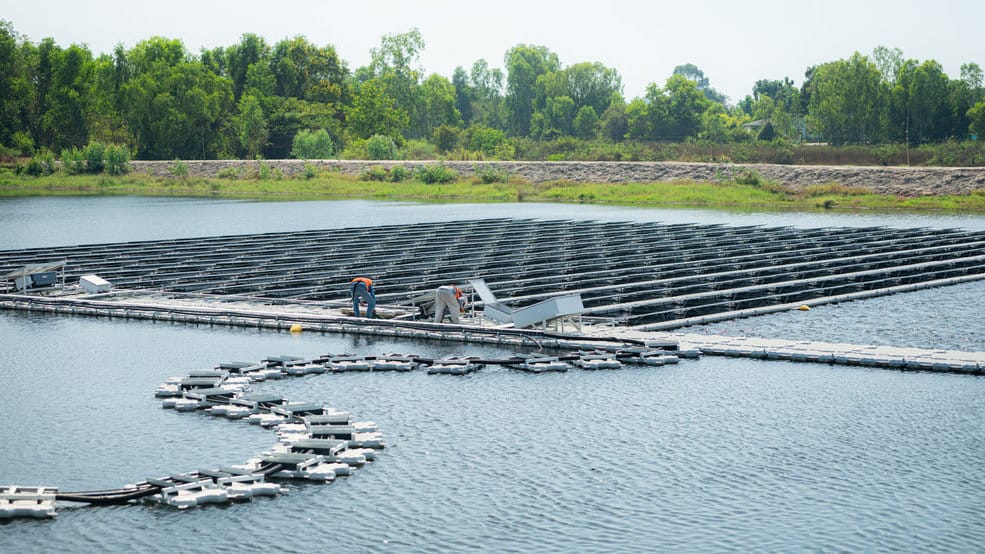
Floating solar panels, or floating photovoltaic (FPV) systems, are solar panel installations mounted on floats and anchored to the surface of reservoirs, lakes, or specific water bodies. These systems aim to generate electricity through the photovoltaic process, similar to conventional solar panels.
According to Gandhi et al. in the journal Nature Reviews Clean Technology (2026), the global installed capacity of FPV exceeded 9.6 GWp in 2024, following rapid growth since 2015.
They predict that the potential of FPV could reach more than 22 TWp if 10 percent of inland water bodies were utilized to their maximum capacity. Floating solar technology is quite attractive because it has the potential to expand electricity production without requiring significant additional land.
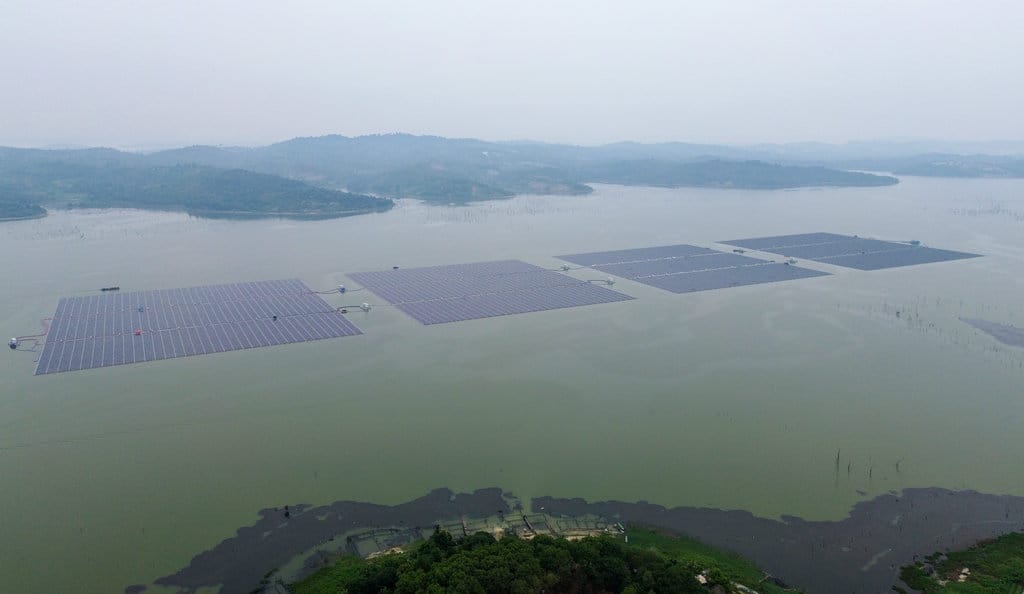
Aerial photo of workers continuing the construction of a floating solar power plant (PLTS) at Tembesi Reservoir in Batam, Riau Islands, on Saturday (October 24, 2026). Construction of the 46 megawatt peak (MWp) capacity plant reached approximately 74 percent in October 2026 and is projected to generate around 61 gigawatt hours (GWh) of electricity per year once operational. ANTARA FOTO/Fitra Yogi/tom.
Installing solar panels on water also offers operational advantages. Water and air currents help cool the panel modules, potentially resulting in higher efficiency compared to terrestrial solar panels.
Gandhi and colleagues also noted the potential for water savings, integration with hydroelectric power plants and aquaculture, as well as a reduced risk of land-use conflicts.
Nevertheless, the cost of electricity from FPV systems is generally still higher than that of terrestrial panels. From a maintenance perspective, FPV is also considered more complex. Meanwhile, the environmental impacts remain not fully understood.
"The challenges include increased operational and maintenance complexity, as well as harsher operating conditions compared to land-based systems," Gandhi et al. explained.
"The impact of FPV systems on the local environment requires further investigation, and system developers may face regulatory uncertainty," they added.
Impact on Aquatic Ecosystems and Aquatic Life
One of the impacts of floating solar panels is the creation of shaded areas beneath the water surface, due to the limited amount of sunlight that penetrates the water. This disrupts the photosynthesis of phytoplankton and aquatic plants. Both of these organisms support the food chain in aquatic ecosystems.
Covering the water surface also has the potential to alter heating and cooling rates, as well as limit wind exposure to the water surface. The magnitude of changes in the aquatic ecosystem also depends on the characteristics of the water body and the extent of the surface covered by FPV.
Yang and colleagues, in the Journal of Limnology (2022), modeled a shallow tropical reservoir in Singapore, with a scenario of installing panels covering 42 hectares, or approximately 30 percent of the water surface.
The results showed a decrease in chlorophyll-a levels (the green pigment in algae and phytoplankton), total organic carbon, and dissolved oxygen beneath the panels. Chlorophyll-a levels were estimated to drop by up to 30 percent, organic carbon by 15 percent, and dissolved oxygen by 50 percent.
In that study, water temperature, stability, and water quality in areas far from the floating panels were relatively unaffected.
Similar results were shown by other research. In a study published in Environmental Research: Infrastructure and Sustainability (2025), Alexander E Cagle and colleagues monitored the effects of floating solar panels in the United States. They found that water temperature and dissolved oxygen levels beneath the panels were lower.
Steven Grodsky, a researcher at Cornell University, explained the downstream impacts. "If you install floating solar panels, you drastically reduce oxygen availability for organisms, you disrupt ecological processes, how decomposition occurs, microbes, how wind moves across the water surface. Everything is interconnected."
Regarding impacts on the ecosystem, Yang and colleagues in the journal Communications Earth & Environment (2024) reported the results of a survey of 26 surface-mounted photovoltaic systems in the Yangtze River Basin, China.
The study recorded a decrease in water temperature and dissolved oxygen saturation. Species richness and plankton density also declined, accompanied by changes in community composition.
Bird diversity also decreased. In the panel areas and their surroundings, researchers recorded 1,089 individuals from 26 bird species. By comparison, reference waters without FPV recorded 4,875 individuals from 35 bird species. The research team also found no waterbirds nesting in the waters of the panel areas.
The findings of the study cannot yet be used as a complete reference. Of the 26 systems surveyed in the Yangtze River, only 5 actually used floating panels, while the other 21 used pole-mounted panels. All locations were fish farming waters, and each site was surveyed only once per season. Therefore, the results may differ if applied in other locations.
Yang and colleagues acknowledged that FPV systems that have been operational for only 3 to 5 years are not sufficient to assess cumulative effects, especially in regions with different climates. Meanwhile, Gandhi and colleagues also emphasized the need for long-term research on various types of water bodies.
How to Minimize the Negative Impacts of Floating Solar Power Plants?
The lack of precise measurements regarding the long-term impacts of floating panels makes early environmental planning for such projects essential. Yang and colleagues recommend selecting locations and scales that are appropriately adjusted, while avoiding critical habitats for waterfowl.
Conservation areas and fish spawning grounds must also be considered to ensure that development does not disrupt the ecological functions of water bodies.
The area and layout of the panels must be adapted to local conditions. In the Yangtze study, variations in water conditions were not correlated with the proportion of the surface area not covered by panels.
These findings indicate that the mere presence of open areas does not guarantee that ecological impacts will remain low. Light penetration, water circulation, oxygen levels, and water characteristics must be taken into account when determining project scale.
Akhmad Suraji, a researcher at Andalas University, explained that floating solar power plants are often promoted as a solution to avoid land-use conflicts.
"That view is correct, but it is not complete," Suraji told Antara.
"Reservoirs and lakes can serve as sources of raw water, irrigation, hydroelectric power generation, fisheries, aquaculture, transportation, tourism, recreation, biodiversity habitats, as well as social and cultural spaces for communities," he explained.
Suraji suggested that floating solar power plants must be understood as an intervention in the relationships between water, energy, ecosystems, infrastructure, and communities.
Developers must also monitor environmental conditions before, during, and after the construction of floating solar panels. Monitoring parameters include temperature, dissolved oxygen, pH, nutrients, plankton, fish, and birds.
Conditions beneath the panels need to be compared with open areas or reference water bodies to allow for a more objective assessment of changes.
Gandhi and colleagues emphasize that long-term data is essential as a basis for developing appropriate regulations, while also providing certainty for investors.
Beyond monitoring, floating solar panel developers must also pay close attention to mooring design to avoid excessive damage to benthic habitats, and use materials suitable for aquatic environments.
When planning to manage water bodies for floating solar panels, local communities and ecological experts need to be involved from the planning stage. Once the panels are operational, routine monitoring remains important for detecting environmental changes and determining subsequent management actions.
Floating Solar Panels, Clean Energy That Is Not Without Risk
Red Report on the PPA-PPO Police Unit Behind the Sukoharjo Islamic Boarding School Case
Are there other efforts to impeach Gibran?
Floating Solar Panels: Clean Energy That Is Not Without Risk
A Million Sensations from the Scent of Patchouli
Traces of Women's Experience and Cultural Identity in Dance Movements
Editor's Picks
Floating Solar Panels: Clean Energy That Is Not Without Risk
Hopes and Challenges in Waste Management at the Putri Cempo Landfill in Surakarta
Floating Solar Panels: Clean Energy That Is Not Without Risk
Floating Solar Panels: Clean Energy That Is Not Without Risk
Floating Solar Panels, Clean Energy That Is Not Without Risk
Emperor Nero Polished His Image Through Artistic Performances
Frequently asked questions
What ecological risks do floating solar panels pose to aquatic habitats when covering large water areas?
Floating solar panels can block sunlight penetration, negatively affecting the habitats of organisms living beneath them. This shading effect disrupts the natural light cycle required for aquatic ecosystem balance.
What was the global installed capacity of floating photovoltaic systems in 2024, and what is the predicted potential capacity?
The global installed capacity of floating photovoltaic systems exceeded 9.6 GWp in 2024. Researchers predict the potential could reach more than 22 TWp if 10 percent of inland water bodies were utilized.
How did the study of 26 photovoltaic systems in the Yangtze River Basin impact water temperature and oxygen levels?
The survey recorded a decrease in water temperature and dissolved oxygen saturation in the studied systems. These changes indicate significant alterations to the physical and chemical properties of the water environment.