DTE Energy activates 132 MW solar park in Michigan funded by customers

The plant was built using voluntary premiums from MIGreenPower subscribers, not from the general rate base. The announcement does not clarify how much of this capacity is truly additional or the tons of CO2 avoided.
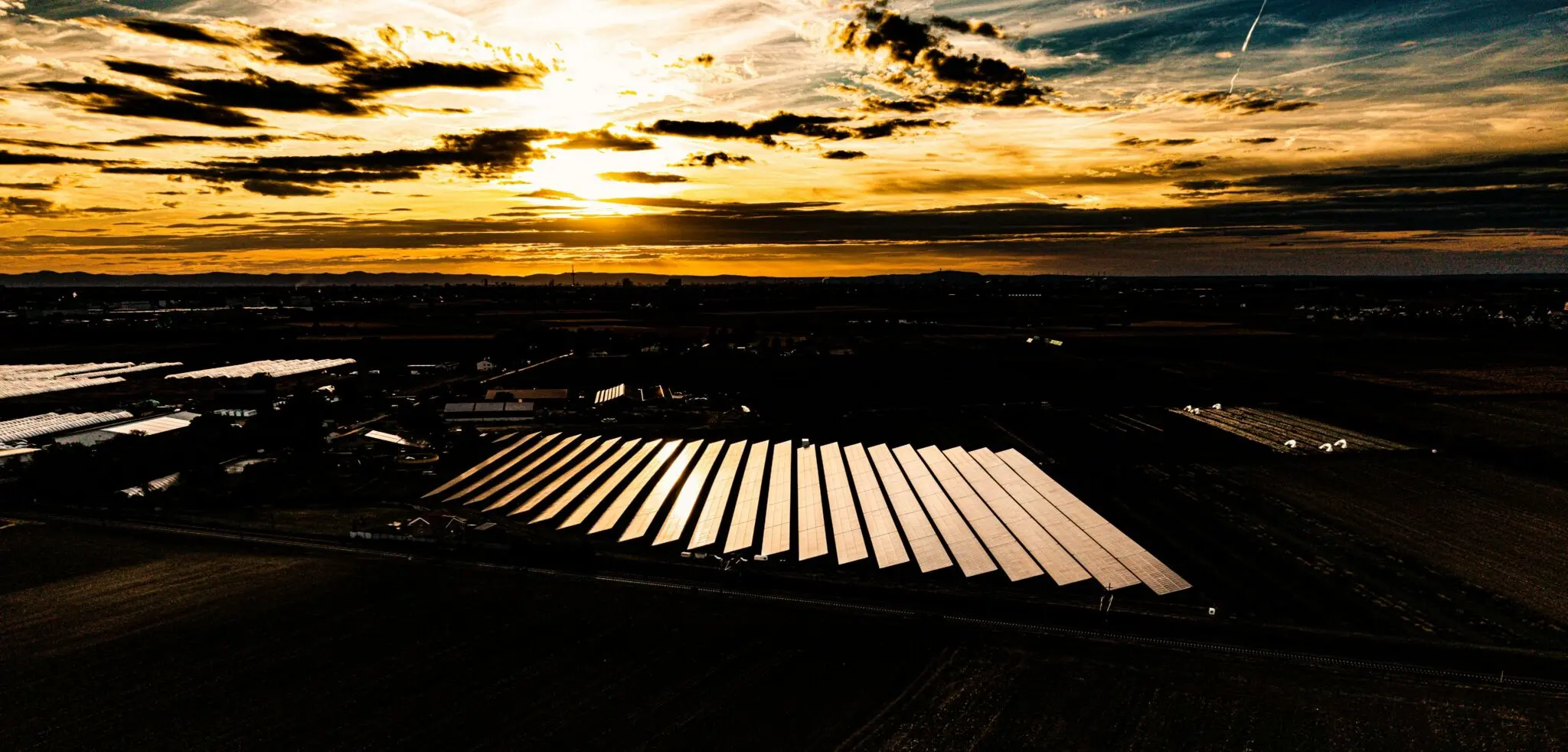
DTE Energy has commissioned Fish Creek Solar, a 132 MW solar facility in Michigan that was voluntarily financed by its own customers and will cover the equivalent consumption of 30,000 homes.
The numbers: 132 MW, $268 million, and 30,000 homes
Let’s look at the numbers. The facility adds 132 MW of capacity and represents an investment of $268 million, according to project information compiled by Solar Power World. It is not a record-breaking figure, nor does it aim to be: it falls within the mid-range of the U.S. large-scale solar generation market. What matters is not the size, but who signs the check.
And it is the customer who signs it. The plant was built with contributions from voluntary subscribers to MIGreenPower, the program through which DTE Energy allows households and businesses to pay a premium on their electricity bills to link their consumption to renewable energy. Neither shareholders nor the general rate base advance the capital: it is provided by those who choose to enroll.
The context pushes in that direction. Michigan approved a clean energy standard in 2023 with a 2040 horizon, and its major utilities face the phased retirement of coal over the next decade. The utility, headquartered in Detroit, needs new capacity and needs it with relative urgency. The question, as almost always, is at what pace and with what funding.
From subscription to megawatt: what lies behind 132 MW
The mechanism has a clear virtue: it requires no public subsidy or a rate review for each megawatt. If there is demand, it gets built. And it has an equally clear ceiling: it only works as long as there are customers willing to pay more for the same electricity.
A customer-funded solar park does not replace the standard; it complements it. Its strength lies in speed; its limit is the willingness to pay.
That ceiling is not theoretical. Voluntary green tariffs in the United States have grown in tandem with the Scope 2 targets of major corporations, which require verifiable contracts to justify to auditors and investors that their electricity is renewable. When corporate demand cools, the project pipeline cools with it.
The question is not whether 132 MW are green, but whether they are additional: capacity that would not exist without that voluntary subscription.
Who pays for the transition: the fine print of MIGreenPower
Additionality is the term that decides everything. A subscriber pays for energy that, in theory, would not have been produced without their contribution. If that condition is met, the result is new capacity; if not, the customer pays to redecorate the existing mix with certificates. And here the brochure becomes opaque: the announcement does not detail how many tons of CO2 Fish Creek Solar avoids per year.
There is a second, less visible filter. These voluntary rates go through the state regulatory commission, the MPSC, which decides how the premium is accounted for and who bears the risk if the subscription does not reach the expected threshold. $268 million put up by customers means that a significant portion of that risk is transferred to the user who pays the premium and, by extension, to the bills of all others.
📊 Ecological impact in figures
The European mirror: PPA, Green Taxonomy and CSRD
The European precedent serves as a mirror. In Spain, corporate renewable energy is primarily channeled through PPAs—long-term bilateral contracts—rather than through voluntary surcharges on utility bills. Iberdrola and Acciona have closed hundreds of megawatts with industrial customers under this formula, and subsequently, the Green Taxonomy and the CSRD directive require justifying every kilowatt purchased with criteria regarding the quality of the contractual instrument. The conclusion is the same on both sides of the Atlantic: clean energy is sold with paperwork, not just with electrons.
And there is the fine print that no press release shows. The transition is advancing at two speeds: those who can afford the premium gain earlier access to clean energy; those who cannot remain covered by the mix decided by the company. This is not a flaw in the mechanism, but its design. It becomes a problem when the voluntary program serves as a pretext for not accelerating the phase-out of fossil fuel generation.
In system terms, 132 MW is a drop in the bucket, albeit one shaped like an opportunity. According to the International Energy Agency, large-scale solar is now the cheapest source of new electricity in much of the world, and its bottleneck is no longer the panel, but the grid and storage. Michigan adds its own challenges: harsh winters, winter demand peaks, and a grid that needs as much investment as generation.
What Fish Creek Solar demonstrates is more modest and more useful: the mechanism works. There are customers, there is funding, and there is a plant connected to the grid. The debate of the next decade will not be whether solar can compete on price, but who bears the cost of the grid that connects it and of the hours without sun. For technical details, the entry on photovoltaic solar energy well summarizes the state of the technology.
Frequently asked questions
How was the 132 MW Fish Creek Solar facility in Michigan financed by DTE Energy customers?
The plant was built using voluntary premiums from MIGreenPower subscribers, not from the general rate base. This funding model ensures that neither shareholders nor the general rate base advance the capital for the project.
What is the total investment amount and the number of homes the Fish Creek Solar project can power?
The facility represents an investment of $268 million and will cover the equivalent consumption of 30,000 homes. These figures place the project within the mid-range of the U.S. large-scale solar generation market.
What uncertainty remains regarding the additionality of the renewable energy provided by the Fish Creek Solar project?
The announcement does not clarify how much of this capacity is truly additional or the tons of CO2 avoided. If the additionality condition is not met, customers may only be paying to redecorate the existing mix with certificates.