Community Solar: A Vulnerability Worth 'Listening To'

It must be acknowledged that the energy transition toward clean energy, as outlined in the second tranche of the 200 billion baht loan project, is a direction that many parties agree with. However, the most closely watched issue is whether the targets will be successfully met.
On October 27, the government, in collaboration with the Provincial Electricity Authority (PEA) and the Metropolitan Electricity Authority (MEA), launched the “Solar Rooftop” project. This initiative supports the installation of solar panels by the public, converting solar energy into electricity to help reduce electricity costs and increase the use of renewable energy.
However, as soon as the Solar Rooftop project was rolled out, criticism from various sectors followed immediately. The focus of the debate centers on the project’s potential to drive a genuine energy transition and on the question of who will truly benefit. These concerns remain unresolved for many parties.
The “Solar Rooftop” project is a government-supported initiative that provides subsidies for equipment and system installation costs to the public. The support amounts to 50,000 baht per household, for up to one million households nationwide, or until the total project budget of 50 billion baht is exhausted.
The project aims to reduce the electricity burden on the public and support the energy transition. It is estimated that the initiative could reduce the public’s electricity costs by up to 24 billion baht per year.
At the same time, the public is allowed to sell surplus electricity back to the electricity authorities, up to a maximum of 5 kW, at a feed-in tariff of 2.20 baht per unit for a period of 20 years, in accordance with the project’s terms and conditions. The revenue from electricity sales will be offset against the electricity consumption bill. If the sales revenue exceeds the consumption cost, the surplus amount will be transferred to the bank account designated during the contract signing process.
Another aspect of the “Community Solar” program is that it opens up opportunities for small and medium-sized enterprises (SMEs) engaged in the solar cell business and registered with the Metropolitan Electricity Authority or the Provincial Electricity Authority to participate in the work.
Nevertheless, criticism continues to target the project, arguing that it will benefit large capital players more than small businesses or SMEs, as certain conditions are not conducive to the latter.
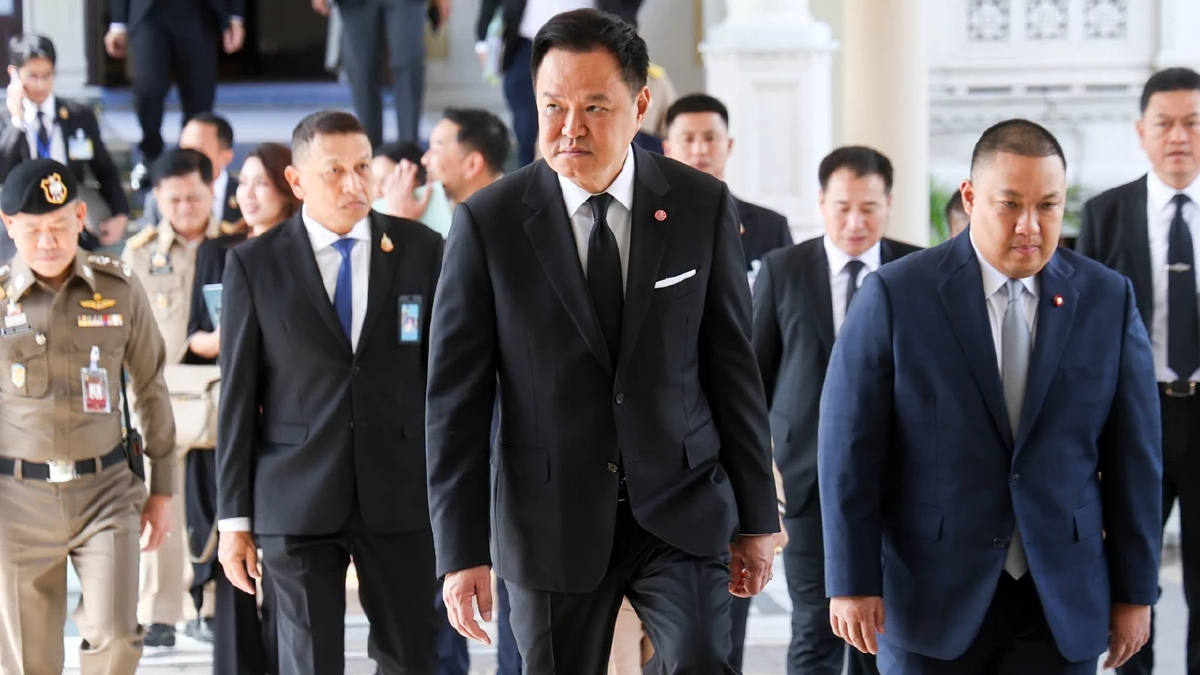
Anutin Charnvirakul, Prime Minister and Minister of Interior, had to step in to quell the criticism. In an interview (October 28, 2026), he affirmed that the project was not designed to favor large investors. Instead, it was created to reduce the cost burden on the public, increase savings opportunities, decrease the use of fossil fuel-based electricity, and promote the use of renewable energy generated from natural sources.
Anutin emphasized that the government is moving forward with energy structure reform and will not reduce taxes on solar panels, in order to ensure fiscal sustainability.
The Prime Minister emphasized that the "Solar for the People" initiative does not favor large capital and aims to reduce reliance on imported energy.
MEA advises checking the list of registered vendors before selecting an installer for the “Community Solar” program.
Meanwhile, Ploypair Suwannachai, Minister of State at the Ministry of Interior, provided additional clarification, stating that the Community Solar Power Project aims to enable citizens to use their own rooftops to generate electricity for personal use, amid an uncertain energy landscape.
He denied that the project favors large private companies, explaining that under the scheme, citizens must select installers who are registered and subject to standard inspections by the Metropolitan Electricity Authority and the Provincial Electricity Authority only.
Regarding the requirement for businesses to deposit a 50,000-baht guarantee per household installation, Ploypair explained that once the installer has completed the service and notified both electricity authorities to connect the wiring and switch the meter to a mode that purchases electricity from the citizen, and once the power has been synchronized and connected to the grid, the 50,000-baht deposit will be refunded to the business within seven days. He emphasized that the guarantee is not held for six to seven months, as reported in the news.
Ploypair further clarified that the 10,000-baht installation deposit is a criterion established to align with the group of citizens who take out bank loans for installation, as banks offer low interest rates for a period of seven years.
Therefore, installers are required to provide a seven-year warranty for the public, covering the maintenance of solar panels and the inspection of various electrical grid connection equipment. Should any installer abandon a project or if the installed equipment becomes damaged, the 10,000-baht installation deposit will be used to protect the public’s interests.
However, Polpir’s explanation appears to have loopholes. This is evident from numerous small-scale companies posting on social media that they are unable to take on projects under the “Community Solar” program due to the deposit requirements, which may impact their working capital.
According to the standard manual for the “Community Solar” program, installers or contractors must obtain a bank guarantee of 50,000 baht per project to ensure the quality of the work.
Additionally, a separate 10,000-baht bank guarantee is required to cover the seven-year installation warranty. This must be submitted within 15 days of receiving the permit. These funds are designated for maintenance, cleaning, and fire insurance.
If Installer A undertakes solar panel installations for 20 customers, they would need to secure two bank guarantees, totaling approximately 1,200,000 baht.
The initial deposit is a performance bond of 1,000,000 baht, which will be refunded within six months upon successful project delivery. Typically, the process of grid synchronization or selling electricity to the grid may take three to six months, or even longer.
Given this reality, operators believe that the six-month delivery deadline may increase the risk of losing this portion of the deposit.
Meanwhile, the second deposit, an installation bond of 200,000 baht, will only be refunded after seven years. Consequently, business opportunities may become concentrated among companies with higher capital costs.
Similarly, Chaiwat Wirudththanakit, a director of Chaiwat Solar Cell Co., Ltd., told some media outlets that the requirement to post a 50,000-baht bond per project and a 10,000-baht after-sales service bond for seven years means that 60,000 baht must be reserved as capital. This does not include the cost of each maintenance visit. However, the average profit per project is only about 20,000 baht. He expressed concern that if after-sales service costs exceed the bond amount, some installers might choose to forfeit the bond rather than provide continuous service for seven years, risking project abandonment and leaving the burden on consumers.
Operators therefore view the project’s terms as a barrier for SMEs with limited capital, making project participation more suitable for large, well-capitalized companies, of which there are only a few in Thailand.
• Government subsidy: 50,000 baht per household for system installation, based on an estimated total cost of 140,000 baht per system. The initial target is one million households.
• Credit support from state financial institutions, such as the Bank for Agriculture and Agricultural Cooperatives (BAAC), the Government Savings Bank, and the Government Housing Bank, which have introduced special loan measures with an interest rate of 2.50% per annum (for a term of seven years) to fund upfront installation costs without requiring collateral.
• Purchase of surplus electricity: Residents can sell excess electricity back to the grid. A 5-kilowatt system is expected to generate an average income of approximately 1,000 baht per month.
• Must be classified as a Category 1 electricity user (residential).
• Must pass structural roof and electrical system certification by the Metropolitan Electricity Authority (MEA) or the Provincial Electricity Authority (PEA).
Importantly, the project has also generated considerable feedback highlighting its "weaknesses" and points of contention that warrant careful review.
1.) Pricing issues and conditions for purchasing surplus electricity. The government has set the rate for purchasing surplus electricity from the public at 2.20 baht per unit. Many parties view this rate as insufficient to provide a worthwhile return on investment or to ensure a rapid payback period.
2.) Backflow issues and the electrical grid. Regulatory restrictions prohibit or control the backflow of surplus electricity into the transmission lines during certain periods. This prevents the system from functioning as a true Net-Metering system, which should allow for a full offset of electricity units.
3.) Cost-effectiveness for holders of the State Welfare Card. For instance, holders of the State Welfare Card must relinquish their existing electricity subsidy rights for a period of up to 20 years. Therefore, a careful calculation of cost-effectiveness is required before making a decision.
4.) Contractor issues and equipment quality. Some contractors and installers have gradually withdrawn from the project. There are also concerns regarding equipment standards, as well as the presence of fraudsters taking advantage of the situation.
5.) Debt burden and accessibility. Although there are support measures or low-interest loans (such as a fixed interest rate of 2.5% per year, with installments of approximately 1,200 baht per period), it may not be cost-effective for households that do not have high electricity usage during the daytime (for example, those with electricity bills below 3,000 baht). In such cases, the installation could lead to an increase in debt.
6.) Lack of energy storage battery systems. Most projects focus on immediate consumption or feed-in sales, rather than supporting household battery systems (as seen in countries like Australia). As a result, electricity from the regular grid is still required at night.
While all these aspects have undeniable advantages and strengths, the “weaknesses” and concerns raised by various parties are also worth listening to and reviewing. This is to ensure that the budget is not spent off-target and to prevent potential loopholes for corruption in the projects.
It must not be forgotten that this project is funded by loans that must be repaid with public taxes, creating a long-term burden for future generations. If the investment does not yield value, fails to meet the set targets, or suffers from corruption like other major projects, those who should be responsible should know it well. Or do they not care?
Frequently asked questions
What is the primary criticism surrounding the Thai government's new Solar Rooftop project and its energy transition goals?
Critics question whether the project will genuinely drive an energy transition and who will truly benefit. These unresolved concerns persist despite the government's stated aim to reduce electricity costs and increase renewable energy use.
How much financial support does the Thai Solar Rooftop initiative provide per household for solar panel installation?
The initiative provides 50,000 baht per household to subsidize equipment and system installation costs. This support is capped at one million households nationwide to help reduce electricity costs for participants.
What specific bank guarantee requirements must installers meet under the Community Solar program manual in Thailand?
Installers must obtain a 50,000-baht bank guarantee per project to ensure work quality. Additionally, a separate 10,000-baht guarantee is required to cover the seven-year installation warranty, submitted within 15 days of the permit.